Author: Laura McFadden

woman looking at computer writing down notes in her journal

Knowing when and how to find a career coach can make all the difference. Let’s face it, no one ever teaches you how to navigate your career. At best, we get half-hearted questions like, “What do you want to be when you grow up?” and “Do you know what you’re going to do when you finish school?” From there, you can try to find a mentor or hope for a great boss who might help you get promoted or otherwise grow in your career. More often than not, though, you’re left to figure it out on your own. And that’s where a career coach can step in. But finding the right person to help you along the way can feel daunting. That’s why we’re here to help you understand how to choose the right coach for you! First, though, let’s start with the basics. What is a Career Coach? Instead of simply telling you what to do, coaches empower you to leverage your resources and find the best solution for yourself, no matter the challenges you’re facing in your work life. Whether you’re at a crossroads or seeking advancement, they can provide invaluable support tailored to your unique goals and challenges. What Does a Career Coach Do? Career coaches can support you with a number of things from finding clarity around your career path, or finding a new job (think resume review and interview preparation), to confidence building, decision-making and leadership development. If you’re feeling stuck in your current role or seeking more satisfaction in your work life, they will empower you to take aligned action towards your goals. They can also assist in making sense of your professional aspirations and guide you through potential career changes. Through exploration, strategy, and accountability, a career coach helps you move forward with intention to achieve your own unique version of success. Why You Need a Career Coach Figuring out your next career move can feel like a full-time job. Between researching roles, updating your resume, networking, and second-guessing yourself at every turn, it’s easy to feel overwhelmed or stuck. A career coach brings a grounded, objective perspective and stays current on the job market and hiring trends. They help you cut through the noise, clarify what really matters to you, and focus your time and energy where it counts. They’ll help you move forward with more direction and less stress, while supporting you to build confidence, hone your transferable skills, and take meaningful steps toward a career that actually feels right. View this post on Instagram A post shared by Ama La Vida | Online Career Coaches (@alvcoaching) Before You Start Searching, Understand Your Support Needs Before you dive into your search, take a moment to reflect on the following questions to help you pinpoint the specific support you need. Are you looking for clarity on your career path or considering a career change? If you’re reconsidering your career trajectory and exploring a career transition, you’ll need a specific kind of support. This kind of coaching focuses on exploration, getting to know yourself and what a successful career looks like for you. A career coach trained in career exploration may not focus on technical support, but rather self-awareness to guide your decision. Are you looking for a new job in the same industry? Maybe you enjoy your current job, but want a change—whether it’s a new role, a better company culture, higher pay, or more work-life balance. If this is the case, you may want to find a career coach who specializes in your industry. Do you need technical support like resume review or job search guidance? If you’re looking for resume writing, interview prep, or job search strategy, you may benefit more from a coach that also doubles as a career consultant. This type of support is often advice-heavy and focused on helping you navigate the process efficiently. Are you looking to grow within your current role or industry? Career development coaching can support leadership growth, skill-building, and strategic planning. This is great for mid-career professionals to senior leaders who want to advance, become more effective, or explore what’s next in their field. How to Find a Career Coach that Fits Your Needs Understanding how to find a career coach that’s truly right for you can feel overwhelming at first, but it doesn’t have to be. With the right approach, this process becomes an empowering step toward real, lasting professional growth. Instead of spending hours searching online, scrolling through endless bios, and wondering if a coach will “get” you, there’s a simpler way. Let Ama La Vida’s Relationship Strategists Do the Work for You At Ama La Vida, we take the guesswork out of finding your ideal coach. Our coach-matching process is deeply personal and 100% human. You can get started by filling out a quick form about your goals and needs, or jump on a free consultation call with one of our Relationship Strategists. During the call, they’ll ask thoughtful questions to understand your challenges, goals, and preferences. Then, based on that conversation, they’ll hand-select a certified coach from our diverse team of 60+ career experts who best aligns with your needs. You’ll receive a link to their profile, which includes their experience, specialties, and testimonials—plus you can schedule a complimentary coach consultation to make sure it’s the right fit. You’re not limited to just one coach either. Through our “celebrity sessions,” you can meet with other experts on our team to explore topics outside your primary coach’s expertise. It’s full-cycle career coaching, built around your goals. Ask Your Network or Therapist for Referrals Another great way to find a career coach is to tap into your network, as they can offer valuable recommendations based on their own experiences. Talk with people who you trust, discussing your career goals, and ask if they can recommend any reputable coaches. Additionally, if you’re currently seeing a therapist, they may also be a helpful resource. Leverage Coaching Directories and Social Media If you’d

Read More
Woman writing in planner

If you’re here to download a career plan worksheet, chances are you’re feeling stuck in your career. We get it—we’ve been there too. Maybe you never really knew what you wanted, you followed a career path only to realize something was missing, or life is just taking you in a new direction. Whatever has you here, we understand that making a change can feel overwhelming. Before you spend hours filling out job applications or years getting more education or training, we’re sharing our method to help you figure out your next career move. Download our comprehensive career plan worksheet to get started paving a fulfilling career path. We created this free in depth guide to help you begin exploring career options and making a plan that works for you. Understanding Career Transitions For Ama La Vida members, career transitions can be driven by things like the desire for better work-life balance or higher income, job dissatisfaction, or going after their dream job. While our members want to find a job that aligns with their interests, it’s normal for them to feel a mix of emotions from excitement to worry that they wasted time getting to where they are now. Some even worry that the next job won’t be any better than the last. It’s true, making a job transition can be scary, but with a proven strategy you can move forward with confidence. This part is all about self-reflecting to understand what you truly want for your career and then figuring out the steps needed to achieve it. Let’s get into it! Using Career Plan Worksheets: Your Road to Rediscovery Think of a career worksheet as your personal roadmap. It’s a tool that helps you figure out your work goals and how to reach them. Unlike those quizzes that tell you what job you should have based on your skills and personality, a career plan is all about creating a step-by-step strategy to achieve your specific career dreams. The main parts of a great career plan include: Setting goals helps you know exactly what you’re aiming for, which keeps you motivated. Focusing on skill development means you’re always learning what you need to succeed. And when you have a big, long-term goal, you can break it down into smaller tasks that are easier to tackle. Each part of the worksheet helps create a solid plan, leading you to a career that’s both successful and aligned. Design Your Dream Career with Our Career Plan Worksheet Our downloadable template allows you to explore and identify your best path forward. You’ll reflect on your values (what’s important to you), interests (what you love doing), and skills (what you’re good at). When you understand these things about yourself it’s much easier to narrow down and decide between different careers. By doing research, networking (talking to people in different fields), and having informational interviews (chatting with people about their jobs), you learn a lot about various industries and roles. Taking the time to do this research ensures your future career goals match what is important to you personally and your skills. Not only does career planning help you clarify what jobs interest you, but it also gets you ready for job applications by highlighting your relevant qualifications and experiences. Chances are, you didn’t have a plan when you found your current job. Without a worksheet, your next job search might be all over the place. You could end up applying to jobs that don’t really suit you, feeling lost, and not reaching your full potential. A Harvard Business Review article shared that very few people think about their career over the next five years. This worksheet will help you set long-term career goals—these are the big objectives you want to achieve in your work life. They guide your career path and help you make better short-term decisions. By exploring and planning systematically, career worksheets pave the way to career satisfaction. Overcoming Obstacles and Staying Motivated Balancing career exploration with your current responsibilities can be tricky. It takes good time management and prioritization. To make it work, set aside specific time each week to explore jobs and learn new skills. Sometimes, you might feel scared or doubtful about the process. To overcome these feelings, break your goals into smaller, more manageable tasks. Then, celebrate each small win as you complete them. Ask mentors, colleagues, and friends for advice and encouragement. Don’t be afraid to seek help or use resources like career coaches and online courses to fill in what you don’t know. Stay interested in your journey by reminding yourself of your long-term goals. You can make a vision board or post reminders for yourself of why this transition is important to you. Don’t forget, by planning methodically and using support, you can achieve your career dreams. Making the Most of Career Plan Worksheets Take time for self-reflection To get the most out of these career plan worksheets, start with honest self-reflection. Really dig into your skills, interests, and values to create a clear career plan. Work your way through the questions in each section of the PDF worksheet guide to help you uncover what’s most important to you. Ask for feedback Share your completed worksheets with mentors or colleagues for feedback. Their insights will help you spot your natural talents. Make it a research project Do thorough career research to understand job requirements and industry trends. This includes having informational interviews to learn about daily life in different roles. Yes, it’s work, but this can also be fun! You’re learning about potential careers that match your own interests. Make sure to take note of what sounds interesting to you! Actioning The Career Planning Process Once you’ve built a career plan, it’s time to put it into action. Here are few ways to get started. Prepare for your job search Keep a log of your accomplishments and add to it often. You can use these to update your resume to match your goals and new

Read More
two Ama La Vida Employees sitting at a computer

Are you feeling stuck in your job search because you lack a college degree? You’re not alone. In fact, according to CNBC “62% of Americans don’t have a degree.” The good news? There are countless jobs with no degree required, and it’s entirely possible to build a rewarding career at any age without one! Actually, contrary to popular belief, there are many high-paying jobs that do not require a four-year college degree. Here’s how you can get a new job at any age by building a strong personal brand, focusing on transferable skills, engaging in your network and embracing lifelong learning without going back to school. The Importance of a Strong Personal Brand Knowing your personal brand is crucial in today’s competitive job market. It helps you stand out from other candidates and showcases your value to potential employers. You can incorporate your experience and professional persona which allows you to be memorable and trustworthy. It helps companies and potential employers value your character and experience, regardless of a degree. Here are two steps to help you get started building a strong personal brand. Define Your Unique Value Proposition What specifically sets you apart from other people in your field? Think about your skills, strengths, and experience and focus on your unique qualities. Take some time to reflect on what you enjoy doing, what people ask you for help with, and even what you have done in previous work—inside or outside the office. Do not limit yourself to traditional work experience! For example, you have probably been responsible for key duties on a team in some capacity, maybe even led one. That is a valuable strength you can showcase, no matter what your formal background is. Or maybe you were responsible for training new volunteers or managing personal event logistics. These are all experiences and skills worth highlighting. Just because your previous experience may not have been paid, that doesn’t mean it wasn’t valuable! Want some more help? Download our free Career Method Guide to get full workbook of questions. Once you have a sense of what sets you apart from other people around you, write a clear and concise statement that explains who you want to be known for professionally. This statement becomes the foundation of your own personal brand and guides how you present yourself in your resume, cover letter, and what you talk about in interviews. Develop Your Online Presence These days, most networking and job searching happens online. Whether you’re using LinkedIn or another social media tool or website, by putting yourself out there and making a connection with more people, you’re bettering your chances of learning about new career opportunities you might not have otherwise known. Take the time to build out your professional profile on whichever site you decide to use. You can keep your unique value proposition close as you do it to remind yourself what you want to highlight. Then, take time to find other people who talk about what you’re interested in learning more about and connect with them. You can respond to what they write or post, share your own thoughts, and maybe even form a real connection with them. You can create a simple personal website or portfolio to showcase your experience, skills, or certifications. For example, if writing is something you enjoy, you can also create content of your own on a blog to position yourself as an expert. You can dig in deeper to developing your personal brand right here. Leverage Transferable Skills When you don’t have a degree, leveraging transferable skills becomes essential because it allows you to demonstrate your ability to perform job functions effectively based on your previous experiences, even if they weren’t paid. If you’ve ever had to collaborate on a team project—whether at work, volunteering, or even in a hobby group—you already have transferable skills. These skills show employers that you have the practical capabilities to succeed in the job, regardless of your education. To do this, look up job postings and descriptions that you are interested in and read what the hiring managers are looking for in candidates. Don’t get overwhelmed at the long list of criteria—no one meets those 100%! Instead, look for key themes and repeated experiences. Many of those you may already have or be able to learn through an online course or simply reading a book from the library. Next, tailor your resume to highlight your experience that is most relevant to that role. Remember to share the outcome, not just the task. For example, if the role focuses on process improvement or project management, you can highlight how you led projects that consistently delivered under budget or within a tight timeline. Be specific and use numbers when possible to illustrate your strengths. Network for Career Success Imagine having access to a wealth of career opportunities that never make it to online job boards. For someone without a degree, having a professional network is even more critical—it opens doors that may otherwise remain closed, creates connections that bypass formal education requirements, and often leads to your next great career move. Building a professional support system or team of mentors and peers can make all the difference. Stay connected to industry events and meetups for your selected field. As you speak with people, ask for advice on what the newest trends are and what skills are the most important. Continue the connection on the appropriate social media platforms, especially LinkedIn. Building professional connections is important because it allows you to tap into the hidden job market, gain valuable industry insights, and build relationships that can advance your career. Embrace Lifelong Learning Even people with advanced degrees need to keep learning new things. In fact, life-long learning is a trait that many employers look for as they’re hiring. It’s no secret that technology is advancing at a quicker and quicker pace. As overwhelming as this can seem, it’s also an amazing opportunity. With all these advancements, most people

Read More
woman looking at computer writing down notes in her journal

Knowing when and how to find a career coach can make all the difference. Let’s face it, no one ever teaches you how to navigate your career. At best, we get half-hearted questions like, “What do you want to be when you grow up?” and “Do you know what you’re going to do when you finish school?” From there, you can try to find a mentor or hope for a great boss who might help you get promoted or otherwise grow in your career. More often than not, though, you’re left to figure it out on your own. And that’s where a career coach can step in. A career coach is someone specially trained to help you navigate your entire career journey. They can help you decide what career you want, create a career plan, and even navigate getting a new job or making a larger career change. But finding the right person to help you along the way can feel daunting. That’s why we’re here to help you understand how to choose the right coach for you! First, though, let’s start with the basics. What is a Career Coach? A career coach guides individuals along their career path. Contrary to popular belief, they are different from mentors and provide a different type of support than consultants. Instead of simply telling you what to do, coaches empower you to leverage your resources and find the best solution for yourself, no matter the challenges you’re facing in your work life. Whether you’re at a crossroads or seeking advancement, they can provide invaluable support tailored to your unique goals and challenges. What Does a Career Coach Do? Career coaches can support you with a number of things from finding clarity around your career path, or finding a new job (think resume review and interview preparation), to confidence building, decision-making and leadership development. If you’re feeling stuck in your current role or seeking more satisfaction in your work life, they will empower you to take aligned action towards your goals. They can also assist in making sense of your professional aspirations and guide you through potential career changes. Through exploration, strategy, and accountability, a career coach helps you move forward with intention to achieve your own unique version of success. Why You Need a Career Coach Figuring out your next career move can feel like a full-time job. Between researching roles, updating your resume, networking, and second-guessing yourself at every turn, it’s easy to feel overwhelmed or stuck. A career coach brings a grounded, objective perspective and stays current on the job market and hiring trends. They help you cut through the noise, clarify what really matters to you, and focus your time and energy where it counts. They’ll help you move forward with more direction and less stress, while supporting you to build confidence, hone your transferable skills, and take meaningful steps toward a career that actually feels right. View this post on Instagram A post shared by Ama La Vida | Online Career Coaches (@alvcoaching) Before You Start Searching, Understand Your Support Needs Before you dive into your search, take a moment to reflect on the following questions to help you pinpoint the specific support you need. Are you looking for clarity on your career path or considering a career change? If you’re reconsidering your career trajectory and exploring a career transition, you’ll need a specific kind of support. This kind of coaching focuses on exploration, getting to know yourself and what a successful career looks like for you. A career coach trained in career exploration may not focus on technical support, but rather self-awareness to guide your decision. Are you looking for a new job in the same industry? Maybe you enjoy your current job, but want a change—whether it’s a new role, a better company culture, higher pay, or more work-life balance. If this is the case, you may want to find a career coach who specializes in your industry. Do you need technical support like resume review or job search guidance? If you’re looking for resume writing, interview prep, or job search strategy, you may benefit more from a coach that also doubles as a career consultant. This type of support is often advice-heavy and focused on helping you navigate the process efficiently. Are you looking to grow within your current role or industry? Career development coaching can support leadership growth, skill-building, and strategic planning. This is great for mid-career professionals to senior leaders who want to advance, become more effective, or explore what’s next in their field. How to Find a Career Coach that Fits Your Needs Understanding how to find a career coach that’s truly right for you can feel overwhelming at first, but it doesn’t have to be. With the right approach, this process becomes an empowering step toward real, lasting professional growth. Instead of spending hours searching online, scrolling through endless bios, and wondering if a coach will “get” you, there’s a simpler way. Let Ama La Vida’s Relationship Strategists Do the Work for You At Ama La Vida, we take the guesswork out of finding your ideal coach. Our coach-matching process is deeply personal and 100% human. You can get started by filling out a quick form about your goals and needs, or jump on a free consultation call with one of our Relationship Strategists. During the call, they’ll ask thoughtful questions to understand your challenges, goals, and preferences. Then, based on that conversation, they’ll hand-select a certified coach from our diverse team of 60+ career experts who best aligns with your needs. You’ll receive a link to their profile, which includes their experience, specialties, and testimonials—plus you can schedule a complimentary coach consultation to make sure it’s the right fit. You’re not limited to just one coach either. Through our “celebrity sessions,” you can meet with other experts on our team to explore topics outside your primary coach’s expertise. It’s full-cycle career coaching, built around your goals. Ask Your Network or Therapist

Read More
woman on a performance review

The mid-year review process typically causes employees to roll their eyes, feeling that their boss is just checking another box off their list. In fact, did you know that according to Gallup only 14% of employees are motivated and inspired by the outcome of a performance review? Here at Ama La Vida, we believe in reframing this mindset. After all, if we have to check the “mid-year review” box, why not turn them into a strategic tool for career growth instead of just going through the motions? Let’s explore what a mid-year review is and how you can be part of the 14% that not only enjoys the process but gains professional development from it. It’s your career, so you need to take an active role! And, if you are a manager that wants to ensure your employees fall into that 14% category, be sure to check out our article: Maximizing Performance Reviews as a Manager. What is a Mid-Year Review? Well, a mid-year review isn’t just an annual review split in half. 🤪 So then, what is it? Let’s start from your manager’s perspective. Hopefully they see the mid-year review as a check-in regarding goal progress, employee performance, and real-time positive feedback. It’s also an opportunity to discuss any areas for improvement. For you, the mid-year review should also include a discussion regarding your employee development and engagement, go through any support you may need on projects, and touch on any feedback you have for your manager. (This process goes both ways after all.) And, when needed, it allows you an opportunity to discuss course correction before the review cycle ends. Briefly Breaking Down the Review Process The mid-year review is the ideal time to evaluate if annual goals need to be tweaked, to have a transparent conversation regarding performance, to celebrate accomplishments, and to discuss professional development plans. The process should encourage a dialog regarding your performance. However, the key to having a successful outcome is for you to take ownership of the conversation. Typically, your company or manager will create a document to review the goal status for each direct report on a team, as well as share any acknowledgements received. These meetings tend to be less formal than an annual review and the flow tends to be focused on discussion about goals. Why Mid-Year Reviews Matter for Your Career As previously described, both the mid-year review and the annual performance reviews are often driven by your manager. Let’s focus on what a mid-year review looks like to you, the direct report. From Gallup, it has been discovered that 53% of employees don’t have a clear understanding of what is expected of them.  The mid-year review is your opportunity to gain clarity on expectations, align on priorities, and ensure you’re on the right track with your goals. The Role of Constructive Feedback in Career Growth Your boss will most likely want to provide both positive and constructive feedback, even if you take control of the mid-year review process. Keep in mind that actionable feedback is a gift that you get to choose how to use. Gaining your manager’s perspective on your performance will help you better understand the expectations for your role and identify key skills to develop for future growth within the organization. The reality is it can be hard to receive constructive feedback on your job performance, so learning how to receive feedback well is an important skill set. In this article, the acronym SIFT (Source, Impact, Frequency, and Trends) is shared to approach what to do with the feedback you receive. Once you receive the actionable feedback, thank your manager for sharing it with you. You can say something like “thank you for sharing this with me because I know it isn’t always easy. I want to take some time to digest what you have said.” This allows you to respond later after having thought it through. Leverage Employee Development Through Mid-Year Reviews Another way to leverage career growth through the mid-year review process is discussing your professional development plan. What opportunities will help you grow and expand your skills? Share a few options with your manager that focus on your skills development while supporting the goals of your team and the organization. For example, if you want to develop your data analysis skills and your organization has expanded into a new market, offer to work with the data analysis team to build market research insights. It’s a win-win: the company gains insights, and you get to network with the experts in data analytics. Common Mistakes to Avoid in Mid-Year Reviews There are some common mistakes that employees make during performance reviews. Being aware of and avoiding these missteps can help you turn your review into a productive conversation for both parties. Below, we’ll explore the mistakes we often see our clients make, and in the next section we’ll dive into strategies to ensure you come prepared for a meaningful discussion. Keep in mind that the best way to avoid any unwanted surprises during your mid-year review is to ask for consistent ongoing feedback from your manager frequently. Don’t wait until the evaluation or the mid-year review to discuss your performance. Let’s dive into what the mistakes are and how to handle them. Avoiding Difficult Conversations It might not be fun to receive constructive criticism; however, without it you won’t be able to achieve the success you desire. In their book *Difficult Conversations,* Stone, Patton, and Heen highlight the importance of sharing the impact a difficult conversation had on you and inquiring about the intention behind it. What this means is if your manager provides improvement suggestions, share with them the impact of that feedback and ask what their intention was in sharing it. Most managers have positive intent when sharing feedback but may struggle with how to deliver it sensitively and effectively. Reframing these discussions from being intimidating to thinking about feedback as a gift will help you succeed. Ignoring or Hiding Missed

Read More
Woman writing in planner

If you’re here to download a career plan worksheet, chances are you’re feeling stuck in your career. We get it—we’ve been there too. Maybe you never really knew what you wanted, you followed a career path only to realize something was missing, or life is just taking you in a new direction. Whatever has you here, we understand that making a change can feel overwhelming. Before you spend hours filling out job applications or years getting more education or training, we’re sharing our method to help you figure out your next career move. Download our comprehensive career plan worksheet to get started paving a fulfilling career path. We created this free in depth guide to help you begin exploring career options and making a plan that works for you. Understanding Career Transitions For Ama La Vida members, career transitions can be driven by things like the desire for better work-life balance or higher income, job dissatisfaction, or going after their dream job. While our members want to find a job that aligns with their interests, it’s normal for them to feel a mix of emotions from excitement to worry that they wasted time getting to where they are now. Some even worry that the next job won’t be any better than the last. It’s true, making a job transition can be scary, but with a proven strategy you can move forward with confidence. The first step in this process is making a career plan. This part is all about self-reflecting to understand what you truly want for your career and then figuring out the steps needed to achieve it. Let’s get into it! Using Career Plan Worksheets: Your Road to Rediscovery Think of a career worksheet as your personal roadmap. It’s a tool that helps you figure out your work goals and how to reach them. Unlike those quizzes that tell you what job you should have based on your skills and personality, a career plan is all about creating a step-by-step strategy to achieve your specific career dreams. The main parts of a great career plan include: Setting goals helps you know exactly what you’re aiming for, which keeps you motivated. Focusing on skill development means you’re always learning what you need to succeed. And when you have a big, long-term goal, you can break it down into smaller tasks that are easier to tackle. Each part of the worksheet helps create a solid plan, leading you to a career that’s both successful and aligned. Design Your Dream Career with Our Career Plan Worksheet Our downloadable template allows you to explore and identify your best path forward. You’ll reflect on your values (what’s important to you), interests (what you love doing), and skills (what you’re good at). When you understand these things about yourself it’s much easier to narrow down and decide between different careers. By doing research, networking (talking to people in different fields), and having informational interviews (chatting with people about their jobs), you learn a lot about various industries and roles. Taking the time to do this research ensures your future career goals match what is important to you personally and your skills. Not only does career planning help you clarify what jobs interest you, but it also gets you ready for job applications by highlighting your relevant qualifications and experiences. Chances are, you didn’t have a plan when you found your current job. Without a worksheet, your next job search might be all over the place. You could end up applying to jobs that don’t really suit you, feeling lost, and not reaching your full potential. A Harvard Business Review article shared that very few people think about their career over the next five years. This worksheet will help you set long-term career goals—these are the big objectives you want to achieve in your work life. They guide your career path and help you make better short-term decisions. By exploring and planning systematically, career worksheets pave the way to career satisfaction. Overcoming Obstacles and Staying Motivated Balancing career exploration with your current responsibilities can be tricky. It takes good time management and prioritization. To make it work, set aside specific time each week to explore jobs and learn new skills. Sometimes, you might feel scared or doubtful about the process. To overcome these feelings, break your goals into smaller, more manageable tasks. Then, celebrate each small win as you complete them. Having support is also important to stay focused, especially on the tough tasks. Ask mentors, colleagues, and friends for advice and encouragement. Don’t be afraid to seek help or use resources like career coaches and online courses to fill in what you don’t know. Stay interested in your journey by reminding yourself of your long-term goals. You can make a vision board or post reminders for yourself of why this transition is important to you. Don’t forget, by planning methodically and using support, you can achieve your career dreams. Making the Most of Career Plan Worksheets Take time for self-reflection To get the most out of these career plan worksheets, start with honest self-reflection. Really dig into your skills, interests, and values to create a clear career plan. Work your way through the questions in each section of the PDF worksheet guide to help you uncover what’s most important to you. Ask for feedback Share your completed worksheets with mentors or colleagues for feedback. Their insights will help you spot your natural talents. Make it a research project Do thorough career research to understand job requirements and industry trends. This includes having informational interviews to learn about daily life in different roles. Yes, it’s work, but this can also be fun! You’re learning about potential careers that match your own interests. Make sure to take note of what sounds interesting to you! Actioning The Career Planning Process Once you’ve built a career plan, it’s time to put it into action. Here are few ways to get started. Prepare for your job search Keep

Read More

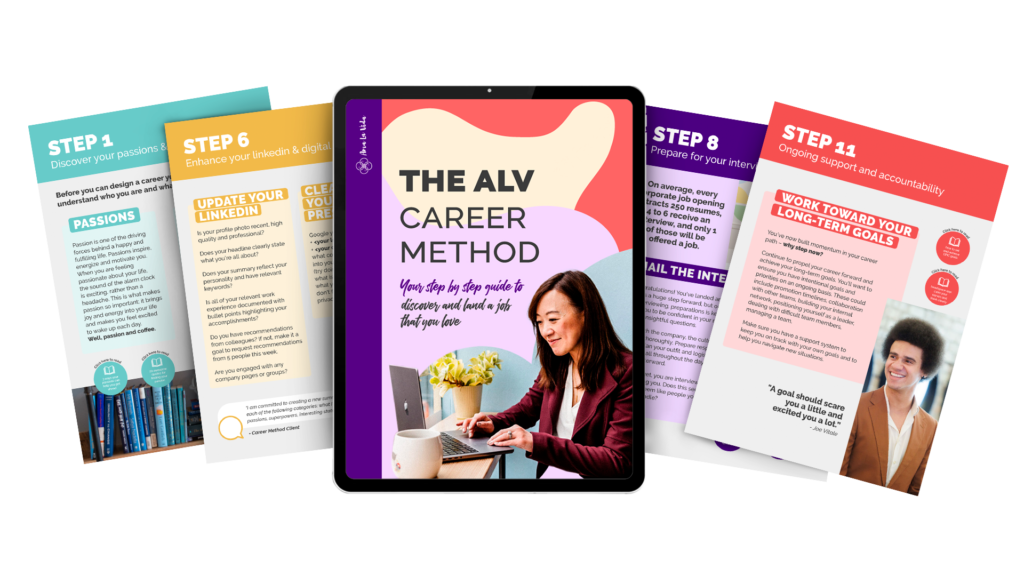
Download our comprehensive step-by-step guide to design and land a job you love!

Images from The ALV Career Method Guide
ALV Method Downloadable Guide

woman searching on computer

“Why can’t I find a job?” 🥵 This question haunts many job seekers, especially after applying to countless roles with little success. Searching for a job in today’s job market can feel incredibly frustrating and can undermine your confidence when your efforts seem to lead nowhere. Many job seekers throw themselves into updating resumes and using the “easy apply” feature to submit countless applications, often without considering their broader career goals or strategies. Tactics such as updating resumes with keywords—without first having the clarity—rarely bring success. In fact, the missing ingredients in most failed job searches are a clear understanding of career goals and the right mindset to approach the process. The Truth Is: It’s Not All About Technical Tips & Hard Work Working harder doesn’t always equal working smarter. Many job seekers believe that landing a job interview is just a matter of sending out more applications or fine-tuning industry-specific keywords on their resumes. And while these tactics are helpful, the reality is that true success in the job search comes from understanding your career direction and keeping the right mindset. To move forward intentionally, it’s necessary to spend time clarifying what you truly want, rather than relying on the “numbers game” of endless applications. You can have all the right practical strategies and tools in place, but if you don’t have a clear vision or a mindset that supports you through the ups and downs of your job search, it can be challenging to find sustainable success. Here are two essential elements to weave into your job search approach: Clarifying Career Goals: Do You Know What You Really Want? Before diving into your job hunt, take the time to ask yourself: “What do I really want?” Having clarity on your career path is crucial for finding roles and securing job offers that align with your strengths and ambitions. If you’re unsure about your next steps, working with a career coach can help you gain the insight you need to accelerate your search. View this post on Instagram A post shared by Ama La Vida | Online Career Coaches (@alvcoaching) Defining the specifics of your dream job—not just a job title—makes it easier to identify the right opportunities and approach the process with confidence. Shifting Your Mindset: From Job Search Frustration to Job Search Empowerment It’s easy to feel disheartened after receiving few responses and many rejections to your online applications, but a simple mindset shift can take you from job search frustration to job search empowerment. Instead of seeing each rejection as a setback, view it as a step closer to finding the right fit. Track and celebrate the small wins such as making it further in the interview process or even getting more views on your LinkedIn profile. By approaching your job search with patience and optimism, you can transform frustration into a more empowered mindset, which propels you toward the right role for you. Common Myths & Misconceptions About the Job Search Process There are common myths floating around like “the more applications, the better my chances” or “I need a lot of people in my network to get hired.” These stories are misleading and can lead job seekers down unproductive paths. In today’s job market, the quality of applications you submit is far more impactful than simply applying everywhere. Networking matters, but it’s less about the sheer number of contacts and more about building genuine professional relationships that open doors to meaningful opportunities. Don’t get trapped by these myths; instead, focus on applying for roles that match your skills and interests. Not only will this make the application process more strategic, but it also helps you feel more energized and confident when discussing your fit for a job opportunity. Let’s Myth-Bust Some Common Limiting Beliefs of Many Job Seekers It’s easy to get caught up in common beliefs that can hold you back. Some assumptions may feel like “rules,” but many are just myths that end up limiting your potential. Let’s debunk a few of these misconceptions and open up new paths to explore. “You need to meet 100% of the job qualifications to apply.” Truth: The hiring manager will often list an ideal “wish list” of candidate qualifications. If you meet around 70-80% of the requirements, are a good fit for the company and are excited about the role, you’re probably a strong candidate. Skills for a specific job can be learned, but enthusiasm and adaptability are invaluable. “No one’s hiring right now.” Truth: Even in challenging economic climates, companies are always looking to fill roles. Many industries are experiencing growth and change (such as tech companies), meaning there are consistently new opportunities to explore. The key is researching sectors that align with your skills and keeping an eye out for companies looking to innovate and expand. “Changing careers means starting over from scratch and needing another college degree.” Truth: Career shifts don’t have to mean starting from zero. Your transferable skills, such as leadership, communication, or project management, can apply across industries. Many companies value these foundational skills as much as industry-specific experience, so don’t assume you need a new degree unless it’s absolutely necessary. Common Job Application Mistakes & How to Address Them Job seekers today face some common challenges and can often fall into patterns that lead to frustration and missed opportunities. The typical online application process usually involves updating your resume with job titles and responsibilities, searching for the exact title you think you want, and then clicking “easy apply” on as many postings as possible. While it doesn’t necessarily have to be more difficult, in order to stand out in today’s competitive job market, you’ll have to use a more strategic approach. Let’s explore some of the most common online application pitfalls and how you can address them effectively to streamline your search and improve your results. Are You Applying for the Right Job Openings? Applying for a job simply because it offers more money can be a

Read More

In today’s competitive job market, mastering the art of managing up is essential for career advancement and success. But what exactly does it mean to manage up? And how can individuals navigate this skill to thrive in their professional lives? Understanding why managing up is hard can shed light on the intricacies involved in fostering effective relationships with your managers. Let’s debunk common myths, explore the benefits, and review the consequences of neglecting this vital skill. Then we can delve into the five best steps to empower you in how to manage up effectively and propel your career to new heights. Why Managing Up Is Hard Managing up isn’t merely about pleasing your manager; it involves aligning your efforts with their goals, preferences, and communication styles. The dynamic nature of workplace relationships, coupled with varying managerial personalities and expectations, can make navigating this terrain difficult. According to an article by Harvard Business Review, many employees are nervous about managing up because it sounds like extra time that most people don’t have in a day. Continue reading for actionable steps to make it easier. Debunking Myths About Managing Up Before diving into the actionable steps for successfully managing up, let’s address common misconceptions that can hinder your progress. By dispelling these myths, we can pave the way for a clearer understanding of what managing up truly means. Myth 1: Managing up is synonymous with brown-nosing. Reality: Managing up is about building rapport, trust, and collaboration with your superiors, which fosters a mutually beneficial relationship. According to Forbes, effective managing up involves advocating for your ideas and contributing to the success of the team. Myth 2: Managing up is only necessary for career climbers. Reality: A report by Gallup suggests that employees who have one meaningful conversation per week with their managers are more productive and fulfilled in their roles. When your manager sees your desire to support their goals, they will demonstrate more support towards you. Managing up is essential for professionals at all levels, ensuring effective communication, creating alignment, demonstrating your personal brand and productivity within teams. The Benefits of Effective Managing Up Now that we’ve debunked common myths about managing up, let’s explore the significant advantages that mastering this skill can bring to your career. By understanding these benefits, you’ll be motivated to invest time and effort into honing your managing up abilities. Enhanced Communication Skills: Mastering the art of managing up cultivates active listening, clear communication, and empathy, invaluable assets in any professional setting. In research published by Bucata and Rizescu (2017), they determined that effective communication with managers leads to greater organizational performance which is a benefit for you and your employer. Career Advancement Opportunities: A survey by Ladders (2019) found that 86% of “high-earning professionals” felt that managing up positively impacted their ability to be considered for promotions. Managing up will increase visibility, foster trust, and will position you as a valuable asset within your organization, paving the way for career growth and development. Improved Workplace Dynamics: Building strong relationships with your managers promotes a positive work environment, fosters collaboration, and enhances overall team productivity and satisfaction. Improving your manager relationship creates a more efficient workplace with greater team collaboration. Consequences of Ineffective Managing Up Neglecting to manage up effectively can have dire consequences. Miscommunication, misunderstandings, and a lack of alignment with your manager’s expectations can lead to decreased productivity, and missed opportunities for career advancement. Also, poor managing up skills can strain the manager/employee relationship by giving the impression that you are unresponsive, unreliable, or disengaged. This impacts your credibility with your colleagues and your manager. 5 Steps to Successfully Managing Up Now that we’ve explored the benefits of effectively managing up, let’s review five managing up strategies you can take to master this essential skill. By following these steps, you’ll be equipped with the tools and strategies needed to navigate your relationship with your manager and move your career forward. 1. Understand Your Manager’s Goals and Preferences: Take the time to familiarize yourself with your manager’s priorities, communication style, and expectations. Utilize tools like the DiSC assessment to gain insight into your manager’s behavioral preferences and adapt your approach accordingly. Another idea is to schedule a one-on-one meeting with your manager to discuss their short-term and long-term goals, and how you can align your efforts to support them. 2. Communicate Effectively: Maintain open lines of communication with your manager. This includes seeking feedback, and clarifying expectations as needed and, most important, providing proactive updates is key. For example, set up a weekly check-in meeting with your manager to provide updates on your projects and discuss any challenges or concerns you may have. Read this post for more ideas on what proactive communication might look like. 3. Build Trust and Credibility: Demonstrate reliability, accountability, and integrity in your actions, which will allow you to earn the trust and respect of your superiors as referenced in this post. A great tool to assess and enhance your trustworthiness is the ABCD Model by Ken Blanchard, Cynthia Olmstead, and Martha Lawrence. “A” stands for able and you demonstrate that you can complete the task. “B” refers to believable and this comes from your integrity. Being honest about your abilities and keeping your word supports this piece. Connected is what the “C” means in the model. Building connections requires not only your communications skills but also giving trust to others. Finally, the “D” is your demonstration of dependability. This requires that you follow through with what you say you are going to do. Using this model will allow you to build trust with your manager. 4. Adapt to Your Manager’s Style: Tailor your approach to fit your manager’s communication and leadership style, fostering better rapport and collaboration. For example, if your manager prefers concise communication, prepare brief status updates or reports for them instead of lengthy emails or presentations. 5. Be Solutions-Oriented: Instead of dwelling on problems, focus on identifying solutions and opportunities for improvement, showcasing your initiative and

Read More

Now that you are in charge, the staff is looking to you to make great things happen, and yet as a new manager, you are just trying to remember to turn right for the breakroom and left for the restroom! There is so much to do. Even the first staff meeting is overwhelming because you want to share everything with the staff. Use these tips to help you have an incredible first staff meeting that will set the tone for the culture you are building for the department. All eyes are on you as the new manager. The staff wants your guidance and your experience to help lead them to new success, and senior management needs you to drive the mission of the organization at the boots on the ground level. Being a new people leader can be a balancing act with great rewards. The first opportunity to set the right tone is during the first staff meeting. How do you share all the information during this meeting without making it overwhelming? You don’t. Instead, follow these three simple tips to make your first staff meeting amazing. “You have a meeting to make a decision, not to decide on the question.” Bill Gates TIP #1: PURPOSE What is the purpose of the meeting? Every meeting should have a clearly articulated purpose; without a purpose, the meeting is a waste of valuable time. This is your first chance to build the culture you want to establish for the team and while it might be tempting to cover all the lofty goals that you proposed to get the new role, the first step is to allow your team to get to know you. Establish time to share who you are, what is important to you, and why you are looking forward to working with this group to achieve great things. Take the time to find out what the team feels is the most pressing concern and why. Keep the focus of the meeting to the top one or two items and know that there is plenty of time to lay out your plan in the future. For the first meeting, make the team the priority. TIP #2: AGENDA When you applied for this role, did you walk into the interview prepared with data, examples of successful implementation you lead, and stories to explain how you support team members for growth, or did you wing it? Chances are you prepared, and you prepared a lot! It shows that’s the reason you were given the role. Now, prepare for your first meeting with the same intensity. After you have fine-tuned the purpose of the initial staff meeting, create an agenda to keep the topic on point. Meetings are an important part of the business world and because so many people feel it’s okay to “wing it”, meetings get a bad reputation of being time-wasters. Don’t let your meetings have this reputation – be intentional with your time. Determine how much time should be spent discussing the purpose of the meeting – your introduction to the team. By doing this activity, if you begin to get nervous during the meeting you can rely on the agenda to keep you on task, within time, and create a culture of appreciating your team members’ valuable time as well. That’s a win, win, win for all! There are several agenda templates available online for you to create one that will meet your needs. TIP #3: FOLLOW UP During the meeting, ask someone to be the note-taker so that you can focus on the conversation and not need to multitask. The key to note-taking is to ensure any outstanding topics are followed up on. For example, if part of your agenda includes asking for the top priority of the team and you need to follow up on resources to help make the top priority an easier process, make sure you provide feedback to the team on what you discovered. This follow up can take several forms: 1) email to the team with updates regarding topics discussed during the meeting and what you have discovered; or 2) if not urgent, it might be a line item of “old business” on the agenda during the next meeting that can be reviewed. The important aspect here is to ensure that you are building credibility by following up on items that you said you would investigate and reporting back to the team regarding the results of your inquiry. Team members appreciate leaders who do what they say and say what they do. “If you aren’t meeting regularly with your team, you don’t have a team. What you really have is a collection of boxes on an org chart.” Barbara Burke A bonus tip – these three steps should be used for each meeting you have, not just for the first team meeting. By getting into the habit of having a concise purpose for the meeting, an agenda that provides a guideline for the team, and finally following up on action items from the meeting you will build the culture that you want with the team and gain credibility through the process. Partnering with a certified leadership coach can help you build self-awareness, develop your leadership capabilities and maximize team performance. Now, go crush your first team meeting!

Read More

“Leadership is the ability to put the right people in the right jobs and then sit on the sidelines and be a rousing good cheerleader.” – Anonymous Recently, a client of mine said, â€śWhy can’t my staff seem to figure out how to motivate themselves? I have 6 office employees, and none work as hard as I do.” I know we all need to get it out of our system, so I let the venting happen for a bit. Then, it’s time to get down to asking the tough questions. As a leader, how are you showing up to help motivate your team? Are you doing more work than them because you are doing their work instead of your own work? In this situation, I shared the following ideas to help my client feel less frustrated and improve the workload in the office. 1. Identify if you are the problem. If you were promoted through the ranks, it can be far more comfortable doing the task because that’s what got you into the leadership role. However, a leader gets the work done by motivating the team members to complete the tasks. Of course, an employee will let you do the job if you want to. Allow the staff to do what they have been hired to do. 2. Align the work with the best person to do it. Some employees love to work on spreadsheets while others love to answer the phone. Allow staff to shine by using their strengths when possible. Find out what they like, what they do well, and where they have opportunities to grow. Use the delegated tasks to help them feel like they are contributing. And, for those tasks that no one likes, divide the workload so no one person feels it’s all on them. 3. Define all aspects of the expectations. As leaders, we are thinking about the next task even before we have finished delegating the current task. This skill set ensures things are done on time; however, it also causes us to rush through the explanation of the expectations. When delegating a task, cover each detail of the expectation. Include specifics such as where it needs to be done, what needs to be done, when the due date is for the task, how it needs to be done if there isn’t flexibility, and why it is important for the department to complete it. Then confirm the employee has heard and understood the expectations. 4. Follow up. Sometimes people forget details. Follow up with an initial email to reinforce the expectations. If the task is something that would take a week, schedule check-ins and send follow-up emails periodically. For example, send a check-in email a day or so after you delegated it to ensure the employee has the resources necessary to complete the task. Send another follow-up email two days before the due date to remind them of the due date and to see if they are on track to achieve the task on time. After they are done with the task, send a final email thanking them for the efforts and highlighting a specific area that they handled well. While there are more steps to being a good leader, the ones above will help you build motivation amongst your team and create an environment where everyone knows you are there to support their growth. ~Laura

Read More