Intentional Pressure: What Pottery Taught Me About Stretching Without Breaking
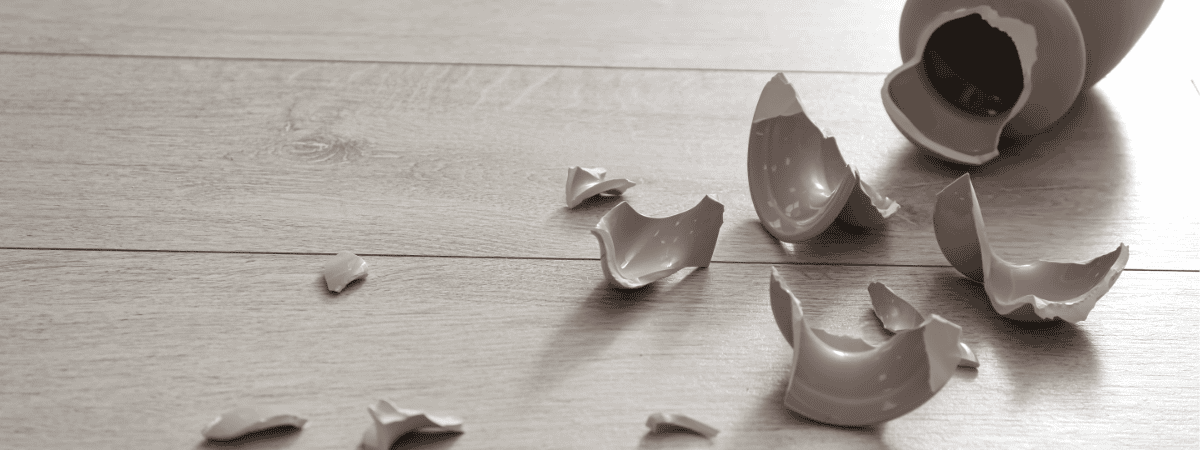
I was staring at what should have been a pretty vase with a round belly and a tall narrow neck, but it looked more like a wonky ball of clay.
After weeks of successfully throwing mugs, bowls, and yes… even plates, I had decided to challenge myself with something more creatively complex and demanding.
That day, our teacher had brought this beautiful bottle vase to the studio, and I decided that would be my next challenge.
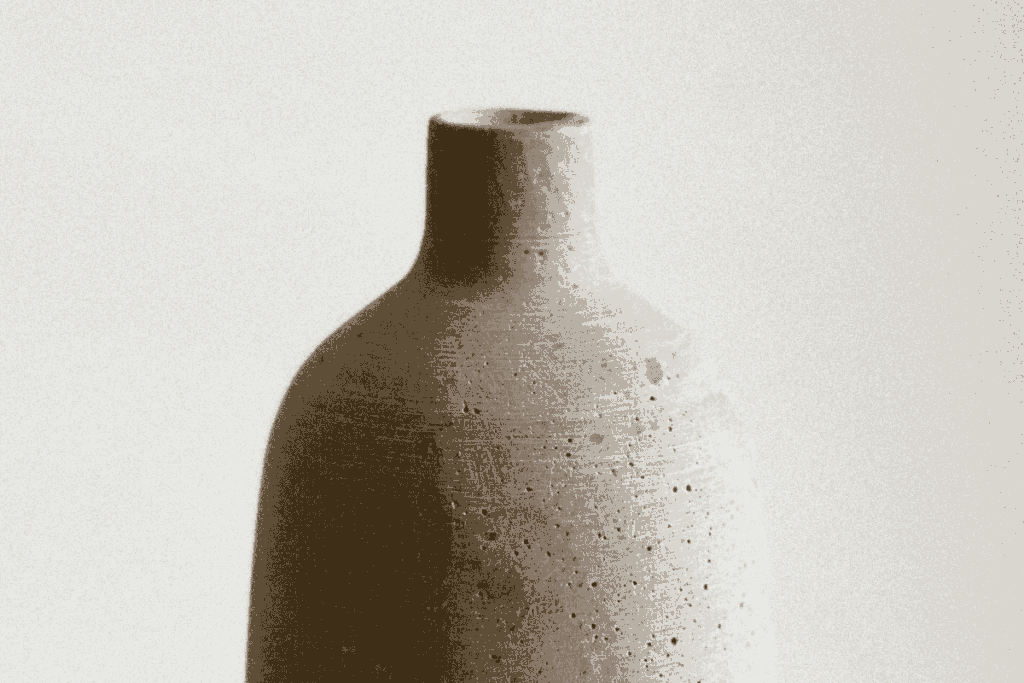
After a demo and some 1:1 coaching, my hands were trying to partner with the clay to get to the desired outcome. I was following each step carefully, trying to remember everything I had just seen and learned, and slowly but surely the frustration started building in my chest.
This was hard.
This was uncomfortable.
And this was not going to an easy 20 minute throwing session. This was about to take an entire hour.
Something about the struggle felt familiar from my work as a coach—I was watching someone (myself) navigate the messy, vulnerable process of growth.
The Discomfort of Growth
Those first attempts at pottery were humbling in ways I hadn’t expected.
My hands and my brain, usually confident in guiding others through career transitions, felt uncertain against the clay. I was reminded of the countless clients who have sat across from me, describing their resistance to taking on a challenging new project or considering a role that felt just out of reach.
There’s something deeply human about our instinct to stay where we feel competent, where we know we can succeed.
But here’s what both pottery and career development have taught me: there’s a crucial difference between productive discomfort and destructive stress.
Productive discomfort is that feeling when you’re stretching just beyond your current capabilities—your hands are learning new muscle memory, your brain is forming new neural pathways.
Destructive stress is when you’re forcing outcomes, fighting against your natural limitations, or pushing so hard that you’re likely to break something (or yourself) in the process. In other words, if the challenge becomes too much, we stop functioning in positive and supportive ways.
This reminded me of a graph I printed out years ago when I started coaching clients that’s been up on my wall in my office for all this time: the optimal tension curve, or stress performance curve:

The Paradox of Endless Possibilities
Walking into a ceramics studio for the first time can be overwhelming.
There are many different clay types, then you learn about hundreds of glazes and glaze combinations, countless techniques to master, the wheel, handbuilding, and infinite forms to explore. Functional or decorative pieces—the possibilities stretch endlessly in every direction.
It’s exhilarating and paralyzing at the same time.
I see this same paralysis in my coaching practice regularly. Clients come to me feeling stuck, not because they lack options, but because they have too many.
Should they pursue the MBA or focus on gaining more practical skills? Explore the startup world or aim for a role at an established company? Stay or leave? When they are ready to pivot, in what direction?
The abundance of choice quickly becomes a barrier to movement.
In pottery, I’ve learned that you have to pick a direction and start somewhere, even if it’s not perfect. You can’t master everything at once, and trying to do so often leads to mastering nothing.
The same principle applies to career development. Sometimes the best choice is simply to make a choice and begin learning from the experience.
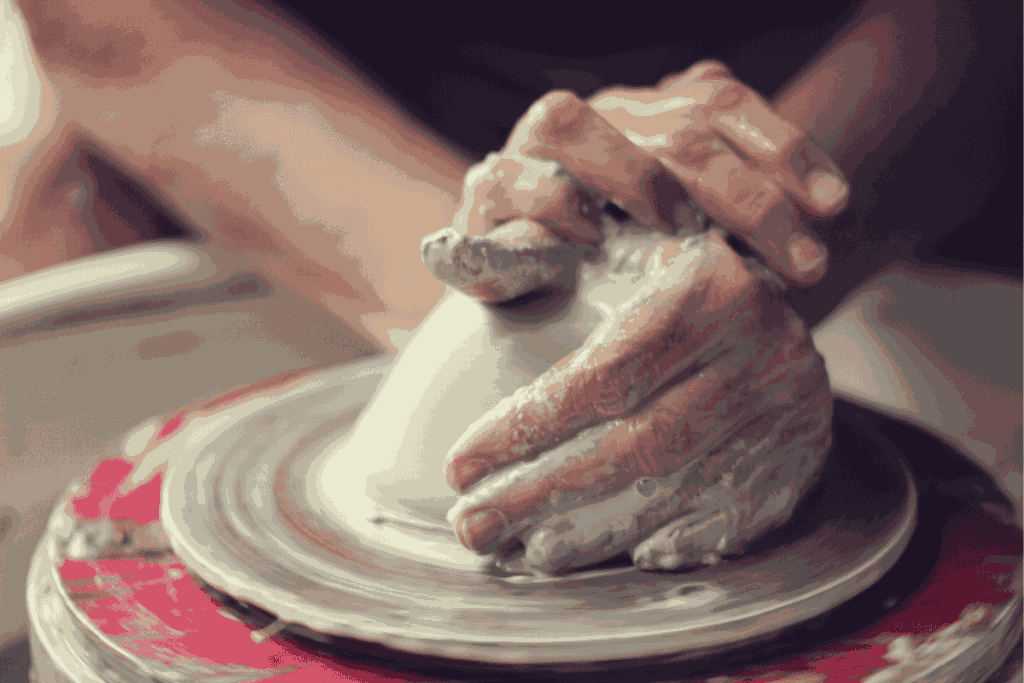
The Creative Flow as Mental Sanctuary
When I decided to start pottery classes last year, one of the things I was most looking forward to was how the creative process would benefit my mental wellbeing.
There’s something about doing something with your hands and exposing yourself to what is “new”, this complete focus that creates a meditative state I can’t replicate anywhere else. I’m still using the analytical part of my brain—the part that’s constantly strategizing and problem-solving for clients—when I’m throwing. But instead of strategizing for someone else, I problem solve in the moment, thinking about what the final product will look like. It is a very tangible process.
This creative flow has become non-negotiable in my week. After days spent helping others navigate complex career decisions, I need this space where my hands can work and my mind can wander.
It’s not just relaxation; it’s a different kind of thinking.
Again, being in that flow state teaches me about optimal challenge levels. When I’m working with clay and everything clicks—when the pressure is just right, the clay is centered, and the form is emerging as I envision it—I’m in that sweet spot where skill meets challenge.
It’s taught me to recognize this feeling and help my clients find it in their professional lives too.
Building Your Foundation Before You Stretch
In pottery, and most other crafts, there’s a progression that can’t be rushed. You learn to center clay before you learn to pull walls. You master basic shapes before attempting complex forms. Skip these fundamentals, and everything becomes an exercise in frustration.
The same principle applies to career development, though it’s often less obvious.
I’ve worked with clients who want to leap into senior leadership roles without first developing their ability to influence without authority. Others want to transition into completely new industries without identifying and building transferable skills or understanding the new landscape.
The temptation is always to jump ahead, to want the big breakthrough immediately.
These foundational elements are what make ambitious stretches possible rather than just wishful thinking.
When you have a solid foundation, the sea of possibilities becomes less overwhelming and more navigable. You can evaluate opportunities based on how they build on your existing strengths rather than feeling like you’re starting from scratch each time.

One Step at a Time
It was during one of my first pottery classes that our teacher warned us of the almost inevitable overwhelm students feel when they start learning about different techniques, tools, or clay bodies. She told us to take one step at a time. Every week, focus on one goal, and move on only when you feel you’re comfortable enough to keep going.
This approach is also how I coach clients through career growth, especially when the coaching is highly tactical.
Rather than overwhelming them with lists of all the skills they need to develop or all the networking they should do, we identify one meaningful stretch at a time. Maybe it’s volunteering to lead a cross-functional project, or taking on a mentoring role, or learning one new technical skill that’s adjacent to their current expertise.
Each step builds confidence for the next.
You’re not just building skills; you’re building your capacity for growth itself.
When to Push and When to Pause
It’s very likely that at some point, we are pushing too hard. In pottery you might feel that you have overworked your clay, or that the shape you are attempting is far too advanced for your skills.
In career development or any other personal or professional goal, maybe you’re feeling more overwhelmed than energized. Maybe the lack of progress is starting to wear you down.
These are signals that you might be in destructive stress territory rather than productive discomfort.
When that happens, the wisest choice is usually strategic retreat—step away from the wheel and start with fresh clay.
Take a break from your networking or your job search activities to get a fresh perspective. Or take time to consolidate new skills before attempting the next stretch.
This isn’t failure; it is wisdom. That’s what I call “intentional pressure.”
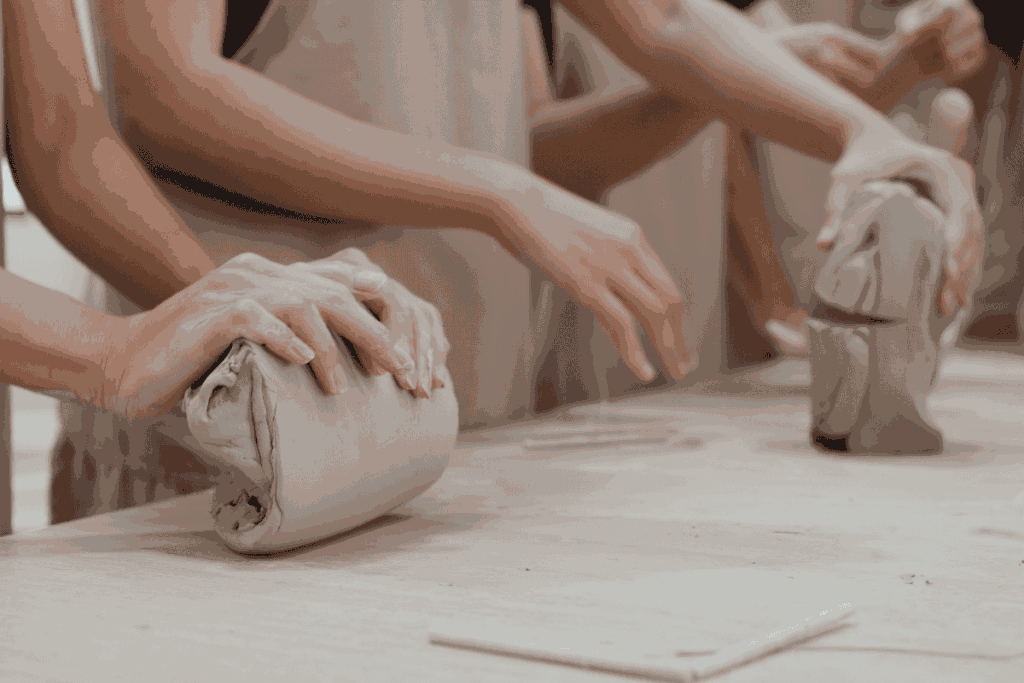
Ready to Apply Intentional Pressure to Your Own Growth?
Start by identifying one foundational skill in your field that you could strengthen over the next couple of months—something that feels achievable but slightly challenging.
In parallel, find your creative outlet: whether it’s pottery, painting, music, or gardening.Commit to one activity that puts you in flow state regularly.
Finally, practice the art of incremental challenge by choosing just one new stretch opportunity rather than trying to revolutionize everything at once.
Ask yourself: What’s my next meaningful stretch? And what creative practice will support me through it?
Here are a few additional Questions for Reflection:
- What foundational skills in your field feel solid, and which ones need more attention before you take on bigger challenges?
- When you think about your current growth opportunities, which ones feel like productive discomfort versus destructive stress?
- What creative activity or practice helps you access flow state, and how can you make more space for it in your week?
- Looking at your career “portfolio” so far, what evidence do you have of your ability to learn and adapt?
- Where in your life are you trying to do too much at once, and what would happen if you focused on just one meaningful stretch?
- What signals tell you when you’re pushing too hard versus when you’re not challenging yourself enough?
- If you were to choose one small, deliberate step toward growth this week, what would it be?
Keep Stretching, But Don’t Go It Alone
Growth—whether on the pottery wheel or in your career—takes intention, experimentation, and support. If you’re feeling ready to stretch but unsure where to begin, you’re not alone. Ama La Vida’s relationship strategists are here to help you clarify what kind of support you need and connect you with the right coach from our expert team.
Let’s find your next meaningful stretch, together.
Book a complimentary coaching consult or keep exploring with our guide: How to Find a Career Coach.