Author: Foram Sheth

number 12 hanging on a wall

12 years. 12 years is the average length of time between when individuals are promoted to management, and when they receive their first personalized leadership training. When employees are promoted their responsibilities include managing others, driving goals, engaging and developing their team. Most new managers don’t have any idea how to effectively accomplish any of these tasks. Why do we wait so long to invest in our managers when they are first given this responsibility? That is like helping your kid learn how to ride a bike at 17 years old after they’ve had 12 years on their own to figure it out and develop habits that they thought made sense. Can you image your kid at the age of 5 on their own trying to figure out how to balance, move the pedals, navigate the handles, and understand the right speed? I bet it’s nerve-wracking, chaotic and frightening. That’s similar to what new managers are feeling when they are given this enormous yet exciting responsibility of helping others succeed. Time and time again we see a common set of challenges when a new manager is promoted without appropriate personalized leadership training:  Bad habits set in. Similar to the bike example, Coach Katie warns, ”If you teach yourself to ski (or play tennis or anything else) without proper training, you build bad habits that become hard to break. That becomes your way of doing things. The same is true for managers. It’s easier to build good habits than it is to break bad ones and building good habits requires proper training and development.”  They are lost in their new role. An individual is typically promoted when she is successful in her role as an individual contributor; she has mastered the tactical aspects of her job. Once mastery is achieved, we naturally think it’s time to move on to the next challenge – to enable other people to be high achieving individual contributors towards a collective goal. While this comes with a better title and a pay bump, the newly promoted manager is off to the races trying to understand her new role, redefine what success looks like as a manager, what success looks like for her team, understand how to motivate her team members, along with learning how to have difficult conversations and the list goes on. Coach Teague adds, “New managers who are promoted into this role because they were successful in what they were doing often have zero training in how to actually manage. This can be disastrous!” ALV CEO Nicole experienced this and says, “I was fortunate enough to receive a lot of training on certain managerial topics: how to run a meeting, what to do if you have an HR issue, how to project manage. But I feel like these didn’t end up being the things I struggled with as a new manager like being promoted to lead a group of my former peers who were all older than I was. I wish I had more one-on-one support to navigate those types of situations.” By investing in your new managers in a personalized way, like through coaching, you are not just investing in their personal development – you’re improving the experience of their employees and ultimately impacting your company’s success.  They get frustrated. Newly promoted managers get frustrated and feel like they have been set up to fail because they aren’t excelling when that’s all they are used to. Due to the frustration and lack of training, newly promoted managers negatively impact team morale, the organizational culture and are likely to be a flight risk. Coach Sara says, “Too often companies wait until there is an issue before investing in developing the new manager.” By this time, emotions and conflicts have heightened and it takes more time and money to get back on track. They negatively impact the people around them. When an individual contributor is struggling on the job, it often just impacts their work product. But when a manager is struggling, that means a whole team of people is often impacted. This can be detrimental to the organization’s culture, morale, and team retention. It only takes one under-developed manager to cause turmoil and cost the organization more money than what it would cost to invest in coaching. We wholeheartedly believe that new managers need personalized and in-depth coaching to learn the leadership skills needed to enable themselves, their team, and the organization to run effectively and function highly. New managers need to learn skills beyond how to conduct performance management reviews and run effective meetings. Today, most new managers undergo management training which consists of E-learnings and/or workshops. E-learnings have a completion rate of 13% and one-off workshops are not personal enough or consistent enough to develop good habits. Managers cannot be given one-time E-learning or workshop. They need personalized coaching to understand themselves as a leader and how to utilize their strengths to positively engage their team members. When newly promoted managers are given personalized leadership coaching, it results in:  Feeling supported. In our current workforce, everyone is looking to be developed to be the best they can be. They want to have an impact and enable those around them. When you provide the personal attention and support managers need, they feel supported to succeed in their new role. Coach Ngoc says, “Coaching is a mirror for them to talk through situations and reflect. They might not have that type of outlet or support at work. If people run into challenges, they need to talk through it or else frustration can get pent up, leading to unhealthy behaviors. It’s also a place of no judgment and allows them to work through their challenges instead of being given an answer.” When this happens, there is an increase in confidence and they know they’ve been provided the tools they need to be set up for success in their new role. This leads them to want to do more and go above and beyond for

Read More

Congratulations! You’ve been promoted to a manager because you’re a rockstar, you did your job really well and you nailed it at being a subject matter expert. You’ve outgrown your role, and the next step up is being a manager. This is probably the biggest career step most people will make – the promotion from being an individual contributor to a manager. But now comes all of the responsibility. You’re responsible for managing a group, and what got you promoted will not be the same skills you need to succeed as a manager. Here’s what needs to change: 1. Your definition of success When you were an individual contributor, your definition of success looked in the form of “I need to do X really well and show results.” Your success revolved around tactical work and your personal contributions. As a manager, it’s a whole new ball game. Your definition of success is no longer about you; it’s about your team. This leads us to reframe our mindset and think about success through the performance and development of others. Your success is directly linked to helping your team members excel individually and bringing the team together to collectively work towards a common goal to advance your organization. 2. Invest in yourself Managing people is hard. There’s no manual, rule book or a one size fits all approach. Each individual is different, complex and has his/her own motivators, derailers, strengths, and opportunities. In order to navigate the people side of managing (which is 97% of managing), think about investing in yourself to learn the skills and build the confidence on how to cultivate effective leaders within your team and help them thrive. Seek out a coach to develop yourself so that you can coach others. The best way to teach is to be taught. 3. Step out of the details As an individual contributor, you were responsible for every single detail of your work. It was your job to be in the micro, and that’s what made you successful. Now that you’re managing other people, it’s nearly impossible for you to be in that level of detail. In fact, it’s dangerous for you and your team if you’re in that type of detail. A key part of your role is to keep a pulse on what’s going on with each team member, how it’s impacting the organization, communicate that to your boss and course correct as needed. Now that’s a lot to remember and keep moving forward. This is why you’ll have to take a step back and think about the bigger picture. Ask yourself, what’s the organizational goal and strategy right now? What’s our function’s role and strategy to support the organizational goal? What is my team’s part in supporting the function and organization forward? Once you have those questions answered, every action should support it. At any given time, you should be able to answer and frequently communicate how your team fits into the bigger picture and how your team is contributing to the bigger mission. 4. Don’t be the hero (or the martyr) It was nice as an individual contributor to be recognized for providing your manager a much needed analysis. Your manager saw a need for the analysis and recognized the impact it could have, so you stayed in the office until 10pm to get it done and save the day. That’s no longer your role. So now it’s your job to identify what the team, the customers or organization needs and identify the best person in your team who can deliver that. You are now supporting the hero and creating opportunities for your team to shine. It’s no longer about you burning the midnight oil for fame and glory but instead to allow your team to step up to have opportunities to learn and grow and to be recognized for their contributions (hopefully not at 10pm). 5. Recognize and celebrate every success and failure In this economy, people are wanting more for less. It can be hard to see the immediate impact or satisfaction, so remember to celebrate success every step of the way. Recognize others for their efforts, their strengths and for a job well done. And when things don’t go the way you originally planned, use that as an opportunity to learn about how to improve next time around. In safe environments, encourage taking chances as it will allow your team members to stretch themselves and innovate. 6. Know when to coach and manage There’s a big difference between managing and coaching. When you’re in a management position, it might seem natural to give out commands and let your team members know exactly what needs to be done and how. While this is appropriate sometimes, don’t let this be a default. Instead, think about coaching your team members to think the way you’re thinking about problem solving and empower them to come up with their own solutions. At Ama La Vida, we follow the RISE methodology for determining when to coach and when to manage. If there is a Right or wrong answer, if a team member is Inexperienced, if there is a Specific course of action that needs to be taken or if it is Essential to complete the task perfectly, then it is appropriate to manage and give clear instruction. In all other situations, do your best to coach your team member instead of manage. 7. Work yourself out of your role This might sound scary at first. You’ve just been promoted, and now I’m asking you to work yourself out of your role. An indicator of a good manager is how many people the manager is able to develop into new managers. Your manager helped you step into the management role by providing you with the opportunities you needed to step up. Now it’s your turn! Start with thinking through how you succeeded. You first had to master your role as a subject matter expert. Help your team members do the

Read More

“The two most important days in your life are the day you are born and the day you find out why.” — Mark Twain When we think about why we do what we do, it sometimes scares us or makes us feel uncomfortable. We may think, I’m not Mother Teresa or Martin Luther King or Mahatma Gandhi or Nelson Mandela with a grand sense of Purpose. That’s okay. You and I are not expected or required to have a magnificent Purpose statement. We simply need to understand our Purpose, big or small, own it and live it. Purpose is a very personal thing – it’s why you do the things you do, whether at work, home or in your community. It’s the ultimate driving motivator for you. Purpose provides clarity, meaning and direction and is your constant around everything you have done and will do. This doesn’t mean that your Purpose is the same throughout life; a common misconception about Purpose is that it is just one definitive thing. It isn’t. Purpose can take many different forms – some people may be finding their Purpose for the first time while others may be re-Purposing. Let me provide an example. Remember when you were in college and you were trying to figure out what you wanted to do and why you want do it? To answer those questions, you were thinking about your Purpose possibly for the first time. As we go through life, major events change our perception and how we view ourselves in the world. When kids leave the nest house, parents feel alone at home or when we are on the verge of retirement, we may ask ourselves, what is my Purpose now? As life changes and events occur, your Purpose may take another form or iteration. Allow yourself to explore that and understand how you can live out your Purpose in your current reality. So how does one find their Purpose? We’ve already given you the definition of Purpose but haven’t provided the background on how to get there. In order to understand your Purpose, we suggest thinking about what we at GenIN Solutions have identified to be the three core elements of Purpose: Passions – Understanding what makes you excited and gives you energy To understand your Passions, ask yourself, what are the things I do that make me lose track of time? Gifts – Understanding your unique strengths and talents To understand your Gifts, ask yourself, what do I get complimented on often? Values – Understanding your guiding principles To understand your Values, ask yourself, when faced with tough decisions, what factors do I consider to make the decision? Passions, gifts and values all work together to inform your Purpose and help you live your Purpose. When looking at it individually, passions fuel your Purpose, gifts support your Purpose and your values guide your Purpose. By articulating these three elements, you can begin to arrive at your Purpose. This Purpose should be a narrative that’s unique to you, informed by your strengths, your passions and your values. Purpose doesn’t have to be only one thing – it can be divided into Purpose at work and home. Let it be simple, let it be unique to you; there is no wrong or right Purpose, as long as it connects with you and what you want your life to be about. When you define your Purpose, you’ll find that you are more engaged at work, you have a greater sense of meaning and fulfillment both in life and at work. The Purpose movement is real – we are shifting from doing what society says we should do to finding our own path and creating our own map to get there. We urge you find your Purpose, own it, and live it.    [wd_hustle id=”webinar-sign-up”]

Read More

I, like many others I know, have a tendency to want what I don’t already have. Not necessarily in material goods, but in attributes and skills. When I moved to the US at a young age, I noticed the increased level of creativity my fellow classmates exhibited. They seemed so skilled at creating beautiful art and making cool crafts. I could never get my art to look like theirs. I didn’t have the same extraordinary imagination, the eye for colors, the technique to paint (inside) the lines. While I tried and tried, but I was barely mediocre. I would get frustrated that I couldn’t do what the other kids could. I questioned myself and my abilities – why am I not as good? After all, society and people often give you feedback on what you need to be better at, not what you’re already good at. I invested all of my energy and time into practicing and trying to be better, but that only frustrated me more. I would get upset and feel crappy that I wasn’t as good as the other kids. After observing my habits for years, my dad (who continues to be a big influence and my coach in life) sits with me and says:  “You have your weaknesses and you have your strengths. While you need to improve your weaknesses, don’t spend your life trying to make up for them. Do something that uses your strengths and people will recognize you and you’ll be happier.“ He was right. No matter how hard I try, I will never be Picasso. Nor will I be anything close to my talented classmates. It just isn’t my thing. I find that when we only focus on our weaknesses and ignore our gifts, we start losing confidence and feel more frustrated – I see this almost daily with my clients. What Are Your Strengths? As a coach, the majority of my conversations with clients start with them saying, “Here are all of the things I need to work on.” They then give me a plethora of things they want to work on. And while that’s great self awareness and dedication to improve, I respond back with, “Tell me about your strengths. What are they?” This catches my clients off guard.  They respond with uncertainty and hesitation, eventually providing me a list with a few strengths.  This list is typically half of the size of the things they want to improve on. I encourage my clients to flush out their strengths and once we have a comprehensive list of both strengths and weaknesses, we discuss how they can use those strengths to work on the things that need improving. For example, I recently had a client who wanted to be more assertive. This client identified empathy as a big strength, which led us to set strategies on how to be assertive while using empathy. She became particularly skilled at being assertive when needed while making sure it was done in a way that made the recipient feel heard and respected. Where Is Your Energy? In life – at work, at home – we all need to work on the things that we’re not good at. There’s no denying that. I often hear from clients that they need to be better with having difficult conversations. That’s a critical skill to have at work and outside of work and you should absolutely have the skills to have those difficult conversations. The problem I encounter is when all of the energy and effort is put into making the weakness a strength. You can work months and months on being able to have a difficult conversation; you do it so it’s not a detriment to you and your work and personal life. At the end of it, most likely, you’re not going to transform into the expert in having difficult conversations. Realistically, it might still be uncomfortable for you but manageable and no longer a detriment to you and your development. But all this time, what happened to your strengths? They were put on the backburner while you focused only on your weaknesses. Embrace Yourself: Be More Of Who You Are Now think Sheryl Sandberg. What comes to mind? Probably her remarkable book Lean In, her leadership at Facebook and her advocacy to build resilience and support women. Rightfully so – you recognized her for what she’s known for. One of Sheryl’s greatest strengths is being authentic. She embraces her strengths and she acknowledges her weaknesses. What if Sheryl spent all of her time working on her weaknesses? What if she didn’t use her strength of being authentic and speaking out against gender bias? If Sheryl Sandberg did not embrace her gift for being authentic and standing up for what she believes in, I’m not sure if Lean In would have been published. I’m not sure if the movement she created would exist. Sheryl Sandberg spent more time on her strengths rather than only focusing on her weaknesses and this contributed to the impact she has today. Often times I tell my clients to think of strengths as a muscle. You have to keep working it out so that it gets stronger and more defined. The more time and effort you can put into your strengths, defining it and refining it, the more you will be happier, confident and successful. After all, your strengths are what make you unique. Your strengths give you recognition. They make you more confident. We all know what Sheryl Sandberg is known for. What are you known for? “You cannot be anything you want to be – but you can be a whole lot more of who you already are.” ― Tom Rath

Read More

Have you ever walked into your colleague’s office looking for that very important time sensitive document only to find yourself in front of piles and piles of documents and scattered food remains? Imagine it – what’s going through your head? If you’re anything like me, you’re feeling anxious, stressed out about meeting your deadline, frustrated, and you curse out your colleague. How can he be so messy?! Now let’s imagine another scenario. You walk into your colleague’s office looking for that very important time sensitive document. You see the shelf with labeled binders and folders. You quickly search for the folder name, retrieve the document – find other documents that might help – and rush over to your desk to complete your task. How are you feeling now? What are you thinking? Besides the obvious of an organized workplace allowing for quick retrieval of documents, there are several physical and mental benefits, such as: It compartmentalizes your work. Consider our example above with an organized office – the document was quickly found because it was in its rightful, clearly labeled folder. And there were additional supporting documents that were not even considered before, which turned out to be helpful. Organizing your office/desk/cubicle helps separate the clutter of the many simultaneous deadlines, projects, and clients, allowing us to focus on the specific client or project at hand. It reduces stress. The physical appearance of clutter brings about anxiety, therefore leading to stress, a sense of feeling overwhelmed and frustrated. An organized workplace allows for quick retrieval of the right document at the right time not only for yourself but for others in the office such as coworkers, bosses and clients. It shows you care. You don’t ever walk into the office with disheveled hair. Why not? You don’t want to look sloppy and of course you want to show off your beautiful hair. Your physical workplace is a reflection of you. And others form perceptions of you based on your workplace. An organized workplace shows pride, loyalty, a sense of caring and responsibility. Next time you contemplate whether or not you want to organize your workplace, think about that one person in the office who is always dressed immaculately. Either you hate this person for being so damn put together or you’re this person. Either way – people know you care about yourself, how you look, and you seem very polished. And that’s just an outfit. Imagine what people may perceive when the workplace is organized. It saves time. You had your Friday outfit all planned on Thursday night. You wake up Friday morning and walk over to your closet for that new shirt. You can’t find it. You frantically start looking everywhere and you still don’t find it. You then go through the 5 stages of grief – you even negotiate to skip happy hour to find that top but you still don’t find it. You’re left with no choice and you pick another outfit, ruining your whole day. Pretty rough day, huh? Similarly, with an organized workplace, you’ll find things more quickly, you feel less frustration, and you’ll find yourself saving time that would have otherwise been wasted looking for that lost document. Tip 1: Organize your digital life I remember an instance where I needed to create a deliverable for a client. I had done something very similar at a previous project so I search my laptop, my emails and of course I couldn’t find it. I spent three hours putting together a document that I had already done before. I was so irritated. This is when I got my butt into gear and decided to organize my files. Take a look at your desktop right now. Do you have files covering every inch of your screen? Do you struggle to find documents or have short term memory like me and don’t remember where you saved something? This can be fixed by organizing your digital life. Here’s how: Step 1: Categorize all projects and recurring actions Think about your day yesterday. What were you doing? How did you spend your time? You may be involved in several projects, some internal initiatives, and you have to submit time and expenses. For all recurring projects and activities, create folders with clear labels for easy access. Step 2: Create a filing system For any emails or documents pertaining to a category created, be sure to file only under that folder. This organized system will help you review documents at a glance, put together summaries or refresh your memory when you need it. This filing system will save you time, energy and chaos of seeing 291293 emails in your inbox, leaving you with only the very important follow up emails in your inbox and space on your screensaver for those very cute golden retrievers. Step 3: Have a consistent naming convention I can’t stress this one enough. There will be times that you forget where you stored that document. By labeling your documents the same way every time, it also avoids any version control issues. My suggestion for naming convention is this: TOPIC_TITLE_ _DATE_VERSION. Having a version such as draft_v2 will prevent you (hopefully) from working on draft_v1 – an outdated draft. Trust me, this may happen when you’re working late nights so avoid the hassle by being diligent about your naming convention. Doing this will not only save you HOURS of time from having to reinvent the wheel but it will also save you a lot of frustration and stress. You’ll also look like the hero when you respond to an email right away because you were able to find the exact information you needed. Not to mention, the next time your boss asks for a document while hovering over you, you can get it to him immediately so he backs off, allowing you to do more important work, like stalking your ex on Facebook. Tip 2:  Organize your to-do list: When you walk into the office in the morning,

Read More

I’m happy and I’m sad. I like being with people and I like to be alone. I like risks and I am cautious.  Do I sound like a confused teen who doesn’t know who she is? Perhaps. But I think I don’t have to be one thing or the other. I can be both and so can you. We don’t have to be boxed into thinking that we have to be this or that. No. Life isn’t that simple and shit is complicated. People are complicated. I recently read a great book called Decisive: How to Make Better Choices in Life and Work by Heath and Heath and they talk about this concept of widening your options. To get away from using the word OR and replace that with AND. This can be applied to work – you’re being presented some options and they say you can go with option A or option B. Well if we reframe the way we think, then we can ask why not both or why not an alternate option – like option C? The same goes with people. You can feel and be multiple things at any given time and that’s okay. Just because you’re a happy person and you like to be with people doesn’t mean you also don’t have days where you don’t care about anything and you want to be alone. That’s not an “off” day – that’s just you being you. People and society like labels. They like perfect words and descriptions of who people are so that they can predict how they’ll act. If I said I was an extrovert, what comes to mind? I enjoy being with people, I like to talk out loud, I like to try new things. Now what if I liked being alone after a long day at work? What if I needed time to process things? Are you going to call me an introvert? You’ve labeled me to fit me into one box because that’s your schema of how things work and who people are. We can’t approach life with labeling people with one descriptor and we also don’t have to label ourselves that way. You have unlimited words to define yourself and the more context you can provide as to who you are and what you like and don’t like, the better people can understand you and not make assumptions. If there is anything you should take away from this, it is not to be limited by the OR options and the OR people of the world. You can be it all. You do not fit into a simple term – you are not introverted or extroverted. You are not type A or type B. You are not a hippie or a cowboy. You can be introverted and extroverted – it’s your preference who to be when. When you label as one or the other, you play into that role and you start seeing things the way you are asked to see it. That’s not you. You are complicated and you are unique and you are you. As Heath and Heath say, widen your options. Because if you don’t, I guarantee you’ll miss an opportunity. You gotta do you. All of you. Want more from Ama La Vida? Sign up for our newsletter 🙂

Read More

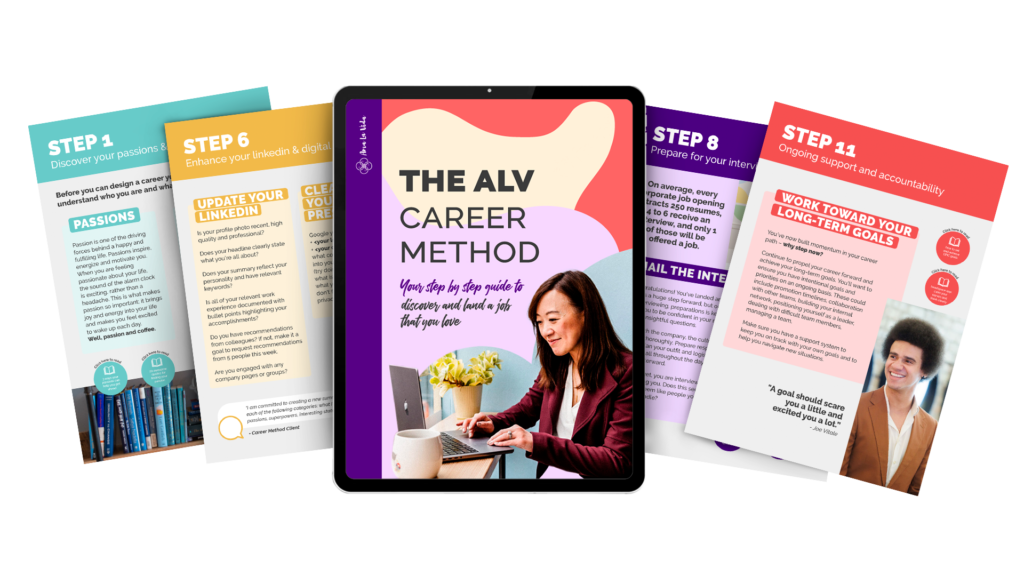
Download our comprehensive step-by-step guide to design and land a job you love!

Images from The ALV Career Method Guide
ALV Method Downloadable Guide