Author: Natalia Tamburini

man on conference call on laptop

If you’re contemplating a career change but feeling stuck, scared, uncertain or overwhelmed, career change coaching may be just what you need. Stepping into the unknown and taking risks can be hard—yet staying on a path that no longer fulfills you and your needs can be even harder. Career change coaching is your roadmap to navigating the unknown with clarity and confidence. We know the hardest part of any career shift is figuring out what to do next. That’s where Ama La Vida comes in. You’re in the Right Place If… View this post on Instagram A post shared by Ama La Vida | Online Career Coaches (@alvcoaching) If any of the above resonate with you, then career change coaching is the answer you’ve been looking for. Pursuing a career change is a significant life event—one that often comes with an emotional rollercoaster ride. But with the right support system in place, you’ll feel more empowered to make decisions that align with your vision and purpose. In this blog post, we’ll break down the intricacies of career coaching, how it can benefit you, and some practical tips on getting started. We’ll also dive into success stories from two past clients, offering real-world examples of how they leveraged career coaching to build lives and careers they love. What Does a Career Change Coach Do? Ama La Vida’s career coaches provide a lot more than resume review, job search support, and interview prep. Our coaching program follows a holistic approach to aligning your next role with your core strengths, interests, values, and goals. Successfully transitioning careers requires reflection, strategic planning, and emotional resilience. If we skip the deeper work and rush the process, you may find yourself back at square one a few months or years down the line. Whether you’re completely switching industries or pursuing a slightly different role in your current field, working with a certified professional coach can give you the structured support, guidance and accountability needed to identify your next steps and stay on course. Your career coach has expertise in analyzing your past experiences, uncovering problematic patterns, and mapping out how your transferable skills apply to new positions. Key areas a career change coach focuses on: Self-assessment and reflection: Identifying your strengths, passions, and values. Goal setting and strategy: Creating actionable steps to move toward a new career. Transferable skills analysis: Understanding how your current skillset can be applied in different roles or industries. Motivation and encouragement: Offering emotional support and strategic guidance throughout the coaching process. Accountability: Keeping you on track with your career plan and ensuring follow-through on goals. How Can Career Coaching Help Me Switch Careers? The Ama La Vida coaching process is grounded in real-world results, empowering you to take clear, intentional steps to achieve your goals. We’ve honed a structured process that utilizes evidence-based methodologies to help you explore possibilities, confront challenges and map out a strategic action plan. Here are some of the key ways career coaching can guide and support you at every stage of your career journey: Clarify Your Career Goals You may know that you’re not happy with your current career path, but not know how to improve or change your situation. A career coach is a sounding board, helping you open your mind to new opportunities. They will ask questions to dig deep and clarify what kind of new role or career path aligns with your life vision and professional goals. Together you’ll set EPIC goals that are elevating, practical, impactful and clear. Having clear goals is great, but your coach will help you take it one step further to ensure your goals are meaningful and reflect what’s truly important to you. It’s important to find fulfilling work that also meets your needs, so you can determine your best next steps. Identify Your Transferable Skills One of the key challenges in a career transition is recognizing how your current skills can be applied to a new role or industry. Your coach will work with you to uncover your transferable skills and guide you on how to position them to succeed in a different context. Before you start applying you’ll need to understand the connection between your dream job and your existing knowledge, skills and expertise. With your coach you’ll assess any skill gaps and discuss how to creatively fill them (you may not have to go back to school!), while also focusing on how to develop and leverage the skills you already have. Create a Strategic Action Plan It’s easy to feel overwhelmed when you’re pursuing a BIG goal like a career change, but a structured career plan keeps you focused and organized. Your coach will help reverse engineer the process and break down your big-picture goals into into digestible steps, ensuring you always know what to do next. Build Confidence and Overcome Imposter Syndrome Having the right mindset can be the deciding factor in whether or not you have a successful career change. A career coach helps you identify the mental roadblocks that might be holding you back, like fear of failure, self-doubt, or that persistent voice whispering, “Are you sure you’re good enough for this?” If you’ve ever felt like an imposter in your own career journey, you’re not alone. In fact, it’s so common that we’ve dedicated an entire article to overcoming imposter syndrome. A coach can help you recognize these self-deprecating thought patterns and develop strategies to quiet your inner critic. You’ll gain confidence and move forward believing that your dream job is within reach. View this post on Instagram A post shared by Ama La Vida | Online Career Coaches (@alvcoaching) Tactical Job Search Support Once you’re ready to start turning your dream career into reality, it will be time for some tactical support. Even if your career coach doesn’t specialize in a specific area of job search support, Ama La Vida gives you access to a diverse team of expert coaches through “celebrity sessions**”** included with your coaching membership. Whether

Read More
young professionals talking at a coffee shop

“Networking” often brings to mind stuffy suits, formal events, and exchanging business cards like candy. But what if it didn’t have to be this way? Here at Ama La Vida we like to embrace creative networking strategies that involve thinking outside the box to make building connections more enjoyable and effective! In today’s career landscape, networking is an essential part of job searching and career growth. Gone are the days of submitting mass applications and waiting for opportunities to come knocking. Modern professionals are shifting their approach, realizing that building genuine connections is often more valuable than sending out dozens of resumes. By cultivating relationships, you create a network that supports your growth and opens doors to unexpected opportunities. What is Networking, Really, Anyway? Networking doesn’t have to fit into a traditional mold. Think of it as simply getting to know and connecting with others. Whether chatting at a coffee shop, attending a meetup, or sparking a conversation online, you’re networking. View this post on Instagram A post shared by Ama La Vida | Online Career Coaches (@alvcoaching) It’s not about wearing a suit or handing out business cards at a formal event—it’s about building genuine relationships wherever you are. By shifting your mindset and embracing the spontaneity of connection, you take the pressure off and make networking a natural, enjoyable part of your everyday life. Shift Your Mindset: Get Excited About Networking, Not Psyched Out When it comes to networking, many people feel anxious or overwhelmed. But by shifting your mindset, you can turn it into an enjoyable experience rather than a stressful obligation. Instead of focusing on gaining something right away, focus on building and strengthening relationships. View this post on Instagram A post shared by Ama La Vida | Online Career Coaches (@alvcoaching) Shifting your perspective can make networking more exciting and less daunting. By focusing on building genuine relationships rather than advancing your career, you create opportunities that foster both personal and business growth. Remove the pressure and enjoy the process of meeting new people in a way that feels natural and fulfilling. The more relaxed and authentic you are, the more likely you are to build meaningful and lasting connections. The Power of Creative Networking Creative networking allows you to connect with like-minded individuals who share your passions, making the process feel more personal and engaging. By showing enthusiasm and a genuine desire to learn more about others, you position yourself as someone people want to engage with. Wouldn’t it be great if networking felt less transactional and more authentic? When you think outside the box, you stand out from the crowd and form meaningful relationships that can lead to new opportunities, increasing your chances of accessing the hidden job market. In fact, according to CNBC, 70% of all jobs are even published publicly and as much as 80% of jobs are filled through connections. Unconventional Networking Events Traditional events like happy hours or professional workshops can be valuable, but they’re not the only way to network. Exploring unconventional settings may make it easier to build relationships in a more relaxed and fun environment. Here are some creative networking opportunities to consider: You could even start your own group where participants can connect around similar interests. When you’re part of a group that shares your passions, the conversation flows naturally, and meaningful connections are much easier to form. Being proactive in creating these spaces gives you the chance to interact on a personal level and foster collaborations that extend beyond the event itself. Remember, the goal of networking is to meet people who share your interests and passions. By stepping outside your comfort zone, you’ll cultivate a network that feels more authentic and aligned with your personal and professional goals. Leverage Social Media with Creative Networking Skills Social media platforms offer a wealth of opportunities for creative networking. In today’s digital world, networking is no longer confined to in-person events. LinkedIn, Twitter, Instagram, and Facebook offer spaces to build and nurture relationships globally. Leveraging social media for networking enables you to connect with more people in your field, maintain those connections, create more opportunities for yourself, and foster growth in your career. Here are some ways to creatively network through social media: Through social media, you can maintain and grow your networks by regularly interacting with your connections. Sharing articles, commenting on posts, or engaging in group discussions helps keep your relationships active and strengthens your professional ties. Creative Networking Tips for Introverts For introverts, networking can feel overwhelming and draining. However, there are creative ways to make it more comfortable. The key is to find environments and approaches that feel less intimidating. View this post on Instagram A post shared by Ama La Vida | Online Career Coaches (@alvcoaching) Here are a few creative networking strategies that work well for introverts: Another great tip for introverts is to prepare thoughtful conversation starters before attending a networking event. A well-thought-out question or comment can instantly break the ice and lead to flowing conversations. Stand Out with a Creative Introduction or Conversation Starter Your introduction is your first impression, and a creative one can make a lasting impact. Whether you’re meeting someone in person or online, having a unique introduction will help you stand out from the crowd. The point is to engage others in a way that showcases your personality and expertise, making connections that can expand your network and open up new opportunities. Here are some ideas for making a memorable first impression: A memorable introduction isn’t just about impressing people; it’s about connecting with those who share your interests. Follow Up with Flair: The Art of the Creative Follow-Up After a networking event, the follow-up is crucial to solidifying new connections. A well-crafted follow-up message can help you stand out and keep the relationship alive. Here are some creative ways to follow up: Maintaining and nurturing your network takes time and effort, but with creative follow-up methods, you can build lasting relationships

Read More
young professional working on laptap and taking notes

The decision to quit a job is a significant one, often fraught with mixed emotions. While it might seem like the only escape from a toxic work environment, burnout, or career stagnation, it’s worth exploring other options before making a drastic change. This blog post will delve into five strategies to help you reevaluate your current situation and potentially find fulfillment within your existing role. Is Quitting Really the Answer? The urge to quit often stems from a mismatch between your personal and professional needs. Common reasons for job dissatisfaction include feeling undervalued, lacking growth opportunities, experiencing poor work-life balance, or simply being bored. Before you resign, take some time to pinpoint the exact issues causing your discontent. Are they specific to your role, your team, or the company culture as a whole? Understanding the root cause can help you determine the best course of action. To gain clarity on your reasons for wanting to leave, try journaling or discussing your feelings with a trusted friend or mentor. Reflect on your job satisfaction over time. Have there been periods of fulfillment? What changed? Identifying patterns can provide valuable insights into your career goals and priorities. Set Boundaries and Honor Them Feeling overwhelmed and burnt out? Setting clear boundaries between your work and personal life can significantly improve your job satisfaction. Establishing limits on your workload, availability, and after-hours communication can help prevent burnout and create a healthier work-life balance. View this post on Instagram A post shared by Ama La Vida | Online Career Coaches (@alvcoaching) Start by analyzing your current schedule. Are you consistently working long hours? Are you taking breaks? Are you dedicating enough time to personal activities and hobbies? Once you identify areas for improvement, begin implementing changes. Communicate your new boundaries to your colleagues and manager, and be firm in upholding them. Remember, setting boundaries isn’t selfish; it’s essential for your well-being and productivity. Try this! Create a weekly schedule that includes work hours, personal time, and dedicated relaxation activities. Be realistic about your workload and avoid overcommitting. Change Your Environment Sometimes, a change of scenery can revitalize your job satisfaction. If you’re feeling stuck in a rut, consider making adjustments to your work environment. This could involve reorganizing your workspace, finding a new spot to work remotely, or even taking a short break to recharge. Think about what elements of your environment contribute to your productivity and well-being. Do you prefer a quiet space or a bustling atmosphere? Do you need access to natural light? Experiment with different settings to find what works best for you. Remember, even small changes can have a big impact on your overall mood and motivation. Try this! Create a list of factors that influence your work environment, such as noise level, temperature, lighting, and decor. Identify areas for improvement and brainstorm potential solutions. Redesign Your Role If you enjoy your company culture and colleagues but find your current role unfulfilling, consider exploring opportunities for role redesign. By taking on new responsibilities or projects, you can gain new skills, challenge yourself, and find greater satisfaction in your work. Start by identifying your strengths, interests, and career goals. Discuss your aspirations with your manager and explore potential opportunities within the company. Be open to taking on additional responsibilities or projects that align with your career path. Remember, role redesign is a collaborative process, so be willing to compromise and find solutions that benefit both you and the company. View this post on Instagram A post shared by Ama La Vida | Online Career Coaches (@alvcoaching) Try this! Create a list of tasks and responsibilities you enjoy and excel at. Identify areas where you would like to develop new skills. Discuss your career goals with your manager and explore potential opportunities for role expansion. Lean into Social Capital Your professional network can be a valuable resource for career growth and development. Building strong relationships with colleagues can open doors to new opportunities, provide mentorship, and create a supportive work environment. Take the initiative to connect with colleagues from different departments and levels of the organization. Attend company events and participate in team-building activities. Seek out mentors who can offer guidance and support. By investing in your relationships, you can create a more fulfilling and rewarding work experience. Try this! Identify key individuals in your company who can serve as mentors or sponsors. Reach out to them and request a meeting to discuss your career goals and aspirations. Redefine Your Why Sometimes, the key to job satisfaction lies in finding meaning and purpose outside of work. If your job is no longer fulfilling your personal or professional goals, it might be time to redefine your “why.” This could involve pursuing hobbies, volunteering, or spending more time with loved ones. Take some time to reflect on your values and priorities. What truly brings you joy and fulfillment? How can you incorporate these elements into your life, both inside and outside of work? By finding meaning and purpose beyond your job, you can gain a new perspective and approach your work with renewed energy and enthusiasm. Try this! Create a list of your personal values and goals. Identify ways to incorporate these into your daily life, both at work and at home. Remember, leaving a job is a major decision. By exploring these strategies, you may discover new opportunities for growth and satisfaction within your current role. If you ultimately decide to pursue a new job, the insights gained from this process will help you find a position that better aligns with your career goals and personal values.

Read More
woman working on coach with laptop

Creating a fulfilling career requires more than just a day-to-day approach. In this blog post, we’ll dive into the practical aspects of crafting a clear career plan. By envisioning where you want to be in five years and establishing long-term goals, career planning becomes a tool that directs your path to professional fulfillment. What is a career plan? A career plan is a strategic roadmap that guides your professional journey from aspirations to reality. Think of it as a practical approach to understanding yourself and the opportunities around you. Why do I need a career plan? As we delve into this exploration, two key reasons emerge, shedding light on the significance of thoughtful career planning. From navigating the complexities of making decisions to the pursuit of the most aligned job, the answers lie in creating a life that resonates with our unique definition of success and strategically setting ourselves up for long-term career goals. Create a job that aligns with your definition of success If you’re going to spend ⅓ of your life doing something, you might as well make it something you’re interested in! Investing time and effort into a career plan helps you to consciously mold a career that aligns with your own personal definition of success. This involves a deep dive into your values and interests, ensuring that the choices you make are driven by genuine passion rather than external expectations. Your career plan is about being actively interested in what motivates you, and crucially, not solely relying on well-meaning advice from family members or friends. To craft a fulfilling career, you must chart a course based on your unique compass, steering clear of external pressures and embracing a path that authentically represents your aspirations. Set yourself up for long-term career goals Most people only think about career planning when they’re already actively looking for a new job, yet it is having a strong strategic foundation that offers you long-term success. Whether defining a specific career path, contemplating further education through graduate school, or deciding the next course of action, a well-thought-out plan is indispensable. By deciding thoughtfully today, you can pave the way for a successful and fulfilling professional future. When to start the career planning process It’s never too late When it comes to intentional career development, the notion that it’s never too late to start exploring is a liberating idea. Career planning is not a rigid framework; instead, it’s an adaptable concept that accommodates individuals at any juncture of their professional lives. Whether you find yourself contemplating a change in career field or transitioning into a new phase of your career altogether, the key is to begin the process of exploration. By exploring career options, you open yourself to a myriad of possibilities and ideas, which can give you a sense of empowerment and control over your career trajectory. It’s about acknowledging that the journey is ongoing, and every moment presents an opportunity to initiate change and set a new course towards a more fulfilling professional life. It’s never too early On the flip side, recognizing that it’s never too early to begin the career planning process is crucial, especially for those stepping into the workforce or considering entry-level positions. Starting to formulate and complete initial career plans at this stage is a proactive move. While the early phase of a career might seem like an exploration in itself, having a clear vision and pursuing defined goals can significantly impact long-term success. By initiating your career planning early on, students and entry-level workers can proactively shape their career paths, ensuring that each step aligns with their aspirations. Whether you’re pursuing a specific career field or actively pursuing opportunities, the key is to begin developing a career plan, laying the foundation for a resilient and purpose-driven professional journey. One example would be strategically planning your extracurricular activities or choosing a focus for the courses you take in school. If you already have an idea of the position or jobs you’re targeting, it can help you achieve your goals much faster. The career planning process While there are various ways to approach creating a career plan, a structured method provides a solid foundation to begin the process. Step 1: Set career goals Embarking on your career planning journey begins with a critical first step: setting clear and meaningful career goals. Here are a few reflection questions you can use to develop some clear career planning goals: Setting these career goals not only establishes a roadmap for your immediate actions but also lays the foundation for a purpose-driven and fulfilling long-term path. By answering these reflection questions, you can gain a deeper understanding of your aspirations and set goals that resonate with your values, interests, and ambitions. Step 2: Do some research Now that you have a clearer vision, it’s time to delve into the realm of research for some career exploration. There are many ways you can start researching what opportunities might be a good fit for you based on your goals, but here are a few of our favorites: Online resources and websites: There are so many wonderful resources online to help you easily understand what different career paths can involve. Networking and informational interviews: Once you’ve narrowed down some of your career options that interest you, you can dig a little deeper by talking to people with more experience in those roles or companies to help you decide which ones you’d like to pursue. Educational and training programs: Not all careers require additional education, but developing new skills can be a wonderful way to expand your career options and even improve your personal fulfillment at work. Remember, the key is to gather a diverse range of information from multiple sources. This will enable you to make well-informed decisions about your career path, aligning your skills and interests with the demands of the job market. Step 3: Work backward Once you have some goals and ideas running around in your head, you may start

Read More
woman smiling waving at computer

“People are like stained-glass windows. They sparkle and shine when the sun is out, but when the darkness sets in their true beauty is revealed only if there is light from within.” Elisabeth Kubler-Ross It’s pretty common that most of us feel pretty confident when we do something well, or get positive feedback, or someone else approves of what we have done. But what about the times that we’re not feeling so hot, or we make a mistake, or when we do well, and everyone compliments us, and we still feel like an imposter? Those moments call for tapping into self-compassion to increase your self-confidence and develop a deeper level of high self-esteem. Before we dive into the how, let’s get clear on some of the terms we’re going to be talking about.  A Three-Piece Band Self-Confidence is your belief in yourself and your abilities. This can change depending on the situation. It’s normal to feel quite confident in some circumstances and less confident in others. Self-Esteem refers to whether you appreciate and value yourself. Your self-esteem develops and changes as a result of your life experiences and interactions with other people. Self-Compassion: Instead of mercilessly judging and criticizing yourself for various inadequacies or shortcomings, self-compassion means you are kind and understanding when confronted with personal failings or challenges. While these three terms are sometimes used interchangeably, they actually are more like three members of a band, building on each other and creating a certain type of harmony. When one of them is off, the rest can’t quite fall into rhythm either. But when we take the time and care to fine-tune one, it encourages the others to follow the beat 🙂  Today, we’ll focus on a few simple tips to tap into self-compassion in your day-to-day life so you can start to see your self-confidence grow and start to build a deep-rooted sense of self-esteem.  Treat Yourself as You Would a Friend Imagine if a friend called you before a big presentation or interview for a job, and you spoke to them the way you speak to yourself. “Oh, you’re nervous? Well, you’re probably going to fall flat on your face anyways, and everyone will think you’re a phony. You’re definitely not good enough to do this” Can you imagine ever saying this out loud to someone you love? No way!  Next time that your self-confidence needs a little bump, show up with kindness and love. What would you actually say to a friend? Maybe it’d be something like: You’re going to do great, I heard you practice – you got this! Or, Oof, I feel you! Interviews are always nerve-wracking. Want to go to a yoga class in the morning to get grounded? This may seem simple, and it’s probably not the first time you’ve heard this, but if you’re not your own best friend, then who are you to yourself? Increasing your self-confidence is a lot like flexing a muscle, and the more practice we have in speaking kindly to ourselves, showing up in moments that feel scary, and proving to ourselves that we will be okay, self-confidence follows suit.  Zoom Out and Focus on Others Whenever something happens that causes our confidence to take a hit: some constructive criticism at work, a social faux paux, or a rejection email from a job opportunity – we tend to zoom in and focus on everything that is wrong with us. The invitation here is to shift the focus from you and your narratives to others and your community.  This isn’t a “get over yourself” type of thing, but rather it’s actively creating space in between your experience and its importance while also connecting with your community and making an impact.  This can look like volunteering to pick up trash, doing a grocery run for an elderly neighbor, watching your sister’s kids for free, or paying for the coffee of the person behind you in the drive-through.  When we start to focus on what’s around us, we notice that our value is much deeper than a job title, some positive feedback, or a raise. The magic of being human really exists in our relationships to each other, and in nurturing those we can start to take our insecurities a little less personally and move with more ease and a sense of connection.  Use Mindfulness to Reap the Benefits of Comparison I know what you’re thinking… You want me to compare myself to others?! Nope, not quite. But I do know that naturally, you probably will. And it’s not always bad. Comparative thinking plays an ever-present role in person perception and social cognition. In other words, to compare is to be human.  Bringing mindfulness into this is the key to turning it from a vicious cycle of negative thinking to positive and motivating observations. Usually, when we see or think of a person that “has the life that we want”, we see it as very all-or-nothing, they have it, we don’t. That mindset makes any path towards growth very challenging. Besides, we usually don’t really ask ourselves what is “it” and why do I want it? Cue mindfulness. The next time you see someone or something that makes you feel not good enough, go through these questions to check in: What is “it” that they have that I want? Be specific here, you can’t say “they have a perfect life” What do I believe would be better/different about my life if I had that? What are some current obstacles that keep me from having that? What part do I play in not having that? How am I getting in my way? Once you’ve slowed down and assessed the comparison by breaking it down, take a deep breath. Then another one.  Now, ask yourself one more question: What is one thing I could do today to get a tiny bit closer to feeling the way I want to feel if I had that thing in my life? Bonus point if

Read More

So, you’ve decided you’re ready to work with a life coach, you’ve met the right person to be your coach, and your first session is scheduled. Now what?! Today, we’ll go over what you can expect from your first life coaching session. Of course, this will look different for every coach depending on their style, approach, and structure, but for the most part, this outline should give you a good idea of what’s ahead so you can feel excited and prepared for your first session! Jitters and Initial Questions Before and during your first life coaching session, you may feel jitters or nerves – that’s okay! We know it can be nerve-wracking to try something new, share personal experiences with a stranger, and have video meetings in general! Your life coach will do everything in their power to create a safe and open space for you to explore the various topics you’ll have in mind!  To break the ice, feel free to prepare any questions you may have about your coach, their background, or how things work. If anything is unclear and making you uncomfortable, feel free to share it right off the bat so your coach can answer questions, address concerns, and get to know you better! Ground Rules & Expectations After you get the initial questions out of the way, you and your coach will go over some ground rules and expectations. This can include anything from scheduling logistics, discussing cancellation policy, and going over what to expect from your coach and sessions moving forward.  This is also a great time for you to set your own expectations about what you need from your coach in your sessions and beyond. Your life coach is here for you, and many of their ground rules and expectations are set to make sure they create a great environment for your personal development and growth – however, you are ultimately the expert on your life, so don’t hesitate to ask for what you need to succeed.  Who Are You? Once logistics and ground rules are reviewed, you’ll jump into the good stuff: getting to know YOU! Your first life coaching session is all about your coach getting to know who you are and what works and doesn’t work for you.  Your coach may ask a lot of questions to learn more about you. Rest assured that your coach comes from a place of openness and curiosity and never judgment. This is definitely the time for you to express any needs you may have when it comes to feeling seen or heard so your coach can better adjust their approach and coaching to your unique needs! Why Are We Here? At this point, you may have met your coach during a consultation or it may be your first time talking to them! It’s important that your coach learns what led you to coaching and what’s motivated you to seek coaching at this moment in time.  Goal Alignment Life coaching, from wherever you look at it, is about you; what matters are your goals, your obstacles, and your dreams. In your first life coaching session, you’ll take time to make sure you and your coach are aligned on what your goals are. Every coach does this slightly differently, but the purpose is to make sure that both you and your coach are clear on what you want. To prepare for this, you can reflect on some of the following questions: What do you want that you don’t currently have? Tangible or intangible! How would your life be different if you achieved your goals? Have your goals changed recently? What led to this change? What have you tried in the past? What worked? What didn’t? Your coach will support you in getting clear on your goals, so don’t worry if they’re blurry and jumbled up before your session. Setting clear goals isn’t a one-and-done deal, and this will be the first conversation of many that you will have around goal setting. Takeaways & Next Steps Because life coaching is all about you, you’ll always have some time to reflect at the end of each session. What are some of your biggest takeaways from today’s session? What did you learn about yourself? From there, you and your coach will define your action steps. Some, you may set for yourself based on your session and goals. Others, your coach will challenge you to do; such as completing one of Ama La Vida’s eCoaching Modules or doing some journaling to reflect on a particular topic or theme.  Are You Ready? Facing the unknown of life coaching and what to expect can be daunting and scary. We hope that you are now feeling more prepared and at ease as you approach your first life coaching session! As always, let us know if you have any questions before you get started – we’re happy to help!

Read More

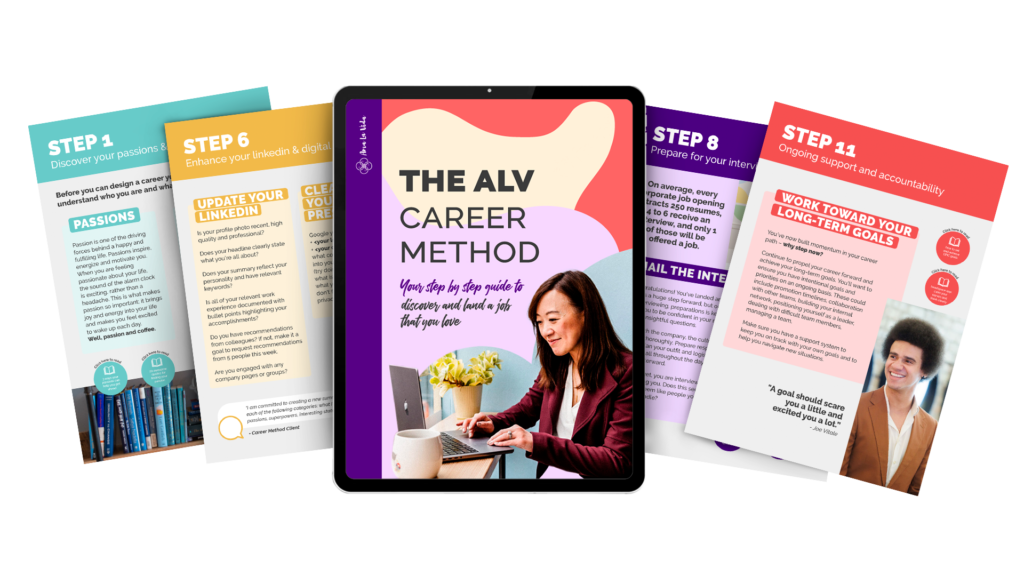
Download our comprehensive step-by-step guide to design and land a job you love!

Images from The ALV Career Method Guide
ALV Method Downloadable Guide

woman smiling sitting outside

Over the last few years, the conversation around mental health has been shifting from silent and stigmatized to open and commercialized and everything in between. I, for one, am so glad we’re starting to talk about mental health. It’s not just about being healthy or struggling with mental illness, there is a big area in the middle that tends to be forgotten.  Today, we’re going to talk about improving your mental health the way you would improve your physical health if you’re already a relatively healthy individual. How do you show up to the “mental gym” and what sorts of things do you do to flex muscles that may be a little weak? Let’s dive in! Note: Mental health is on a spectrum and before we dive into some ways you can improve and care for your mental health, we want to call out that sometimes the best answer to this is to seek help. If you feel like you need professional help with your mental health, please call a mental health provider or seek out immediate help through the SAMHSA National Help Hotline.  1. Lower Your Expectations Every time I say this to my clients, they laugh. Lower my expectations? Why? Well, odds are that your expectations of yourself are way too high. Much higher than the expectations you hold of others or anyone else holds of you. So, lower them.  We expect ourselves to give our 100% ALL of the time and if we don’t, we beat ourselves up for not doing enough or being enough. So I say, lower your expectations. A good way to frame this is by coming up with your goal and then breaking it down into three categories.  Your first category is your expectation of yourself when you’re feeling your best – this can be your “ideal”  The second category is your expectation of yourself if something else were to come up – a busy week, a last-minute deadline, or a head cold And the final category is your expectation of yourself if something major happens – a family emergency or a more serious illness like the flu or covid Now, that third category is your new goal.  Anything beyond that, categories 2 and 1, is exceeding your expectations, not meeting them. Anything you do that’s the third category or more, you celebrate! If you don’t meet that level of expectation, you reflect: what happened, what got in the way, what type of support do I need? In none of these circumstances, do you ever beat yourself up. Got it? 2. Stay Present “If you are depressed you are living in the past. If you are anxious you live in the future. But if you are at peace you are in the present” Lao Tzu Living in the moment or mindfulness has been and still is a hot topic of conversation. We all know we should do it, but how do we do it when our minds are reeling, going a million miles a minute? One of my favorite mindfulness practices is a practice called “Orienting.” It’s simple and you can do it anywhere, anytime. I encourage you to have scheduled moments in which you orient (set an alarm or match it up to a thing you do every day like drinking coffee, eating lunch, or brushing your teeth).  Before starting this exercise, pay attention to your breathing. Take slow, deep, long breaths – in through your nose and out through your mouth. Breathe deeply for about 3-5 breaths and then go through the following steps: 5: Acknowledge FIVE things you see around you. It can be anything, don’t worry about judging it or bringing any memories or stories in. Don’t start thinking “I see my room, it’s so messy and there is clutter and I should’ve cleaned it” Simply acknowledge 5 things. Ex. I see a pen. I see a plant. I see a computer. I see a tree. I see a couch. 4: Acknowledge FOUR things you can touch around you. It could be your hair, a pillow, or the ground under your feet. Again, no judgment or stories just state facts. Ex. I can feel the ground on my feet, it feels cold and solid. I feel the pillow in my hand, it is soft and fuzzy.  3: Acknowledge THREE things you hear. This could be any external sound around you or near you.  Ex. I can hear the whirring of a helicopter. The sizzle of a pan. I hear my dog snoring. 2: Acknowledge TWO things you can smell. Maybe you are in your office and smell pencils, or maybe you are in your kitchen and smell food. If you need to take a brief walk to find a scent you could smell soap in your bathroom, or nature outside. Ex. I smell my coffee, it is nutty and strong. I smell my shampoo, it smells like coconut. 1: Acknowledge ONE thing you can taste. What does the inside of your mouth taste like—gum, coffee, or the sandwich from lunch? Ex. I can taste my toothpaste.  Once you acknowledge these things, bring your focus back to your breath. How do you feel now? Where do you feel those feelings in your body?  You can also do this exercise in the moment when you feel anxiety, stress, or any other intense emotion come in. This simple exercise gets you out of your thinking brain into your feeling body and hopefully supports you in de-escalating emotions that may be too intense or negatively affecting you in your day to day. 3. Move Your Body Moving our bodies has proven benefits for our minds and bodies. It helps release endorphins, move emotions through our bodies, strengthens the mind-body connection, and get us out of our heads. Like everything, there are helpful and harmful ways to do this and for the sake of improving your mental health, we want to focus today on intuitive movement, what it means, and how to embrace

Read More

If you’re here, maybe you’ve just googled, “What do I want to do with my life?” or “I feel stuck and don’t know where to start” or “Why should I hire a life coach?”  Welcome, you’ve found the right place. Life coaching has been gaining momentum over the last few years and is carving its space in the personal development world. Unlike therapists, life coaches don’t delve into psychological disorders or deep trauma, nor do we dive into the past and stay there in order to heal. However, we do work with individuals to support them in getting clear on who they are and what they want, exploring what’s been getting in the way, and moving them forward to create a life they love. You can read more about the differences between therapy and coaching here. Today, we’ll dive into 5 reasons to hire a life coach and explain a little more of what life coaching is all about.  1. Explore Ideas in a Safe Space Do you ever get an idea about something and then share it with someone close to you and get discouraged or overwhelmed when their response is filled with opinions, doubts, and fears? Even though most of us have at least one person in our lives that we can talk to about anything, that person still brings their own biases and fears into it because they are (even in the smallest ways) personally involved with what you do and how you do it.  Working with a life coach offers a safe and unbiased space to explore any and all ideas that come to your mind. This space looks different for everyone, and life coaches are open and flexible, so your coaching time can be everything that you need to feel comfortable and safe to dive into some of your wildest ideas. Your coach is on your team 100% of the time, whether that means picking one thing and working on tiny action steps towards it or having a million ideas and trying them out to see which one fits. A life coach leaves judgment, preconceived notions, and biases at the door so they can show up fully for YOU. 2. Challenge your Mindset So much of the work that life coaches do is mindset work. Many of our clients know what they want or have an idea of the general direction, but they get stuck or feel lost as to where to start. As coaches, we believe every one of our clients is creative, resourceful, and capable to do what they set their mind to, but sometimes our minds are exactly what gets in the way.  Life coaching is a powerful way to evaluate and challenge your thoughts and beliefs about yourself and the world around you. It helps shift your mindset into one that helps you thrive. Life coaches can support you in taking the time to slow down, digest what your mind is telling you, and work towards uncovering what it is that you need to succeed. They’re there every step of the way to then support you in shedding the old mindset and embodying the one that will help you achieve your goals.  3. Get Unstuck through Powerful Questions I always love hearing a client tell me, “That’s a really good question,” and then silence fills the room as they think deeply about what the answer is. That’s how I know we’re getting somewhere good. Powerful questions evoke discovery or insight and usually challenge the client’s assumptions. Sometimes, it’s the simplest of questions that evoke the biggest “a-ha” moments. Having the space to ask and reflect on things instead of assuming and going through the motions is a great tool to lean into when feeling stuck or lost.  A life coach has an arsenal of questions that curiously and empathetically probe at assumptions and beliefs that help you unlock what’s already there. Many people believe that it’s the coaches that have the answers, but the true power of coaching is asking questions that help individuals arrive at their own answers and feel empowered in that moment to continue exploring what they discover.  4. Have an Accountability Partner As you probably already know, new habits are really easy to think of but not so easy to develop. Creating a new habit, undoing an unhealthy one, or trying something new takes time and commitment. It means showing up for yourself every day and working towards that end goal in big and small ways.  With a life coach, you have an accountability partner that can not only help you in setting those smaller milestones and checkpoints, but can dive deep with you when things don’t go according to plan with zero judgment. Accountability is not just about having someone who keeps you checking the boxes, but it’s about being able to reflect on what worked, what didn’t, and what got in the way so you can continue to grow and move forward as you learn more about yourself.   5. Gain Confidence through Action Humans are thinking creatures. We like to have everything “figured out” in our heads before we feel confident enough to take action. Yes, a lot of the work you do with a life coach is about thoughts, feelings, and mindsets, but a life coach also supports you in increasing your confidence through action. They do this by taking small steps and embodying the version of yourself you’re working towards becoming. Your coach will encourage you to come up with action items every time you meet to build on the awarenesses and reflections you gain from each session. They will also be by your side as you explore and try things on, and celebrate your wins so you can gain confidence in your ability to be the person you want to be.  In its most basic form, the purpose of life coaching is to empower you to take responsibility for your life and keep you accountable for taking a structured and disciplined

Read More

5 Things To Do Now Instead of Quitting Your Job By now, you’ve probably heard of The Great Resignation – 33 million Americans quit their job since the spring of 2021. However, this doesn’t mean everyone quit their jobs to go live off the grid and never work again. The reality is, most of us still need money to pay the bills, buy groceries, pay off student debt, and continue doing the things we like to do.  In those moments of burnout, stress, and anxiety, quitting your job might feel like the only option to feel better. In some cases, this may be true. Your job may be a toxic workplace, you might have other responsibilities like being someone’s full-time caretaker, you know exactly what you want to do next, or you have the financial ability to quit without something else lined up.  In any other case, quitting your job, albeit seemingly satisfying in the short-term, may not be the only option. Today, we’ll talk about 5 things you can do instead of quitting your job.  1. Set and Honor Boundaries It’s easy for us to blame our jobs for not having enough time to sleep, pursue our hobbies, or spend time with our families. Rightly so, in a way, because American work habits and work culture can be really unhealthy in many ways. But, there’s also some responsibility we need to take as individuals in our own stress and burnout, and that comes with setting and honoring our own boundaries. Now more than ever, it is up to us to decide when work starts and when it ends. For many of us, we don’t have a commute that bookmarks our day, and our offices are just a few steps away from our living room.  Take some time to reflect and define your boundaries before you think about quitting your job. You can start by identifying your needs such as sleep, leisure, personal relationships, hobbies, alone time, and exercise. What do you need and how much? What would an ideal day look like and what boundaries do you need to make that ideal day possible? If you need more ideas on how to define your boundaries, read this or talk to your coach about it! Your coach can support you in defining what’s important to you, naming boundaries, and staying accountable to yourself! 2. Change Your Environment In order to grow, flowers need soil, sun, and water. But not all flowers are the same. Some need a lot of light and little water, and others need little light, a lot of water, and extra nutrients in the soil. We are a lot like flowers; we all need different types of needs to be met to create the right environment for us to thrive. Historically, traditional 9-5 jobs haven’t been conducive to the idea of autonomy and flexibility which means many of us are stuck trying to fit into an environment that doesn’t work for us and doesn’t allow us to grow.  Now that you’ve identified your boundaries, go a step further by using them to define your ideal environment at work and in your personal life. What is your soil, sun, and water ratio?  To decide that, consider these questions: What types of environments allow you to focus and be productive?  Where do you find inspiration? How do you recharge? What drains your energy? In which experiences (professional or personal) have you felt like you were thriving, or at the top of your game? Break that down – what did this look like? Feel like? Who were you with? After defining your ideal environment, communication is key. Talk to your manager and colleagues about your needs and how they can support you and how you will in turn support them. A thriving garden also needs the tender care of a gardener, so continue to replenish yourself and keep your ideal environment ideal by intentionally making decisions that help you thrive every day.  3. Redesign Your Role I strongly believe that the “dream job” doesn’t exist, but rather that we have the power to mold and create our ideal role by leaning into our strengths and interests and implementing changes in the work we do and the way we do our work.  Redesigning your role might look like taking on new challenges that are more aligned with your interests and strengths, delegating tasks that you don’t want to do or don’t need to do to other team members, or a combination of both. It can also look like setting up new structures and processes to make your workday flow – focusing on highlighting your strengths and supporting you with the things you don’t like to do or aren’t great at.  Some of this you can start tomorrow: make a list of the tasks and responsibilities that your role consists of including everything, big or small. Then circle the things you want more of and underline the things you want less of. How can you capitalize on the circled tasks? How can you make the underlined tasks less painful? Take a designer’s mindset: hypothesize, prototype, test, and iterate. This might not be a one and done deal, but rather a continuous discovery process until you get to what feels right.  4. Lean into Social Capital Social capital is “the networks of relationships among people who live and work in a particular society, enabling that society to function effectively.” At your current job, you have some amount of social capital, whether you’ve just started or you’ve been there for a while. People know you, they’ve seen you work, they’ve collaborated with you, and they know how you show up.  Having social capital gives you a leg up when it comes to exploring something new. This could look like getting involved in some cross-collaborative projects with other departments, shadowing someone in a whole different role within your company that interests you, or talking to your manager about your career path and seeking their

Read More

Over the last few weeks, many of my clients have wanted to talk through how to re-enter social situations. As Covid-19 lockdown restrictions lift, we have to manage the good, the bad, and the ugly that comes with it. So today, I’m sharing 5 tips to support you in re-entering the social world as things begin to open up.  First, I want to acknowledge that everyone will be coming into this from a different starting point. Re-entry social anxiety in a post-lockdown world can mean many different things to everyone. Some may be itching to go dancing in a crowded bar or travel all over the world, yet their comfort level around people may have shifted over the past years. Others may have secretly enjoyed the safety of being cooped up at home and are facing the reality of going back to “normal”. There is no right place to be or right way to feel. All of your emotions, whatever they are, are valid and worthy. Whether it’s going back to the office or facing the holidays with family, I hope these tips will help you reflect on what you need and let go of what isn’t serving you as we head into 2022. 1. Accept it will look different We all have clear pictures in our heads of how it used to be. We know what we liked and didn’t like, where we felt comfortable and what we avoided — that has all changed. It may not feel like it, but the last couple of years have literally altered our brains, and how we show up and move around the world has inevitably shifted. Regardless of what you’re venturing back into, it’s important to first and foremost accept that it will not look the same as before. The truth is, there’s still a lot of unknown even as things open up and we resume activities as we used to. Half the battle is accepting that all of these experiences will look and feel different. The point isn’t to change them or wish they were just as before, but rather to figure out how to best live through what is. That means letting go of all expectations and leading with curiosity and kindness as we navigate this new social landscape. Your outings might be shorter, your conversations may feel awkward, and you might realize you like or dislike new things. Let go and accept it! 2. Start small If you’re not even sure how you’re going to feel when you re-enter social situations, start small!  Think of one thing you feel comfortable with right now: that might be meeting a trusted friend for an outdoors walk or getting coffee with a coworker. There’s no right or wrong answer—what feels comfortable for me might not be comfortable for you. Start with the least intimidating thing and check in at the end of it: how did that feel? Would you do it again? What’s the next step? Take your time and be honest with yourself here – baby steps is the way to go! 3. Create space to recharge One thing I’ve noticed is that as soon as things started to open back up, I went back to my old ways of overcommitting to plans. I quickly said yes to every opportunity and just like that, every day I had something to do. It was exhausting! After the last two years, we’ve realized that getting back into the swing of things can take a lot out of you – that’s okay. Make space for it and prioritize recharging. You can do this by setting certain boundaries, like only making plans 2 times a week, or consciously creating a wind down routine before or after socializing. The key here is to know what types of activities help you recharge. The theme to all of these tips is individuality and realizing we all have different needs. What types of things feel like self-care to you? If you need a little help you can see self-care tips by your Enneagram Type or your Myers-Briggs type. 4. Know what’s in your control (and let go of what isn’t) As you re-enter social situations, remember you get to choose what you’re comfortable with. Whether that is indoors or outdoors, mask or no mask, small get together or big parties – YOU DO YOU! You can feel empowered in making decisions about what serves you and choosing what works for you. Take some time to reflect on this. Don’t be afraid to communicate with your friends and family about your needs and boundaries. This can come especially handy as holidays are around the corner. Some things you can consider: What is the group size I feel comfortable with? Do I want to wear a mask indoors? Outdoors? What things do I not feel comfortable with? What do I need to prepare for this social event? The flip side of this coin is that what other people do or think is not under your control. That means you can’t control whether everyone around you wears a mask, or if they agree with you or not. Stay firm on your boundaries but also honor others’ boundaries and let go of what is not under your control. 5. Embrace the awkward  After more than a year of video calls and working from home, there might be some awkwardness in how we all interact with coworkers, family, friends, and strangers. Embrace it! Naming your emotions takes their power away so say something like, “This is weird, huh?” or “I forgot how to talk to humans, didn’t you?” Adding some humor into an awkward situation can put everyone (including yourself!) at ease and bring some light into an otherwise very serious or anxiety-inducing situation.  Whether this re-opening is something you’re looking forward to or dreading, remember to be kind to yourself. These past couple of years have been tough on everyone and the route into our new normal won’t be easy. Honor your

Read More

You’ve heard it before and you’ll hear it again: setting boundaries is really important. Many of the issues my clients bring to coaching are in some way related to their boundaries. Specifically, their lack thereof. Boundaries can seem complex and nebulous, which makes them hard to define and implement for a lot of us. So I wanted to simplify how to establish your boundaries. The process can be easy as ABC* *Disclaimer: setting and honoring your own boundaries is no easy feat. But I hope that these tips support you in establishing your needs! Establish Your Boundaries Awareness Half the battle of boundary setting is being aware that a lack of boundaries is not serving you. This can look a little different for everyone. But here are some questions that you can ask to reflect on this and shine a light on your needs. Do you struggle with making decisions, even small daily things? Are you exhausted at the end of the day and not sure why? Are you feeling resentful towards your friends, family, or coworkers? Do you feel like your life is one long endless to-do list? Do you say “yes” when you want to say “no” to things? Are you taking on more than you can handle? Do you find yourself overly concerned with what others think of you? If any of these resonate, you might lack boundaries. Personal boundaries are much like physical boundaries. Think of a fence or property line — these things signal some sort of limit to something. They let us know if we can or cannot enter (and how) or if we’ve gone too far. If these physical boundaries don’t exist, we might swim in really deep and troubled waters or step on our neighbor’s garden. Without an awareness of boundaries, we can find ourselves in hurtful situations.  It’s important to reflect on our feelings and situations we find ourselves in and ask, “Is there a need that is not being met here? Do I feel attacked or violated in some way?” In this step, there is no need to jump into action just yet, the goal is to grow in our awareness of what a lack of boundaries looks and feels like, so we can start to identify what we want it to look and feel like instead. Beliefs Whenever I hear a client of mine say that they have trouble saying “no” to people, I always ask, “What thoughts are going through your head when you say ‘yes’ when you mean ‘no’?” Some common answers are: I want to prove my worth, I want this person to like me, and I want to be helpful. Boundaries and beliefs go hand-in-hand. What we believe about ourselves will directly affect the boundaries we do or do not establish.  If we have a need for alone time to recharge, but we believe that our worth as a friend is measured by how much time we spend at a party, we will violate our boundary of needing a solitary wind-down routine every night in order to stay out a little longer.  If we want to prioritize time with our family after work, but we believe our value as a professional means taking on a last-minute request from our boss at 4:50pm, we will violate our boundary of logging off at 5pm to spend time with our kids to make sure we are seen by our commitment to work.  This might work if we make these sacrifices once or twice. But when we find ourselves consistently breaking our commitments to ourselves because we believe that our worth and value is measured by what others think of us, we will grow to be exhausted and resentful of the people in our lives.  What beliefs are keeping you from identifying and honoring your own boundaries? What other belief could be true instead? Remember that the thoughts that go through our heads are not inherently true. They are “For Sale” signs up in our headspace and we get to choose which ones we buy into.  Communication You’ve grown in your awareness and identified limiting beliefs when it comes to setting healthy boundaries – good work! But a boundary cannot be honored if it’s not openly communicated. If your boss doesn’t know that you won’t be checking emails after 6pm, they will continue to email you. If you’re always available to drop everything to support a friend (even when it is detrimental to your mental health), your friends will continue to expect you to show up.  We are constantly teaching others how to treat us. By being clear with what we need, what we tolerate, and when we need a break, we are allowing others to have clear expectations of us and how we want to be treated. YOU have all the power to set, honor, and communicate your boundaries.  Sometimes we avoid communicating our boundaries because we’re afraid of what others will think of us. Revisit what beliefs you’re buying into and reassess. If you’re concerned with being a good friend, which belief serves you more: Being a good friend means saying ‘yes’ to everything my friends need from me Being a good friend means taking care of myself so I can show up wholly to my friendships Do you see how different those two beliefs are? Which belief do you think encourages setting and communicating healthy boundaries? Do It Again Setting healthy boundaries is much like flexing a muscle – you have to do it over and over again in order to gain strength and power. That means checking in with your needs before committing to something or telling a friend or coworker exactly what you can and cannot take on.  None of this is to say that this will be easy. Much like working out, setting boundaries can be challenging and we may stumble as we go along. The important thing is to reset and do it again and continue to grow into this new

Read More

Let’s start with a question: Would you rather break up with someone or tell a coworker that you’re bothered by something they did? In a survey, most people picked the dumping over the difficult work-related conversation (No Hard Feelings, pg. 139). In my opinion, there is something seriously wrong with that data point. How can it be that we’re so terrified and avoidant of hard work-related conversation? My clients and I always talk about interpersonal problems and how to become a better communicator in the workplace. Their thoughts sounds a lot like: Joe from Accounting is getting on my nerves. Sara from Marketing is SO cold (she must hate me). I think everyone thinks I’m the office bitch… I always ask my clients to show me the evidence, and guess what? There usually is none! No hard facts to prove their assumptions – just lots of emotions. I want to share a tool that will support you in becoming a better communicator at work and doing something about it without getting emotional. Let’s dive in! You Know What They Say About Assuming… Have you ever brought up an issue to another person and found yourself completely dumbfounded by the fact that they couldn’t see it from your perspective? That’s because we tend to jump to conclusions through a mental model called the “Ladder of Inference.” First described by organizational psychologist Chris Argyris, and later popularized by Peter Senge, the model explains how we quickly and unconsciously move from the facts of a situation to a conclusion (and why our conclusions are sometimes wrong). Check Yourself… …you know the rest! It’s so easy to send a passive-aggressive email or stew in the frustration of miscommunication and let resentment build up. The Ladder of Inference teaches us that we’re really good at unconsciously moving from observation to action.  If you take only one thing away from this blog post, let it be this: Give yourself time to slow down. When something happens at work, whether it’s a comment from a coworker that rubbed you the wrong way or a missed deadline, take a moment to label what you’re feeling. Are you hurt, frustrated, disappointed? Dive deeper by trying to understand where your feelings are coming from and check where you are on the Ladder of Inference.  The Ladder of Inference in Action We’ll be taking the role of Malia. Malia is the manager of a development team at a mid-sized technology company, and her whole department has been under a lot of stress lately. They have a lot of projects and not enough capacity, with tight deadlines looming above their heads. Malia’s direct report, Jack, walks in nearly half an hour late and quickly thanks to the office manager for taking his call. Malia decides to take action right away, and as soon as Jack is settled at his desk, she tells him that being late is unacceptable and that if it happens again, they will have to have a serious discussion about it.  Let’s review how Malia arrived at her decision to take the action of confronting Jack right away. 1. Observing available data There are facts and reality all around us. The first step is to observe data. Example: Jack shows up 20 minutes late, looking frazzled and frustrated, and stops by to thank the receptionist for taking his call. 2. Selecting your data or reality Our realities are based on what we choose to gather as data. Step 2 is where we choose the data that fits our perspective. Example: Jack shows up 20 minutes late. 3. Interpreting what it means After we select our reality, we assign meaning to it based on our past experiences, memories, and biases. Example: Malia has struggled with employee engagement in the past. The first sign of their disengagement was showing up late and having no respect for timelines. They were hard to work with and ended up leaving the company after a nasty disagreement. 4. Making or testing assumptions Then, we make assumptions based on the meaning we created. Example: Malia assumes that Jack is late because he has no regard for schedules or the deadlines they are under. 5. Drawing conclusions From our assumptions, we conclude what needs to be done or what the right next step is. We haven’t considered all the facts, but we choose to come up with a conclusion based on our interpreted meaning. Example: Malia decides Jack must be reprimanded for being late so this does not turn into a bigger issue and create problems the way it did for the past employees. 6. Adopt beliefs Our conclusions lead us to cement a belief about the situation. We tend to use this belief over and over again when selecting data in the future, which becomes very problematic as our perspective narrows. Example: Malia decides every employee that shows up late has no regard for schedules or deadlines and must be dealt with accordingly. 7. Take Action Here is where we take action. You will notice that the action we take is usually based on our assumptions and conclusions, rather than facts. Example: Malia immediately reprimands Jack and gives him a strict warning about respecting schedules and deadlines. Check yourself and take a few deep breaths! Pause and Reflect Now that you’ve identified where you are on the ladder, it’s time to make your way down the ladder. Our goal is to go down to the “observable data and facts” rung, so we can untangle ourselves from our (perhaps incorrect) assumptions and stubborn beliefs into what’s actually there and what’s really true. Below are some questions you can ask yourself and reflect on as you make your way down the ladder of inference. Start at the level you identified yourself to be on and work down from there: Reset and Rework Congratulations! You made it to the bottom of the ladder. Hopefully, even just taking a little time to pause and reflect has already left you

Read More