Transition to Retirement: Preparing for More Than Just Your Finances

A successful transition to retirement involves much more than a plan for how long our money will last. At Ama La Vida, we also see it as an opportunity to consider how we want to contribute, connect, grow, and create a meaningful next chapter on our own terms.
A 2026 survey conducted by Oath Money & Meaning Institute found that about 40% of retirement advisors rarely or never discussed non-financial retirement goals, even though 66% of retirees call that preparation “very important” or “essential.” The findings also highlighted that most people spend the majority of their retirement planning time on money and little on the human side of the transition, even though they wish they’d done otherwise.
There’s no single “right” way to retire, and the goal is to prepare for a retirement that fits the life you want to create. Setting yourself up for a successful transition to retirement means thinking about more than money.
So whether you’re years away from retirement, quickly approaching the transition, or already navigating this chapter, this guide will help you think through some of the changes retirement can bring and the choices you can make to create a transition that feels right for you.
We’ll explore what can make the transition challenging, how to prepare for the emotional and lifestyle changes that come with it, and some of the ways you can approach this next chapter.
Why the Transition to Retirement Can Feel So Challenging
One of my clients, let’s call him Rob, started coaching to plan his retirement in five years. He knew he would have a lot more time on his hands, and was excited about the transition. But at the same time, he didn’t feel fully ready to stop working. The closer his retirement became, the more and more he dreaded putting his working years behind him.
This is something we see all the time. As our clients start to dig into their transition to retirement, a flood of mixed emotions is a very common response. Retirement brings a shift in the daily structure of your working life, your routine, and your identity, which can come along with a sense of relief, freedom, and anticipation, as well as fear, sadness or grieving what’s left behind. For some, retirement even brings feelings of panic or distress.
Most transitions feel this way. And it’s all a normal part of any transition process. There’s no right or wrong way to feel. Your experience will be unique to you.
What’s most important is to be aware of your thoughts and emotions, and to notice how you’re feeling in your body. Developing self awareness is an important part of navigating this new phase of your retirement years with clarity and purpose.

What Changes During Retirement (That People Don’t Always Expect)
As we’ve already honed in on, retirement is a much bigger life transition than simply leaving a job. Most retirees expect to have more free time and less structure, but there are a lot of changes that come along with this shift that often come as a surprise. Understanding what to expect can ease the transition and help you decide what to prioritize and what to rebuild.
A Shift in Your Social Life
A shift in work structure often opens the door to a loss of community and connections, as work provides a ready-made social structure. Collaborating with colleagues, attending meetings, office banter, and the absence of these taken-for-granted experiences can surprise us as we may find ourselves battling loneliness.
Research from the National Library of Medicine suggests that loneliness levels can rise sharply about a year after retirement, with emotional loneliness reported to spike the fastest. And this makes a lot of sense! For many people, day-to-day interactions with co-workers or clients make up a large part of their social lives. For some, work is even where close friendships were established and nurtured.
A Shift in Identity
Loneliness, a loss of structure, and a diminished sense of status or contribution can lead to a deeper challenge: an identity gap, that leaves us asking “Who am I now?”
So much of what we do is linked to who we are. Our careers shape how we spend a great deal of our time and, therefore, who we spend it with. Our career paths impact the skills we develop and the ways we contribute to the world, and over the years, our career identity can become deeply ingrained. It becomes difficult to separate what we do from who we are.
I recall a coaching conversation with a client exploring a transition to retirement after serving as a math teacher for over 30 years. She said, “When someone asks me, ‘What do you do?’ I love saying, ‘I’m a math teacher.’ I’m not ready to let go of an answer I’ve given for decades.”
Feeling a sense of purpose is not “woo woo;” it has a real and measurable impact on one’s quality of life, vitality and longevity. Meaningful contribution or purpose is linked to better physical, mental, and emotional health outcomes, such as better sleep, lower rates of chronic disease, and more physical activity.
None of these losses have to be an inevitable part of retirement. While we may not have these aspects automatically built into our work structure anymore, we can intentionally continue to cultivate them.

A Great Retirement Plan Goes Beyond Your Finances
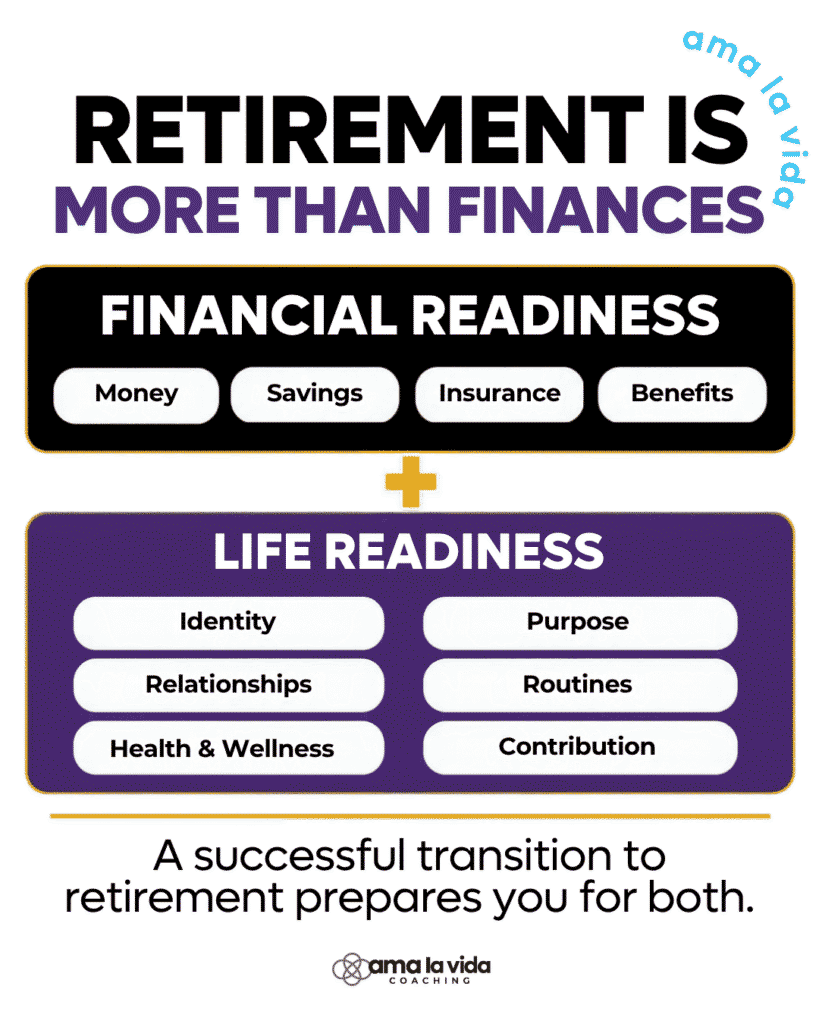
This is why here at Ama La Vida, we believe that a successful transition to retirement requires more than investment strategy and financial planning.
What we’ve seen is that most people focus on their financial readiness for retirement while giving less attention to emotional, identity, and practical lifestyle readiness. Planning across all of these areas can lead to a more balanced transition, alleviate stress and potentially make this the most rewarding period of our lives. After all, they call it the “golden years” for a reason!
Of course, it’s important to keep retirement finances in mind. A financial advisor can help you prepare your retirement savings, retirement accounts, Social Security and Medicare strategy, and retirement budget.
But here are the aspects of retirement planning that we often see overlooked.
How to Prepare Emotionally for Retirement
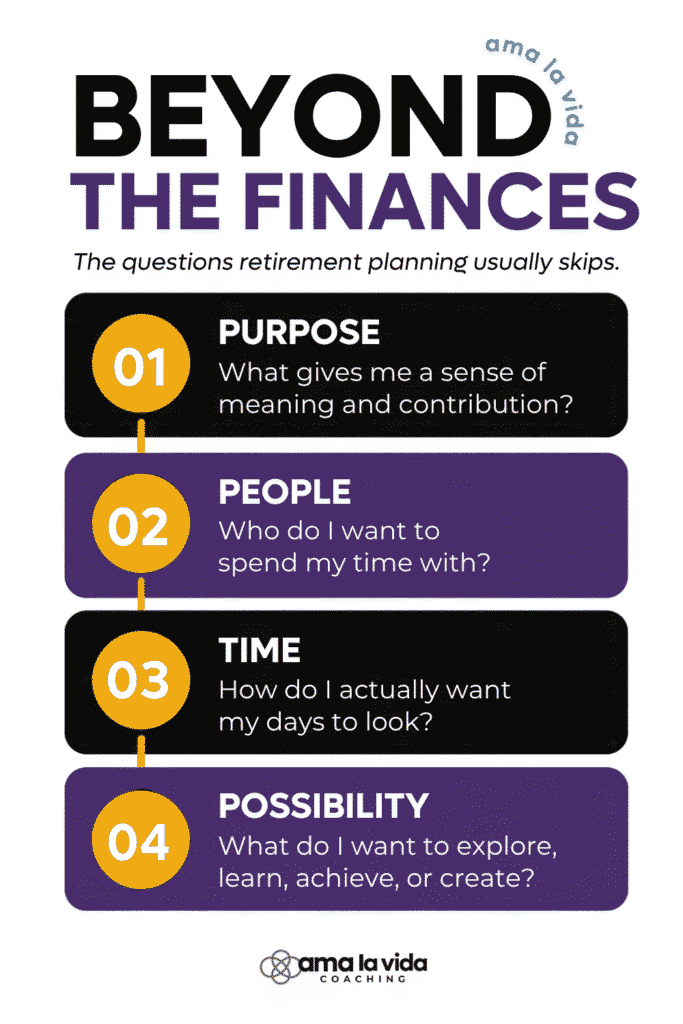
As you prepare for this transition, consider these four non-financial questions alongside your financial planning:
Who am I beyond my work identity?
Your career may be an important part of your identity, but it is not your whole story. Retirement can be an opportunity to reconnect with other parts of yourself: your interests, strengths, values, and dreams that may have put on hold. Create a list of 5-7 interests or passions, and make sure to include any dreams you have put on hold.
How will I stay connected?
Workplace relationships with clients and colleagues often provide regular social contact. Consider the people, communities, groups, or activities that will help you maintain meaningful connection in this next chapter. Identify 2-3 sources of social connection that don’t depend on the workplace (classes, clubs, communities, volunteering, etc.).
What will a typical day or week look like?
Freedom can feel both liberating and uncomfortably unstructured. Reflect on how you want to balance and fit in the things that matter most to you. Consider rest, movement, learning, spending time with friends and family, volunteering, travel, creativity, or even a new form of work. Start by writing down what you want a typical Wednesday to look like in your next chapter, be specific about time, then move on to what a typical week might look like.
How do I want to contribute?
While it may not feel like it at first, retirement can actually mean stepping more fully into purpose versus away from it. Think about the different ways of contributing that would feel meaningful to you. Would you want to mentor, teach, volunteer, consult, create, care for others, or pursue work that feels more aligned with who you are at that stage of your life? Identify one thing that led to a sense of contribution for you at work, and brainstorm how to replicate that feeling in a different way or somewhere else.

What About Early Retirement or a Forced Retirement?
Retirement doesn’t always happen on your own timeline, and while some may have years to prepare, you might find yourself in the position with little to no time at all. Unplanned professional situations, like a layoff or organizational restructuring, or unplanned personal circumstances, such as a change in your health status or caring for a family member, can bring this transition on quite quickly and unexpectedly.
When retirement isn’t your choice, it can feel particularly destabilizing. You may experience a wide range of emotions all at once, including disappointment, anger, and grief, or on the other side, relief or even hope. Along with the losses we discussed above, you may also experience a sense of loss for the future you thought you were going to have.
Give yourself permission to feel it all. You don’t have to immediately turn an unexpected retirement into a positive or plan to get the most out of this next chapter.
Instead, give yourself some time, some grace, and intentional space to process what’s happening. No major decisions have to be made before you’re ready. You can also seek support if needed from people in your life or a professional who can help you navigate this transition.
There’s Still Time to Plan
We hope you’ll take some comfort in knowing that retirement planning doesn’t have to happen exclusively pre-retirement, and there’s no perfect time to have everything figured out. Whether you’re quickly approaching this transition, you’ve recently made it, or you’ve already been retired for years, creating the time to reflect on the above questions can provide a lot of clarity.
While you may not be able to control when your retirement happened, you can begin to focus on what is within your control to intentionally design what you want this next chapter to look like.
It’s truly never too late to pause and reflect.
Creating a Shared Vision for Retirement
We’ve explored the mixed emotions that can accompany a transition to retirement. Instead of feeling paralyzed by the question, “What do I do now?” consider a more empowering one: “What kind of life do I want to create?”
And you don’t have to answer that question alone. Stay in conversation with your partner, family, and anyone else who will be part of this next chapter. Talk about what you each want your days, relationships, home, and lifestyle to look like. Better yet, co-create that vision together. Having these conversations early can tighten bonds by surfacing any differences in expectations, so that they can be addressed. This will help everyone feel more prepared for the changes ahead.
For couples especially, retirement can bring significant changes to how you spend your time and where you live. You might consider whether you want to downsize to reduce costs such as property taxes, move closer to family for support, or stay in your existing home. You may also want to discuss longer-term plans, such as whether you’d prefer a retirement community with built-in health services or social/recreational activities, or hope to age in place in your home.
There’s no one right answer. Some retirees choose to move closer to family for additional connection and support, while others prioritize staying rooted in the home and community they already know. The important thing is to have these conversations and make decisions intentionally, rather than letting circumstances decide for you.

How Do You Actually Want to Spend Your Time?
Retirement inevitably leads to a shift in how you allocate your time, as you’re probably moving from a more structured situation to one that gives you more freedom.
It can be easy to get caught up in the day-to-day or to quickly fill your time without first understanding your real priorities.
This is why we urge our retirement coaching clients to reflect on what’s most important to them before they start filling their schedules. We discuss values, passions, personal interests and non-negotiables. This helps to get a bigger picture view of how you actually want to spend your most valuable and non-renewable resource.
Then we can align your decisions and start planning what to pursue with your free time: volunteer work or a part-time job, hobbies, travel, learning a new skill or language, mentoring, joining a book club, spending time with family or your grandchildren, or perhaps you’ve got a bucket list you’d like to revisit.
There are so many options, so first having something to anchor into helps steer us in the right direction.
If you’re not ready to fully retire, you can explore a “phased retirement,” which is becoming a more popular option through reduced work hours or job sharing, or pursue some kind of transitional work like consulting.
If you get stuck, ask, “What do I want to do that I just haven’t had the time to do?” Tap into what lights you up, where you want to make an impact, and on whom you want to make an impact. What have you always wanted to learn or master? Ask those who know and love you to chime in with some ideas, as they, no doubt, have heard you mention something you just didn’t have time for or always longed to do.

Defining Your Retirement Goals
Now that you’ve got some ideas about what you want to do with your time, begin outlining a few retirement goals. The following six categories are a great place to start, or you can always create your own.
- Overall Vision and Lifestyle: realistically consider where and how you want to live your life daily or weekly.
- Finances and Security: consider your income, savings, insurance, benefits, and budget to support the lifestyle you want. Moving from a regular paycheck to a different income structure can create anxiety or uncertainty, so it’s worth considering what financial support or resources you may need to feel secure.
- Identity and Mindset: now that you’re shedding your previous professional identity, who are you beyond your title and what beliefs about retirement need to shift?
- Connections and Community: how will you stay connected and to whom? What relationships do you want to nurture? Who do you want to spend your time with and why?
- Wellbeing and Energy: what can you incorporate into your lifestyle to support your health, strength, mobility, flexibility, vitality, and energy?
- Contribution and Meaning: consider what gives you a sense of purpose and meaning. What do you have to offer? Do you want to make an impact, and if so, in what way?
Don’t Be Afraid to Experiment
Creating a successful transition to retirement can be experiential; sometimes we don’t know what we want until we’ve had a chance to actually experience it.
Give yourself some time, grace and space to consider, and try out, your options. You don’t have to get it right the first time, and experimenting can be lots of fun! We love to encourage our clients to try new things, learn and adjust along the way.
Rob’s story continued to evolve as he explored what retirement could look like. As we dug deeper into his values and hopes for his next chapter, his love of sports emerged. This ended up leading him to learn more about the sports influencers he followed, and he looked into their businesses, podcasts, and YouTube channels. Soon, he was exploring what it would take to start a podcast of his own.
Rather than waiting for the clarity or perfect moment, Rob began taking baby steps. He began building relationships in the world of sports, researching platforms and practicing interviews. By the time he wrapped up his coaching membership, he had a clear direction and a plan he was genuinely excited about!
It’s never too late to seek the support you need, and you don’t have to navigate this transition on your own.
How Retirement Coaching Can Help
Having a supportive ally in your corner can make all the difference when planning your transition to retirement. A retirement coach provides structure, helps you design your next chapter and make intentional decisions, offers accountability, serves as both a sounding board and safe space, and helps you move forward during this period of emotional uncertainty and change.
Using the Ama La Vida Purpose, People, and Plan approach, your coach will help you identify what matters most to you, who will support and connect with you, and how to intentionally create a next chapter that you love.
Financial advisors help you prepare your resources. Retirement coaching helps you prepare yourself—your mindset, relationships, routines, and sense of purpose. Both areas play an important role in your successful transition to retirement.
Retirement has never been just about having enough money to stop working. It also includes exploring what a meaningful redirection of your identity, time, connections, and lifestyle can look like, and creating a next chapter that feels alive with possibility.
You don’t have to figure it all out on your own. Ready to start designing your next chapter? Explore retirement coaching with Ama La Vida.