Category: Health Coaching

woman smiling sitting outside

Over the last few years, the conversation around mental health has been shifting from silent and stigmatized to open and commercialized and everything in between. I, for one, am so glad we’re starting to talk about mental health. It’s not just about being healthy or struggling with mental illness, there is a big area in the middle that tends to be forgotten.  Today, we’re going to talk about improving your mental health the way you would improve your physical health if you’re already a relatively healthy individual. How do you show up to the “mental gym” and what sorts of things do you do to flex muscles that may be a little weak? Let’s dive in! Note: Mental health is on a spectrum and before we dive into some ways you can improve and care for your mental health, we want to call out that sometimes the best answer to this is to seek help. If you feel like you need professional help with your mental health, please call a mental health provider or seek out immediate help through the SAMHSA National Help Hotline.  1. Lower Your Expectations Every time I say this to my clients, they laugh. Lower my expectations? Why? Well, odds are that your expectations of yourself are way too high. Much higher than the expectations you hold of others or anyone else holds of you. So, lower them.  We expect ourselves to give our 100% ALL of the time and if we don’t, we beat ourselves up for not doing enough or being enough. So I say, lower your expectations. A good way to frame this is by coming up with your goal and then breaking it down into three categories.  Your first category is your expectation of yourself when you’re feeling your best – this can be your “ideal”  The second category is your expectation of yourself if something else were to come up – a busy week, a last-minute deadline, or a head cold And the final category is your expectation of yourself if something major happens – a family emergency or a more serious illness like the flu or covid Now, that third category is your new goal.  Anything beyond that, categories 2 and 1, is exceeding your expectations, not meeting them. Anything you do that’s the third category or more, you celebrate! If you don’t meet that level of expectation, you reflect: what happened, what got in the way, what type of support do I need? In none of these circumstances, do you ever beat yourself up. Got it? 2. Stay Present “If you are depressed you are living in the past. If you are anxious you live in the future. But if you are at peace you are in the present” Lao Tzu Living in the moment or mindfulness has been and still is a hot topic of conversation. We all know we should do it, but how do we do it when our minds are reeling, going a million miles a minute? One of my favorite mindfulness practices is a practice called “Orienting.” It’s simple and you can do it anywhere, anytime. I encourage you to have scheduled moments in which you orient (set an alarm or match it up to a thing you do every day like drinking coffee, eating lunch, or brushing your teeth).  Before starting this exercise, pay attention to your breathing. Take slow, deep, long breaths – in through your nose and out through your mouth. Breathe deeply for about 3-5 breaths and then go through the following steps: 5: Acknowledge FIVE things you see around you. It can be anything, don’t worry about judging it or bringing any memories or stories in. Don’t start thinking “I see my room, it’s so messy and there is clutter and I should’ve cleaned it” Simply acknowledge 5 things. Ex. I see a pen. I see a plant. I see a computer. I see a tree. I see a couch. 4: Acknowledge FOUR things you can touch around you. It could be your hair, a pillow, or the ground under your feet. Again, no judgment or stories just state facts. Ex. I can feel the ground on my feet, it feels cold and solid. I feel the pillow in my hand, it is soft and fuzzy.  3: Acknowledge THREE things you hear. This could be any external sound around you or near you.  Ex. I can hear the whirring of a helicopter. The sizzle of a pan. I hear my dog snoring. 2: Acknowledge TWO things you can smell. Maybe you are in your office and smell pencils, or maybe you are in your kitchen and smell food. If you need to take a brief walk to find a scent you could smell soap in your bathroom, or nature outside. Ex. I smell my coffee, it is nutty and strong. I smell my shampoo, it smells like coconut. 1: Acknowledge ONE thing you can taste. What does the inside of your mouth taste like—gum, coffee, or the sandwich from lunch? Ex. I can taste my toothpaste.  Once you acknowledge these things, bring your focus back to your breath. How do you feel now? Where do you feel those feelings in your body?  You can also do this exercise in the moment when you feel anxiety, stress, or any other intense emotion come in. This simple exercise gets you out of your thinking brain into your feeling body and hopefully supports you in de-escalating emotions that may be too intense or negatively affecting you in your day to day. 3. Move Your Body Moving our bodies has proven benefits for our minds and bodies. It helps release endorphins, move emotions through our bodies, strengthens the mind-body connection, and get us out of our heads. Like everything, there are helpful and harmful ways to do this and for the sake of improving your mental health, we want to focus today on intuitive movement, what it means, and how to embrace

Read More

I am a voracious reader. Yet, this past year has left me drained of energy to tackle a larger book with lots of “meat”. I found myself gravitating toward fluffy, feel-good stories. This left me with a hole in my learning cycle , as I am typically a large consumer of professional and personal skill enhancing fare.  Enter the ALV Blog! These short form articles have provided me the content I crave without the commitment of a book that I do not have the energy or inclination to pick up right now. I have learned much from my colleagues over the past year! They are all subject matter experts and freely share their expertise. Here at Ama La Vida Coaching, we coach across four main vertical markets: career, leadership, life, and health & wellness (with lots of overlap)! Here are my favorite ALV Blogs from 2021 within each vertical: Career Blogs Career coaching takes on many forms, from exploration, developing new skills, networking, creating an effective resume and building a personal brand. As coaches we are often asked what we really do? Coach John, in this blog,  shares some ways that a career coach can help you work on career discovery that may not be viewed as the “norm”. And don’t miss his blog about answering those tricky interview questions. Networking is a critical piece of the job search process, and the last two years have changed the way we approach it! Coach Brooke shares the strategy needed to network in a remote work in this blog.  Looking for what essential skills you may need in the upcoming year? Check out my blog about essential skills needed for 2022. Leadership Blogs This isn’t just for leaders! Leadership coaching works with skills for people who are looking to improve their professional presence in the workplace. It can look different for many types of workers, from managing a team, to managing yourself, to providing feedback and improving communication. While 2020 gave a lot of us new professional experiences, we were settling into some new routines for 2021. In this blog, Coach Bijal guides you on the best ways to onboard new employees and build trust in the remote world. We have been hearing the term “servant leader” a lot within the last couple of years and many clients ask what it really means! Check out Coach Cait’s blog about how to become a servant leader. This powerful blog from ALV’s Chief Coaching Officer, Coach Foram, helps you grow your team into the leaders you want them to be! Life Blogs We all need a little “life” support! What I love about our life coaches here at ALV is that their strategies and expertise support you personally and professionally! Not sure what Life Coaching is and can do, check out Coach Cait’s blog! Confidence is one of these areas that traverses work and home life! Coach Jill gives some great tips on how to begin to grow your self confidence in this blog. Not sure how to identify where you may need some improvement? Let Coach Bijal guide you how to find your blind spots in this blog. Feeling more uncertain this year more than ever? Me too! I found this blog by Coach Kristin super helpful about how to navigate and get more comfortable with uncertainty. Health & Wellness Blogs I do not coach in the Health & Wellness vertical and am always amazed at the coaches at ALV who do this effortlessly, check out some of their words of wisdom. Wanting to make a change and then making one are two very different things, both important pieces to a journey of good mental health. Start with Coach Sara’s blog about getting ready for change and then move to Coach Cait’s blog about how to change your mindset. This is a “do not miss” read! Coach Natalia keeps it real while giving real life tips to tame your inner critic.  My personal goal this past year was learning how to set boundaries and reframing my “shoulds”. These two blogs helped me so much! Check out this blog from Coach Natalia, and this one from Coach Sara. Bonus Blogs: While the ALV Blog is my favorite, here are some other blogs that get honorable mentions: The Opportunity Machine: written by ALV’s own Coach John. Got a thought? Coach John has one on the same topic, I guarantee it! His easy to read and relate style always has me coming back for more! Seth’s Blog: written by renowned author, marketing strategist and all-around business expert Seth Goldin. Always on point and to the point! While not technically blogs, all things Adam Grant and Brene Brown are a worthwhile pursuit!

Read More

I love this time of year! From Thanksgiving until New Year’s, time seems to speed up in a lot of ways while also slowing down. I love the different pace and feel that work and play has, along with the different activities like tree hunting, decorating, lights-watching, gingerbread making, feasting, zoo lights, and family and friend time. While it can be an exciting time, it can also be a stressful time. It can bring about that feeling of “shoulds”. I “should” do this and I “should” do that. So today, we are talking about how to “should” less over the holidays! The Holiday Shoulds Oftentimes, these stressors are described as “shoulds”. Here are a few for example’s sake: What’s Wrong With “Shoulds”? Do you relate to any of the above “shoulds”? No matter the “should”, they all imply some sort of judgment. According to the Oxford Languages Definition, should is a verb “used to indicate obligation, duty, or correctness, typically when criticizing someone’s actions.” The challenge with judgment is that it can stop us from taking action. Should keeps us focused on what we feel like we’re supposed to do, not necessarily what we want (or need) to do. These feelings of guilt, pressure, stress, and lack of control often keeps us stuck, instead of helping us take the actions that would ultimately make us feel better. So how can we effectively manage our “shoulds”? By exploring and breaking them down into 4 key steps, we can shift our focus to a more empowered mindset and help us prioritize what we really want and need over the holidays.  The 4 Steps to Quit “Shoulding”: What’s Next? Are you ready to explore your shoulds and start taking action? If so, I invite you to explore and reflect on the following: In Conclusion While the holidays bring more joy they often bring more stress into our days as well. So as you look to the month ahead, I encourage you to take note of the pressure your “shoulds” are creating for you and take intentional action towards shifting these statements. Stop “shoulding yourself” to death. Whatever your ideal holiday season looks like, here’s to much happiness, health, and fun ahead for you! Take care and I look forward to what’s next for you.  ~Coach Sara

Read More

What is Health & Wellness Coaching? Is it nutrition? Fitness? Meditation? Weightloss? Palo santo, healing crystals and full moon parties? Everyone has their own definition of what health and wellness is because “good health” feels different for everyone. Our bodies are vastly different and we all need different things to make us feel good.  But the message that health and wellness is individualistic gets lost in society’s standards of what “health” should look like. Social media, movies, ads, the wellness industry as a whole all project unrealistic expectations of “health,” and that can be overwhelming, stressful, confusing, frustrating and defeating. That’s where Health and Wellness coaching with Ama La Vida comes in – to help you define what health and wellness feels like for you and you only. Let’s bring those goals to life, shall we?  A Year With a Health & Wellness Coach The goal of our health and wellness coaching is true transformation – mind, body and soul. We believe health coaching isn’t just about losing weight or getting fit. It’s about building a long-term happy, healthy relationship with your body and mind. Together with your coach you’ll develop the tools and resources you need to take back your health, so you can live a happier, more productive and fulfilling life. Whether you have clear goals you want to accomplish or you have no idea what you want but you just know you want to feel better than you do right now, we’ve got you! Some other things that clients come to us for are: reframing negative self-talk, creating healthier habits, finding more balance and purpose in their life, feeling more confident in themselves, repairing relationships to food and just feeling worthy of living a life you truly love. Here are a few major focus areas that we’ll work on together: 1. Redefine Health Goals Like I mentioned above, health and wellness is and should be individualistic. Let’s release everything you think health should look like. How do you want to feel? What goals do you want to create for yourself? And if you don’t know, that’s okay! Most people don’t. In fact, we have a solution just for that. One of my favorite eCoaching modules is setting EPIC Goals (EPIC stands for Elevating, Practical, Impactful, and Clear). These goals are where we get to turn your vision into reality. We start by creating clear milestones and action steps that you can follow that will help you achieve your goals and visions. 2. Expertise You may have studied Finance or Law or Education. And yet, you are asking yourself to also be an expert in your own health and wellbeing. We bring in experts to support us with our taxes, plumbing, or cleaning our teeth. It’s okay to bring in an expert in to help you with something outside of your wheelhouse. Bring in a coach to help you improve your physical, emotional, spiritual and social well-being! In addition to being rigorously trained in top certification programs, our health coaches have years of experience in coaching. They are experts in their craft and can help you to prioritize and hone in on the areas where you need the most support. 3. Accountability We have processes and deadlines at work or school that keep us on track and ensure we get things done. When those deadlines are lacking in our personal lives, it is easy to let things slip through the cracks. Weeks, months, and even years can go by without us making the changes we need to be happier and healthier. Working with a coach provides you with a structured approach to your health and wellbeing. There is a built-in accountability system to keep you on track. Even when you encounter roadblocks or struggle to stay motivated, we’re here with you every step of the way to help you get back up and keep moving forward. 4. Sustainable Change Coaching is not a quick fix, as much as we would like for it to be. It’s not an overnight miracle (or a product claiming that it is!). Coaching is a way to create sustainable change in your life. A lot of people come to us knowing where they want to be (or don’t want to be) but are just missing the tools and frameworks to help get them to a healthier, happier place in life. A year of coaching will provide you more than enough practices that help continue to strengthen that sustainable change long after our work together is done. Maximizing This Upcoming Year A year of coaching might sound like a big commitment. That’s because it is! But you are here and are ready to commit to changing your life. And sometimes, that’s the hardest part. Sure, instances have come up that have forced us to put a lot of goals on hold, but that doesn’t mean we have to completely give up. So much of health and wellness coaching is inner work and that doesn’t have to stop for anything. We only get one life, so why not make it the best it can possibly be?  Are you ready to start living your best, healthiest life? Sign up with a certified professional coach who will help you create a roadmap to success. To get started, book a free consultation with one of our Relationship Strategists. In this 30-minute call, they’ll learn more about your goals and current situation, help you decide if coaching is right for you, and then get you matched with a coach.

Read More

The other day I was talking with a client about body image. She said to me “it’s just really hard to love parts of my body sometimes.” I agreed. Even when we try to “love all our imperfections,” it’s still indicating that we have undesirable features we have to force ourselves to love. That doesn’t have to be the case. So I said: “What if we stopped forcing ourselves to love the parts of our bodies that we just simply don’t? What if we worked for body neutrality instead?” Lightbulb. There are a lot of great movements that promote self-love. However, it’s not always easy to practice when we live in a society that idolizes thin, fit bodies and reminds us that our flaws should be and can be fixed. And then there are diets being disguised as “lifestyles” but still tell you what you should and shouldn’t eat. And weight loss programs relabeled as “wellness” tells you in order to be well, you must be a certain size. These mixed messages are dangerous and can be misunderstood as “love your body, but only if it looks a certain way.” What is Body Neutrality? It’s difficult trying to change your entire mindset to loving your body when you’ve been at war with it for so long. Body neutrality is about shifting away from self-hate and critiquing our bodies without forcing ourselves to love all parts of our bodies. It’s about getting to respecting our bodies without focusing on the negative thoughts. We don’t have to love or hate our bodies. We can work towards accepting them just as they are.  When we focus on neutrality instead of forcing love, we’re able to remove that added stress and worry. We can make room for things that actually bring us joy and happiness. So how do we begin practicing “body neutrality?” Values Values are our personal judgments about what’s most important to us in life. They are our principles and standards of why we do the things we do. When we uncover our values, it helps us see where our energy and focus should be. It helps us make decisions that are aligned with the life we really want to be living. When we observe parts of our bodies that society tells us are undesirable, we can instead shift our attention to the things that mean the most to us. For example, whenever I observe my rolls and squishy parts, I might have a judgmental thought. But then I remind myself of all the things that are more important to me than a flat stomach and thigh gap. “I see you, soft parts. You’re okay! What I value most is spending time with friends and family, not restricting myself anymore and celebrating life with food, drinks, travel, trying new things. I value living my life to its fullest. Worrying about how I look to others is no longer important. I will always choose my dream life over my dream body.“ Focus on your values and what’s really truly important to you in life over negative body observation. Gratitude Gratitude has been scientifically proven to rewire our brain patterns to focus on the good in life. It helps us to focus on everything that we’ve accomplished instead of all the things we haven’t. Practicing gratitude for what our bodies do for us can help us take our focus off how we look and shift our energy to focusing on how we feel, what our body does for us, how she keeps us alive, how she heals us, comforts us and lets us know what’s wrong and what is right.  “Hey there, thighs. I love how strong you are for all the activities and movement I enjoy. You allow me to seek adventure and seek places that I wouldn’t have without you.” Focusing on gratitude is how we begin to shift from forcing love to embracing body neutrality. Compassion There is nothing easy about undoing an entire lifetime of believing that our bodies need to look a certain way in order for us to be happy. We’re used to working against our body for so long, restricting, counting, weighing, critiquing. It can feel overwhelming and resistant! Compassion helps us ease into changing our thoughts and beliefs about our bodies. I like to think about compassion as my best friend who comforts me when I’m having an off day. She’s always encouraging, comforting and appreciates all the work I put towards my own happiness. When we fall off track or stumble into old habits (which we will!), compassion helps us be less judgmental of ourselves and learn from our failures so we can get back up again and keep going.  “Wow, today was not my best, and that’s okay. Bad days don’t determine my worth. What did I learn today that will help me be better tomorrow?” Body neutrality gives us peace to just be as we are. It allows us to stop worrying about fixing the parts of us that are natural, like cellulite, rolls and squishiness. To stop wasting time and energy trying to shrink ourselves to look like the unrealistic body types that society and diet culture idolize. Body neutrality allows us to focus on doing things in life that actually bring us joy and happiness. It releases the pressure we put on ourselves: if we don’t love our bodies, then we’re doing something wrong. It untangles the confusion around “what does my body have to look like in order to love it?” We don’t have to love everything about our bodies, but we don’t have to hate them either. Instead, let’s just be as we are so we can focus on the joys in life.

Read More

Partnering with a specialist is a fantastic approach to support your health! We are going to dig into Nutritionists, Trainers, and Health Coaches and talk about how they each support your health and goals. I have personally benefited from working with all three. Deciding which specialist(s) is right can be tough if you don’t know the differences in how they support their clients. Here we’ll explore the differences between specialists so you can decide which is right to support your health! Health Matters Now More Than Ever We know that health is important – it’s common knowledge that greater health has an impact on overall quality of life. According to the World Health Organization, worldwide obesity has nearly tripled since 1975. The Centers for Disease Control and Prevention (CDC) reports that 6 in 10 adults have at least one chronic disease, and 4 in 10 have two in the US.  Another challenge we face is that particular diets do not have one-size-fits-all results (check out this Harvard Article). Our health matters now more than ever, and a customized approach to health and nutrition can best support you. Creating a customized nutrition and fitness approach that is best for you can be challenging and very overwhelming. Nutritionists and Your Health Nutritionists offer general advice for their clients regarding diet, food, and nutrition. While many people use the term nutritionist interchangeably with a dietician, not all nutritionists are dieticians. A dietician has met specific educational and licensing requirements to be able to treat or diagnose nutritional problems. Nutritionists provide the resources and strategies to help you build a better nutrition plan! They often develop meal plans and nutrition-based guidelines to help address your health goals.  As part of my own weight loss journey four years ago, my husband and I completed a weight loss program together and partnered with a nutritionist. They explained our diet and customized our plan based on our overall goals and our results along the way. It was helpful to have a guide answer questions and support my health in tweaking my meal plan to hit my targets. Navigating a new meal plan can be tricky, and a knowledgeable specialist helped ease my uncertainty along the way! Trainers and Your Health Trainers focus on physical exercise to help clients improve their fitness. They develop personalized training programs to meet clients where they are and support their specific goals (such as  weight loss or gain, building strength, or improving cardio endurance.) Trainers partner with their clients by walking through custom training programs together, while providing support and motivation along the way and ensuring their safety.  I really enjoyed the process of working with a personal trainer in tandem with my weight loss program. My trainer was extremely helpful in building my gym workout routine. Previously I would only focus on cardio since it was in my comfort zone. I was uncertain of the exercises and equipment needed to build my strength. Through education and encouragement from my trainer, I expanded my personal fitness program and now have a solid foundation to build from. Health Coaches and Your Health A health coach helps clients clarify their goals, build healthy habits, and evolve their mindset to achieve their goals. Through the structure, accountability, and support of a coaching partnership, a health coach guides their clients to work through the behavioral changes to live a healthy lifestyle. A health coach also helps their clients move forward as opposed to telling them what to do. When needed, a health coach will also offer additional resources or recommend other specialists such as nutritionists or trainers.  As part of my own weight loss program, I also worked with a health coach to hold me accountable to my goals. When times got tough and I hit a plateau and doubted myself, they helped lift me up and keep me going. When I needed extra support when I wasn’t following through, they helped shift my perspective and get unstuck. When I was tempted to take it easy, they challenged me to push harder and reminded me of my vision. Overall, they supported me through the many hurdles along the way. And as an added bonus they helped ignite my passion for health coaching and nutrition! Questions to Ask: Ready For Health Coaching? Knowing where to begin on your health journey can be tough, and health coaches can help! Partnering with a health coach is such a powerful tool to help you set and achieve your goals. Ama La Vida’s health and wellness coaching guides you towards true transformation through self-reflection to gain clarity and focus. This is exactly what your best version needs to combat self-sabotage, create healthy habits, and harness your personal power! If you are ready to elevate your health though health coaching, schedule your free coaching consult with me today! I look forward to connecting with you.

Read More

Download our comprehensive step-by-step guide to design and land a job you love!

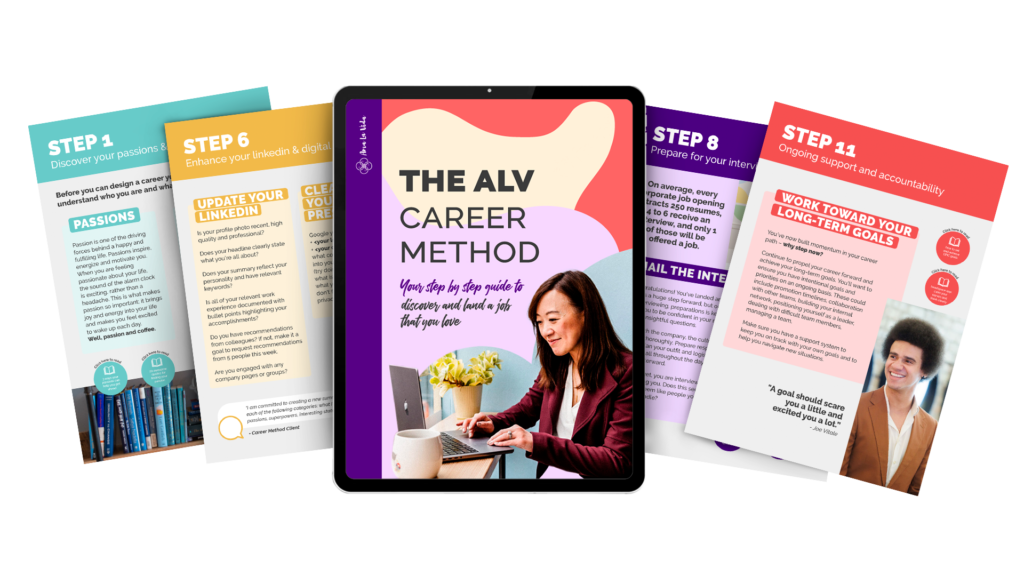
Images from The ALV Career Method Guide
ALV Method Downloadable Guide

5 things to do instead of emotional eat

Current events have turned our lives upside down. We’re facing unprecedented circumstances and uncertainty. We’re mostly stuck inside, many of us have lost our jobs, we’ve been forced to create an entirely new way of living, and day by day it is becoming harder to see a future that is certain and “normal” again. Stress at this magnitude can bring a lot of emotions to the surface, some more unpleasant than others. In response to this uncertainty and if you’re like most of us, you might seek comfort in a familiar place: the kitchen. Eating when we feel emotions can be one of the easiest and most immediate ways to make ourselves feel better in stressful times, but if we continue to ignore certain emotions, bigger issues might arise down the road. Think about it this way: you wouldn’t fill your gas tank with water and expect your car to run properly, right?  You probably wouldn’t put more gas in your tank than your car could handle either. Cars require maintenance and care just like humans do. If we ignore the “check engine” light long enough, our car will start making funny noises, other parts will stop working, and we could eventually break down. Think of emotions like stress, anxiety and overwhelm like a “check engine” light. It’s our body’s way of letting us know it’s time to check under the hood.  Food is a huge part of our lives.  It’s a necessary part of our existence and for many, our culture. We eat to celebrate. We express ourselves through food. Usually, we share love through food. We gather with friends and family over food. It can bring so much happiness and excitement into our lives, which is why it’s natural for us to resort to food when we’re sad and want to feel joy. Psychologically, eating comfort food when things get tough can help us feel better, also called emotional or stress eating. However, this is only a temporary solution. Our “check engine” light might stop flashing for a little bit, but it’s not fixing the actual problem. Biologically, eating can also help regulate energy levels when feeling stressed and overwhelmed. Stress is associated with changes in cortisol levels so we tend to crave foods higher in fat and simple carbohydrates because our bodies crave additional energy to function while under stress. If you’ve noticed any changes in your eating patterns since the start of this uncertain and overwhelming time, your body is doing a great job of keeping you alive. Our external environment can affect how we feel internally, so if there is fear and scarcity around the availability and accessibility to food, it can affect our eating patterns. Take this for example: one might be likely to eat more than normal when feeling overwhelmed as a means to cope. Some might find themselves snacking throughout the day, while others might severely restrict food intake in an attempt to feel in control.   Although emotional eating feels good at the time, it’s not helping us get to the root cause of our stress or unpleasant emotions.  If we continue to suppress those emotions with comfort food, we’re creating more health problems. For example, when we find ourselves emotionally eating food with little nutrition and minimal health benefits, it can weaken our immune systems, deplete our energy levels and affect our mental health at a time when protecting our bodies and our mindset is particularly important. If we don’t take care of ourselves and fuel our bodies with proper nutrition, we will suffer. Have you ever felt “butterflies” in your stomach when you’re nervous or looking forward to something? Have you ever dreaded doing something that feels “gut-wrenching?” This communication between our brain and our stomach is called our “gut-brain connection,” which explains how what we eat affects our mental health. A healthy, well-functioning gut has a balance of “good” and “bad” bacteria.  When we overeat food that lacks nutritional value, like processed foods, added sugar and simple carbohydrates, it increases the amount of “bad” bacteria in our gut. Since “bad” bacteria feeds off unhealthy foods, the more we consume those foods, the more intense our cravings become. That’s why when we eat fast food, we tend to crave more of it. Stress is another factor that depletes good bacteria. Since 70% of our serotonin production is in our gut, when the “good” and “bad” bacteria are out of balance, it can create more stress in our bodies, which affects our brain. This doesn’t mean that we should avoid unhealthy foods all together. It means that we should observe how certain food affects our mood and energy so we can create a healthy balance that works with our lifestyle.  So how do we fix the “check engine” light? When we have a thought, our brain sends neurochemicals and hormones to our bodies, which creates emotions. Our emotions influence our actions and behaviors, which in turn creates our reality. If we want to prevent those unpleasant emotions from negatively impacting our lives, we have to find ways to release our emotions.  My physics teacher always told us “what we resist persists.”  If we use food or other distractions to suppress our emotions, they will always surface. Think about it this way: when we’re happy and excited, we express our excitement by cheering, yelling, sharing with friends and family, celebrating, doing things we enjoy. This is how we release our emotions. Even when we experience unpleasant feelings, we want to vent to friends and family because we usually feel better after doing so. But when we hold onto stress, anxiety, worry, fear, it stays bottled up inside us. That emotional energy needs to be released. It’s physics! Every day we should be checking in with our emotions and observing how we’re feeling throughout the day. Pay attention to your hunger cues. When you feel hungry, choose nutritious food that’s enjoyable and will keep you energized. If you find yourself emotional eating,

Read More
body confidence

Do you find yourself having to “be good” after a “bad” weekend? Have you tried every diet under the sun only to gain the weight back and end up right where you started? Or maybe you’ve been dieting for most of your life and have no clue how to eat “normally.” Do you wish you could just feel healthy, confident and secure in your body without comparing yourself to others? Do you wish you could eat your favorite foods again?  Yep. Me too. I was stuck in Dietland for most of my adult life. I was a pro at convincing myself every “new diet” was going to be the one that changed everything for me. But time and time again, I failed at staying committed to my weight loss goals.  It was exhausting, frustrating and so defeating because all I wanted was to feel good about myself and stop obsessing over food. But no matter which diet I tried or how much weight I lost, my insecurities followed me. The reason why most diets fail is because we have been taught to resolve internal problems with external fixes. Trying to change things on the outside is a whole lot easier than looking inwards. It’s like going to the car wash hoping it will fix the engine problem. It might seem cheaper and faster, but it won’t get to the root cause of the problem.  Growing up, no one taught us how to heal our emotions. We also weren’t taught how to improve our mindset or how to shift unhealthy habits. It’s overwhelming and intimidating, and so naturally we avoid the uncomfortable work. Sometimes the best way to go about challenging ourselves and embracing real, sustainable change is by working with a coach.  My story took a drastic turn when I hired a coach. It changed my life. It allowed me to compassionately look at areas of my life that needed the most work, areas that I had been avoiding for so long. I knew where I wanted to be, but I just didn’t know how to get there or what tools to use to help me. Coaching provided me all of that and so much more. What exactly is coaching? Coaching is a way for you to connect with someone who has often been in your shoes, someone who has shared similar challenges. Through personal experience and professional training, we are properly equipped with the best tools and practices to help you get unstuck and hit the ground running towards your health and wellness goals.  The intention of Ama La Vida’s health and wellness coaching is to help transform you from the inside out; emotionally, physically, spiritually and socially. We get to work with you to help you take back your health. This way you can continue to grow and live your happiest, healthiest and most confident life. You’ll be mindfully paired with a coach to help you define what health means for you and customize a personalized plan to help you achieve your health and wellness goals. No matter what blocks, challenges or resistance you might experience, your coach will be there to guide you and keep you motivated, accountable and excited. I know how important this is for you because I have been there. I’ve walked in your shoes and I will do whatever I can to help you reach a balanced, healthy, confident life. Why the Process Matters Although health coaching is customizable to your own needs and lifestyle, the one thing that has helped my clients consistently achieve their goals is having a proven process in place. It helps us stay focused and track progress so we can see what works and what doesn’t. Because health is so unique to each individual and the amount of information out there is endless, it can be difficult and overwhelming to find the right health plan for you.. It’s hard to navigate that space on your own, which is why we have a process in place that works.  Here are 3 reasons why: Structure: It seems like there’s a new fad diet circulating the internet every day. Because of the volume of information out there that’s mostly influenced by diet culture, it’s easy to feel overwhelmed and have no idea where to begin. Having a process in place gives you the structure you need to stay focused on your goals, track your progress and quit the guessing game. No matter where you are on your journey to living a healthier, more confident life, trying something new might feel like you’re starting over. We’ve helped hundreds of clients better their lives through our proven process, and we know we can help you too. Personalized: No two people’s bodies are the same. No two people’s past experiences are the same. Your goals, dreams and desires are unique to you, which is why our process is personalized to fit with your lifestyle and meet your goals. Life happens and things might change along the way, but no matter what, we have the flexibility to adapt our process to what you need most. Sustainable change In an instant gratification society, we’re conditioned to want the “magic pills” to fix our problems. But most of us know that those quick fixes are simply band-aids and only leave us with temporary change. Coaching is not a quick fix. It’s also not a linear process. There will be ups and downs, but it’s all part of the growth process and it allows you to learn so much more about yourself. Coaching is a way for you to get to the root cause of whatever you’re looking to change so we can clear out the old habits and beliefs and make room for new, healthier ones. If coaching were an easy fix, everyone would be doing it. It’s not always easy but the rewards are life-changing. So cheers to you for being here. You’re stepping outside your comfort zone, and you’re ready for real change. The

Read More