Category: Work Life Integration

It’s a beautiful thing, but we know that balancing the wonderful gift of motherhood with work can be challenging. So we wanted to come up with a couple pieces of advice that have helped us working mothers. From our working moms here at Ama La Vida, to all you strong, working mamas at home. Tips for Balancing Work and Motherhood Betsy My children are now grown. I spent way too much time when they were young while I was working worried about intangibles… What I wish I had done was asked myself this powerful question:  “What do I want to be sure my boys know for sure about me?”   From that vantage point, I would have had more clarity about how I spent my time and energy working and at home. I would have known what my goal was. For them to know that I loved them unconditionally, had confidence in their capabilities, supported their independence, and was always there for the really tough stuff. Cait As someone who is relatively new to motherhood (and balancing work and motherhood), I’m still learning. One of my favorite mentors once told me that “parenthood was the hardest job you’ll ever love.” It couldn’t be more true. There are good days and there are really challenging days.  Everyone’s situation is different. I recognize that I am privileged to have a partner who is actively engaged in parenting our son and a support system of friends and family. At the end of the day, I am constantly reminding myself to be grateful and also to recognize that I’m doing the best I can. We all are. For my clients who are moms, I encourage them to take time to get to know the person they are now that they are a mom. Call on your support system and let your needs be known, and practice gratitude and self-love. Most importantly, though? Have fun and laugh with your children. Nicole One thing I was surprised to hear so many of my new mom friends say was, “I just didn’t expect x to be so hard.” For some it was the postpartum period, for others it was mom guilt. Perhaps one of the benefits of having babies later than a lot of my friends is that there was little left to be so completely surprised by. I believe that expectations management is one of the most crucial skills in life. Now this may sound cynical, but I went into motherhood with low expectations. Let me clarify. I expected this baby to bring me joy and love that I’ve never before experienced. That turned out to be true. But I also expected her to challenge me in ways I’ve never before experienced and test every aspect of my emotional and physical wellbeing. That also turned out to be true, and I don’t anticipate it will let up as she ages. I think this mentality has helped me tremendously. Going into this experience with eyes wide open has not made it any less demanding. I’m still exhausted. My heart still aches when I miss a milestone while at work. I’m still struggling to figure out how to get it all done in 24 hours. But I knew I would face all of those things, and the knowing makes it so much more manageable. Know that motherhood will bring you indescribable joy. And also know that it will bring you immense challenges. If you can find a way to manage your expectations and lead with love, then you and your little one will be just fine. Foram  There is no such thing as a perfect balance. I tried to chase the balance for so long before I realized that life is a see-saw. It’s constantly moving up or down based on what is required from your personal life, motherhood, or work. Let your see-saw be dictated by what’s pressing and tell yourself that you made a conscious choice to allow one aspect to take priority in that moment. Be sure to keep in mind your unconditionals about work and life and try to honor those no matter what. At the end of the day, you’ll make the right choice for yourself, your family and your work based on the information available to you. Be kind to yourself next time that the mom guilt or co-worker guilt creeps in. You’re doing an incredible job being a role model to your children and everyone else around you.  Shari Everyone will “mom” differently, because everyone’s children are different. This is the hardest and most important lesson I learned as a mom. Whatever you do, if it works for you and your kids, then you are doing a great job! And if it doesn’t work, you are still doing a great job and are learning along the way! As a mom of older children, the next hardest lesson I learned is that I, as my children’s parent, can not care more about their passions and pursuits than they do. This one is a struggle because I want my children to have their dreams come true!  I’ve found that my balance is that I have four goals for my children. I want them to be happy, healthy, support themselves (with health benefits) and be a productive, contributing member of the community at large. How they get there is up to them, and they will have my 100% support in their corner! Brittny I am a brand new mother, in a pandemic. One of the greatest lessons I am learning is to let go of unrealistic expectations. I know I can tackle my entire to-do list, just not all at once. Some things get pushed to the next day, and that is okay, as long as the important stuff gets done. Working from home full-time while also balancing full-time motherhood can be exhausting. Setting boundaries and giving grace are the best gifts to yourself.  One thing that gets me through my day is my

Read More

As I’m writing this post, I’m 36 weeks pregnant. I’m very lucky that for me this means that in about a month or so (depending on Tiny’s plan) I’ll be signing off for a 12-week maternity leave. Figuring out how to hand off work and take 3 months away from my job has been a project in and of itself.  I’ve certainly woken up many nights over the last few weeks wondering… Who will manage this task while I’m out?  What will the team need from me?  Who will oversee the strategy of our initiatives that I’ve been leading?  How can I ensure the team is set up for success?  How will I make sure nothing slips through the cracks? However, it’s not just maternity leave that raises questions like these. Over the past decade of my career, I’ve changed jobs five times, traveled internationally more than once, and also supported dozens of clients as they managed their own transitions as well. Every time we prepare to be unavailable, whether for a finite window or indefinitely, we need to transfer knowledge to other people. How do you approach it? How to Hand Off Work Effectively 1. Define a list of what you’re managing I’m a fan of lists. I think in spreadsheets, so when I started my maternity leave plans, I made a shared spreadsheet with a line for each task or responsibility. When going on vacation, I started with my status document of all my projects that I maintained for myself. Alternatively, some of the other mommas at Ama La Vida used a Word or Google Doc to share their plans. My husband is planning to use OneNote for his paternity leave planning. It could even just be an email! The reality is, the format doesn’t much matter. Take some time, brain dump everything you do. 2. Who should take responsibility while you’re gone? Often when we leave a role, there isn’t someone new lined up to fully take over. Your work will get spread across a few people – you’ll have to delegate effectively. Think about the skill sets, historical knowledge, and time commitments of the people around you. Then align with those people and perhaps your supervisor to ensure everyone feels good about the assignments and the plan. 3. Add in context and background to your document You’ll want to assume the person taking over the responsibility for each task has no idea what it is. They’ve never heard of it. Start there. What do they need to know? This background might be history on a client, or the strategic rationale for a deliverable. This background will do two important things. First, it gives the new owner a mental framework for understanding the task at hand, which will help them process the information you’re sharing. Second, it empowers them to make informed decisions. By knowing the context of the assignment, they can evaluate any myriad of challenges that come up – be it slipping deadlines, budget choices, or evaluating suggestions. They need this! Don’t skimp! 4. Share the logistics Let’s get to the nitty gritty – logistics. What are the budget codes they’ll need? Where are the files stored? Who else is involved, what’s their contact information, and when should they be looped in? Lay it all out there when you begin to hand off work. 5. Make the action items clear Potentially the most important part, what actually needs to be done and when? As you’re handing off a project or role, there’s a funny window before the new person has fully taken over. They know it’s coming, but unless you’re very lucky, they probably haven’t fully wrapped their heads around everything they need to do. Lay it out for them. What are the key milestones and deadlines? What actions do they need to take? Answering these questions will not only make sure nothing gets missed, these immediate needs will also help the new folks transition into the mindset of the “owner.” Giving them the first few steps will help them get started. 6. Review it with the new owners Nothing beats the power of a conversation. Chances are, you’ve been doing the role long enough that certain parts of it are just second nature to you. It’s worth the time to sit down and talk through the details with whomever is going to take on your work while you’re gone. They will certainly have questions for you! Setting things up so you can hand off work and take time off or move to a new role can be very stressful and time consuming, there’s no doubt about it. Take your time. Document everything. Have good conversations. And then, when you’re off or gone, don’t think about it! 

Read More

Maternity leave is an important time for you as a parent to bond with your new addition and for your family to adjust to an exciting, albeit exhausting, new normal.  We have a long way to go in this country, but it has been great to see more and more companies providing substantial parental leave policies to birthing parents and non-birthing parents. However, breaks from work that last weeks or months are often coupled with stress. Stress around how to plan and ensure goals are still met in your absence.  These steps will help you effectively prepare for your leave so that your team can thrive while you’re gone. And also so that you can focus your time and attention on your family. Understand Your Benefits and Follow Procedures Before you can plan thoughtfully, you should fully understand what you are entitled to in terms of time off and benefits. This can be quite confusing as it differs by state and employer. This article provides a great summary of the various methods of securing paid or unpaid time off for maternity leave. Connect with HR at your work to understand your benefits in full. Also, ensure that you fill out the proper paperwork to secure your leave according to your employer’s policies and processes. Start Early Once you know how long you’ll be taking off and when you plan to start (some parents begin their leave prior to their due date, and some wait until the baby arrives to try to maximize time with the child), you can begin preparing for your time away. If you’ve ever left for vacation and realized 2 hours before you signed off that you didn’t have a coverage plan in place, you know the panic that can set in. Don’t set yourself up for that panic (times a million) by waiting until the last minute, or even the last week or two. Start planning early for your leave (babies can be unpredictable!). Luckily in most cases, you know that maternity leave is coming months in advance. This gives you ample time to think through your strategy and put a comprehensive coverage plan in place. Start taking note of tasks as you complete them, meetings you lead or attend and any extracurricular involvement you have. If you are only paying attention for a week or two, you will likely miss some of your important, less frequent tasks. Starting to build awareness and document your role months in advance will allow you to catch all of those additional responsibilities. Make Life Easy For Those Covering Document processes and procedures. Ideally, someone would be able to pick up your documentation and perform the task without having to ask any questions. That’s the goal! Try and get this level of detail in your documentation whenever possible. Loom is a great free tool for recording short video tutorials including screen recordings. This can make your process documentation a lot easier. Try not to leave a mess! In the hustle and bustle of the day-to-day, all of our inboxes, processes and to-do-lists can get a bit dizzying. It’s extremely difficult, if not impossible, to hand over a perfectly clean set of responsibilities to someone else. However, making your best effort to tidy things up before training your replacement will make their life easier. This might include: Schedule transition meetings to walk people through what you need of them and to give them a chance to ask you any clarifying questions. This includes determining temporary changes in reporting structure and bringing stand-in managers up to speed on what they need to manage your direct reports in your absence. Use it as an Opportunity to Identify Gaps You may not even realize until you go to document your processes or train someone else on them that certain aspects could be improved upon or that the processes in place don’t even make sense anymore. Use this exercise as an opportunity to identify areas of improvement for the future. You can even suggest to the person covering for you that they keep track of their own questions and suggestions so that you can have their fresh perspective in addition to your own when you return and can address it. Determine Your Communication Plan Hopefully you will be able to truly disconnect, delete your Slack, chat and email apps and focus on your family. However, there may be a few scenarios where it makes sense for you to be kept in the loop. Think through the following, and determine your preferred communication strategy: Once you’ve come up with your answers to these, take the time to document them along with the rest of your coverage plan and communicate it to your team. Expect the Unexpected Babies don’t follow our plans and may arrive a week late or 3 weeks early. While of course you can’t account for every scenario, try to make your plan for maternity leave as flexible as possible so you can adjust to whatever is required.  Some things to think about: Think about Your Reengagement Strategy Playing catch-up is always tricky. Remember that the world you are returning to will look completely different from the one you left. Here are some things to consider: You won’t be able to plan for every detail because you won’t know all of them until you’re living it. But thinking through some of this in advance may make the transition a bit smoother. Seek Support They say “it takes a village” for a reason. No one can do it all alone, and community can help you be educated and more importantly, stay sane. This could be something as simple and informal as buddying up with other recent/expecting parents at work or joining some local parenting Facebook groups. Or you may also want to seek some more structured support. Some of our favorite providers include Partum Health, which provides postpartum coaching, support and care coordination and Kunik, which provides community and resources for working parents. Seeking

Read More

Working remote can provide so many benefits! There can be more flexibility in your schedule, quality time with family, and a shorter commute each day. Yet, exhaustion can occur from countless zoom calls, excess screen time and communication challenges. Remote work is not always easy, but it is possible to be productive while also finding that balance! I’m sharing my favorite remote work hacks to help make your work from home lifestyle a bit easier. Have a Back-Up WiFi Plan After navigating endless wifi challenges from the unstable internet that comes working in a rural location or a cafe, I’ve learned the importance of a reliable wifi back-up plan. Give yourself peace of mind by having a back-up plan ready. Unexpected interruption in your connection when leading that important Zoom meeting or trying to make a deadline, is the worst! Here are some back-up wifi options: Calendar Everything I mean…everything! Put it all in your calendar- your meetings, your designated work time, your lunches, your workouts, your breaks, all of it. If you can plan it out before the week begins, great. If you can plan it out the morning of, also great. Why? Not only can this help you to use your time productively, but it can also support you in taking the much-needed time in the day for YOU. By including those blocks of time for ‘you time’ like a workout, meditation, lunch with a friend, or a passion project, you’re ensuring you get the time in your day to refresh and refuel.  Have a Designated Workspace Just as you want to make your home a place you enjoy living, make your workspace a place you enjoy working. As a remote worker, your personal life and work-life strangely collide. The key is to create a separation for your workspace within your home. If you have a separate room for an office, that is a great way to create a designated space. If not, find a well-lit corner of a room that you feel can provide the privacy and comfort needed to work.  Ensure that your workspace is set up to support your mood and productivity. You can do this by finding a space with great lighting, separated from distractions, and that is ergonomically friendly. That means no setup that requires you to hunch over your laptop on your bed or in a painful wooden chair all-day. It’s worth investing in upgrading your chair and desk arrangement to provide that comfort. Here is a helpful article for some ergonomics 101 to boost your work setup within the home. It’s also important to add things to your space that help boost your mood and productivity. This can look different for everyone but here are some tips to help you create a space that you love. Set Boundaries! Easier said than done, right? Boundaries take practice but once you master them, you’ll be amazed by the impact they can create. When you have everything needed to work within your home’s comfort, it’s easy to blur the separation between work and outside life. It can often feel convenient to reopen the laptop, respond to a slack message, or tweak that meeting document. Yet, working from home or remotely does not mean you’re available every waking hour of the day.  The key is to know (or set) your designated work hours, communicate effectively across your team, and truly log off at the end of each workday. Create a habit of logging off and disconnecting at the end of the day. You can do this by silencing all notifications, putting the laptop away, and separating from your dedicated workspace. You have the power to set the proper expectations and not be overly available. It’s essential to protect this much needed time for yourself away from work to avoid burnout. Overcommunicate Communicate, communicate, and overcommunicate. When you lack face-face communication and all updates are made by virtual means, clear communication is key. You want to ensure that all details are received via the best system possible. Ensure that you know the best communication channels amongst your team and when to use them (i.e. slack, email, text, call). Be aware of how your team operates and the best medium for each circumstance. Also, ensure that you communicate with urgency when needed. For example, if you’re sending a request on a tight deadline, flag it as urgent in the email subject line or slack message.  Reiterate any and all important details in your messages to be 100% sure that nothing is confused or misinterpreted. Finally, some things are more efficient to chat out verbally rather than in writing. In that case, use Zoom or a call with your team member to discuss it. With remote communication, it’s better to overdo it than underdo it, air on the side of caution. While I love working remotely, I realize that it’s not the ideal situation for all. It can be challenging to find the proper balance and separation between work and personal life. I hope these tips help make remote work more manageable and enjoyable for you to adapt to working in this new normal. I’ll leave you with some words of wisdom by John Wooden: “Things work out best for those who make the best of how things work out.”

Read More

To all the parents out there, cheers to you – this has been no easy task! There is so much pressure to do it “right.” Every stage of the child’s life has its ups and downs. The constant worrying and anxiety never goes away. We also have our own lives with personal and professional demands. Then add in family dynamics, our obligations to social life and our community. It’s endless and exhausting. As if it wasn’t already difficult, enter the pandemic into our lives. Parenting in COVID is tough! Let’s point out the obvious consequences of parenting in the COVID world. We are scared for our children’s health. Daycares and schools are shut or have gone completely remote and we are left to figure out e-learning at home. This changes our routines and we may have to work at home while making sure the kids are fed. We feel alone and have no boundaries – there is nowhere to escape! The little ‘balance’ that we had pre-COVID is now nonexistent.  Parenting in the midst of a crisis – there is no manual. We are tired, overworked and see no light at the end of the tunnel. If I could, I’d hibernate like a bear for a year and hope to wake up when everything is over. But that’s not an option. These are the cards we’ve been dealt. How should we play our hand to survive? Survival Tips: Acceptance Accept that this is the situation that every single person (and parent) is dealing with. Parenting in the middle of COVID is completely out of our control and we can’t fall victim to denial. The sooner we accept what is, we can then focus on how to navigate through the pandemic.  Reset Your Expectations If you’re used to taking on more responsibilities at work and being part of all school activities and having a dynamic social life, then let’s reset. This is not going to be manageable in this environment and if you try to maintain what once was, you’ll set yourself up for failure. Figure out where your limitations are and know that they are going to be different temporarily. Remember, this isn’t going to make you less of an accomplished person! This means you’re being realistic with what’s in front of you. Know what you can practically manage and work towards that. Don’t try to go back to pre-pandemic ways. That’s not our current reality right now. Give Yourself Grace This isn’t the time to beat yourself up. As much as we hate it, there is so much happening that we can’t control. It’s okay if you lost your temper at home. It’s okay if you didn’t give your 100% in a meeting. Be kind to yourself. It’s okay to mess up, not be composed, to not even shower (for a day or two). Breathe and remember you are doing the best you can! Practice Gratitude Gratitude puts our pain into perspective. Gratitude makes us feel happier and builds emotional resilience. Make it a habit to be thankful for one thing every day. Perhaps that’s for a great cup of coffee, for making a home-cooked meal or for the extra time you get to spend with your children. You’ll feel better and you’ll show up better. Disconnect Especially if you’re working right now, it’s difficult to switch off. The demands of work are greater and more complex. It’s easy to feel like all you do is work and take care of your kids. Social media isn’t helping either. You need time to regroup and be with your family or friends. Put your phone and all electronic devices away and focus on spending quality time and being present with those around you (or by yourself for a very rare moment). Self Care It may seem silly to think about self care during times like this. Here’s the thing – you can’t pour from an empty cup. Taking care of yourself also doesn’t need to be a grandiose thing. Think about what fills you up and gives you a boost of energy. Maybe that means having 20-minutes of quiet time to read a book. To drink a glass of wine. To watch your favorite movie. Figure out what you need, and then ask for it and make it a priority. Commit to one self-care act a week.  Focus on What You Can Control We drive ourselves crazy when we try to control the things we can’t. To be most productive, think about what is in your locus of control. We cannot will COVID to disappear (we wish we could!). Do not stress about the things you have no power to change. Instead, shift your attention to what you can control and manage. Know that you have done the best you can. Parenting is already really difficult. Throw in COVID, and parenting is pretty much impossible. Someday we are going to look back at these times and laugh at how creative we got to survive. That’s what this is all about. Survival. There is a lot we will learn about ourselves and our children as well. That’s the positive about this. We are spending more time than ever with our children. Time that we’ll never get back and that is special. To my fellow parents – we can do this. We ARE doing this. This too shall pass. 

Read More
cybersecurity and remote work how to stay safe online

Although working from home has many advantages, there are also integral cybersecurity risks when partaking in remote work. Staff using unsecured personal devices, multiple network access points, and a lack of knowledge about safe online security practices overall are just a few. Businesses must understand and acknowledge these threats through implementing company-wide awareness, the provision of secure devices or security tools, and attentive cybersecurity teams. Cybersecurity and Remote Work Risks Long before COVID-19 prompted social distancing policies in nations across the globe, the remote work industry was thriving; a 2019 Owl Labs report estimated 48 percent of employees in the United States worked from home at least once per week.  Unfortunately, experts have confirmed that telecommuting can expose vulnerabilities that cybercriminals are eager to exploit. One memorable example is the attempted hack on the World Health Organization (WHO). Earlier this year, hackers set up a fake WHO website in an attempt to trick WHO employees into giving up their passwords. Although that particular escapade was a failure, such incidents reveal the risks of deception and attack when employees are literally left to their own devices with countless businesses forced into an abrupt switch to remote work without sufficient preparation time.  There are a host of issues that influence a corporation’s vulnerability to cyberattacks through teleworkers, most of which are the result of substandard security practices on behalf of individual employees or a lack of established company cybersecurity protocols. Bring Your Own Device (BYOD) Culture In an era where the bulk of staff members own a smartphone, laptop, or both, the ability to BYOD is a modern convenience many workers enjoy: checking emails via mobile and bringing your personal laptop into the office is becoming increasingly more common. In the process, potentially sensitive information can be stored on a device that may be poorly secured—South Korean cryptocurrency company Bithumb suffered a catastrophic data breach in 2017 when an employee’s home computer was hacked.  Corporate IT departments cannot control how workers handle their personal devices outside of the office. Antivirus software might be nonexistent or out of date, or a gadget with shared access could be susceptible to information theft. On the same note, an employee may not notice or flag suspicious activity, such as log-in activity at unusual times, that would be apparent to an IT professional monitoring a company network or device. Unsecured Networks One of the luxuries of telecommuting is the ability to work almost anywhere, as long as there’s internet access. The problem is that not all access points are protected — including home networks.  The cybersecurity measures most businesses employ are beyond what the average individual would consider or is capable of implementing at home. Consumer-grade modems and routers, combined with weak wifi passwords and encrypted networks can make remote workers easy prey. Employees who connect to public wifi networks are even more at risk; cybercriminals can spoof the public network and gain direct access to any connected devices.  Unregulated Data Exchange  Within the office, work-related discussions are limited to two options: face-to-face, or through company software. Documents and data are exchanged across the company network, which, in turn, is monitored by cybersecurity staff with security protocols in place.  However, at home, the lines of communication can become blurred. Sensitive data can be sent to colleagues or supervisors through a text message or downloaded to a personal device that is not sufficiently equipped against hackers.  Lack of Privacy  Working from home offers a greater opportunity than ever before for company data to fall into the wrong hands. Discussions among remote staff that are appropriate within company walls can serve as goldmines for observant listeners in public spaces, such as coffee shops.  Staying Safe While Working Remotely  Fortunately, many of the cybersecurity challenges remote workers face are not insurmountable as long as they are addressed swiftly. Common-sense measures can go a long way towards reducing the chances of a successful cyberattack. But both the company and employees need to be made conscious of high-risk scenarios and prevention.  Practical security measures such as multi-factor authentication for high-level employees with access to sensitive data are equally vital. We also recommend implementing explicit policies regulating conduct to guide teleworkers on the right track.  Company Equipment Only or Securing Personal Devices Ideally, enterprises should provide remote workers with company devices which can be monitored by IT staff. These devices should also be set up with essential defenses such as firewalls and antivirus software. Employees that have access to client information, financial reports, or other private data should not be working from multiple devices. They also should not be exchanging information with team members via mobile devices.  If employees are left to supply their own gadgets for work, then they need to be provided with the resources to adequately shield their devices and protocols for how to do so. For example, employees should be using secure VPN network connections to log in to their accounts. Along with installing company-provided security apps and software available to remain well-defended. Comprehensive Education  One element that plays a significant role in the strength or weakness of any cybersecurity strategy is the human factor. This refers to the knowledge and understanding people possess about staying safe online and preventing malicious attacks. The value of educating teleworkers on core cybersecurity practices should not be underestimated. Even simple techniques such as creating stronger passwords can reduce vulnerability.  All staff, especially those working from home, should undergo training or be given resources to learn to identify and defend against common hacking tactics, such as phishing attacks or concealed malware. Employees should be motivated to look out for and report security breaches and attempted attacks.  Establish Clear Rules of Conduct If BYOD is permitted, then organizations need to clarify where to draw the line. To protect their company and their employees’ devices. Stipulations such as prohibiting the use of shared devices may seem obvious, but they need to be in writing. Physical security guidelines such as locking laptop screens before taking

Read More

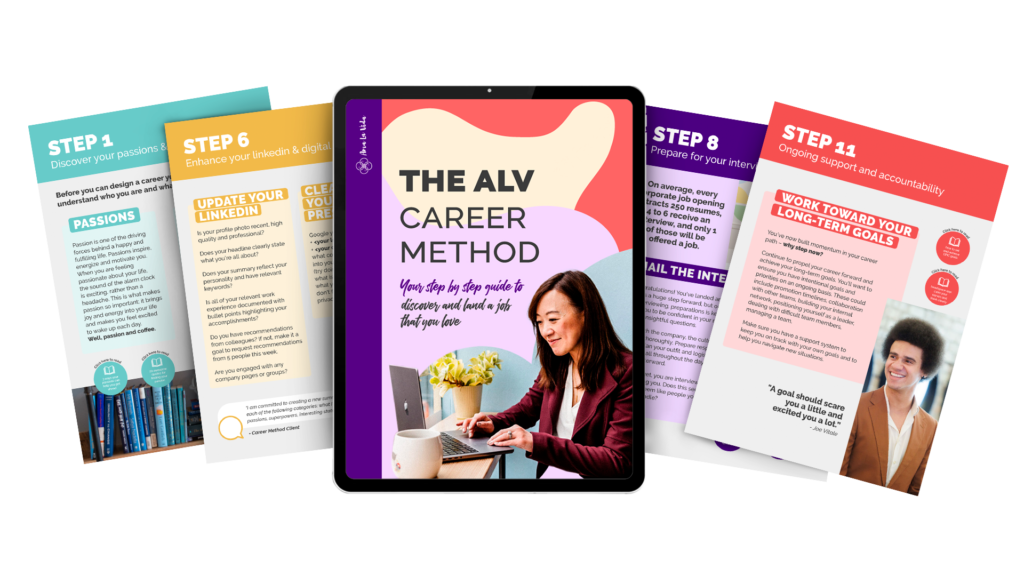
Download our comprehensive step-by-step guide to design and land a job you love!

Images from The ALV Career Method Guide
ALV Method Downloadable Guide

Even with certain states starting to reopen, things are still uncertain. Besides our health, finances are top of mind right now. Here’s 5 ways to manage your personal finances during continuing uncertain times:  1. Conserve Cash The first, and most important, rule to follow in uncertain times is to conserve cash! You should minimize your spending as much as possible and keep as much money in the bank as possible!  It seems like obvious advice, but sometimes a crisis can cause people to panic.  Don’t rush to pay as many bills as possible!  Stop and think about how long you can make your current cash last if you pay only what is absolutely essential.  Make a list of bills that are priorities and those you can hold off on paying or negotiate down.  2. Expense Management This step is also key in navigating uncertain times.  There are a few ways to go about getting your expenses in line when you need to cut back. Work to reduce fixed expenses: Cut variable expenses as much as possible: Get Creative! 3. Negotiate Bills Many companies offer hardship discounts to people who find themselves in a tough spot financially.  It might require a bit of patience, but calling and asking for assistance can really reduce your monthly expenses and give you the wiggle room you need to get through a rough patch.  Remember, EVERYTHING is negotiable, or at least you should assume everything is negotiable until you confirm otherwise.  The worst thing that can happen is that the company says no and you need to revisit your budget to add the necessary expenses back in.  4. Pause Retirement and other Contributions This is often a hard pill to swallow for people, but it is often a necessary step.  We encourage clients to turn off retirement contributions and to cut contributions to HSAs, FSAs, ESPPs, etc.  This is a quick and easy way to inject extra money into their paychecks when they need it most Remember, you can always go back to making these contributions later and make up for lost time, but the benefits of making these contributions is far diminished by the negative impacts of incurring credit card debt or in withdrawing funds from your retirement account.  5. Tap Into Unused Resources There is potential for you to utilize resources that can minimize your financial burden.  In some instances, eligibility for utilizing these resources may require you to have a higher credit score, but if you have the ability to access them you should take advantage! It’s important to get creative when times are tough! You need to explore every available option and consider utilizing resources and making sacrifices you never considered before. In a crisis, things can be stressful and overwhelming, make sure you take a step back and evaluate the entire situation before making any rash decisions! Tough times don’t last forever, being smart now can eliminate financial pain down the road and put you in a better position once the uncertainty passes. *In partnership with The Financial Gym.

Read More
two people giving virtual feedback

It feels like we were making great strides with having one on one feedback conversations – both positive and constructive. We made it a point to have ad-hoc conversations when walking down the hall. But now that has changed. With a virtual working environment, we don’t have the same ad-hoc opportunities. We are being pulled in many directions and providing feedback isn’t always top of mind. Contrary to our actions, providing feedback and reinforcement right now is one of the best ways to continue to engage your team and help develop them. If providing feedback before was difficult for you, it’s even more challenging in a virtual environment. There are ways to provide virtual feedback and do it effectively. Here’s how: Create a goal to provide feedback. If you aren’t regularly providing feedback to your employees, first start with creating a goal. Perhaps that goal is providing constructive feedback one time/week and positive feedback two times a week. You’ll notice positive feedback is easier to give than constructive feedback. The intention here is to practice. Once you have successfully taken these steps to provide feedback, then challenge yourself after three weeks of consistent practice to increase the frequency. What you’ll learn is that the more you practice, the easier it gets. Slowly it will become so intuitive that you won’t have to sweat about giving feedback. Learn a feedback framework. If you’re currently using the compliment sandwich or what I call the shit sandwich feedback framework, stop. The shit sandwich is giving positive feedback, squeezing in some constructive feedback and then closing it with a positive feedback. This type of feedback format isn’t effective. In fact, it dilutes the message and confuses the recipient. Here is Ama La Vida’s feedback framework. Learning a framework is the first step in preparing for your feedback. While this is not a linear framework; however, it’s important to walk through each point when giving both positive and constructive feedback.  Collect data. If your team members work cross-functionally, reach out to those they work with and ask them what your team member is doing well and can be improved upon. These will serve as additional data points for you to share with your team members. It will also help you have additional insight in case there are conflicting points of view from your team members.  Prepare for your virtual feedback conversation. Write down your main talking points. Incorporate the feedback framework and make sure there is only one key message. Do not try to integrate five different points in one conversation. Otherwise, the recipient will leave confused and not know what to focus on. As you prepare your feedback, ask yourself: Does my message include empathy? Have I tested my assumptions? Have I created the message with positive intent? Then practice your delivery in the mirror or with a peer. It’s one thing to think about your conversation; it’s another to practice out loud. Schedule time with your colleague and use video. Ask your direct report if it’s a good time to share feedback. It’s important to get permission as this allows for both parties to be mentally prepared. It’s also important that you both have video on so that you can read body language. Start the conversation by building rapport and connection. Then go into your feedback framework as practiced. When you are delivering the feedback, be sure to do so in the other person’s language. For example, if the recipient is very analytical, they are going to need to know who, what, where, when and why. If the individual is a quick talker, they’ll need you to get to the point quickly so that they can understand what the takeaway is. Be sure to adjust your communication style to the needs of the recipient. Use slack/email for informal communication and feedback. Not every piece of feedback has to be scheduled formally. If a colleague wrote a really good email, reply back and let her know what you liked about the email. There is no need to be overly formal about feedback except for when a conversation is required. This is especially true for positive virtual feedback. Send a quick note when someone is doing something particularly well, explain what you like about what they have done and you can reinforce it again when you have your 1:1 meeting. Hold yourself and your team accountable. It’s important now more than ever to have closer relationships with your team. If you were doing 1:1s every month, it might be time to shift to bi-weekly until the team has started to find their working groove again. Be more available to your team. Hold everyone accountable to sharing feedback – downward, laterally and upward. Because you can’t physically see your colleagues’ faces, you can’t see if they are stressed or upset or confused. This is the time to over-communicate. Have daily huddles as a team if needed. Create an open space to go through what’s working and not working. Discuss how everyone is still learning and growing. Solicit feedback if you’re not getting it – the more you can know about what someone needs, the easier it’ll be to solve the problem.  Closely monitor metrics to assess performance. Sometimes constructive feedback is a response to an event that’s occurred. That’s reactive feedback. While we can’t be proactive about all feedback, it’s imperative in a remote work environment that as a leader, you keep a close eye on your metrics. It means doing an audit of your team members’ metrics and making sure things are on track. It might be difficult for your team members to ask for help – they might feel overwhelmed or ashamed or stressed. This is the time for you to look for the warning signs. If you find any, quickly set up a meeting over video and curiously inquire what is going on. This might not be the time to give feedback; rather, it’s an opportunity for you to learn what your

Read More
creative ways to stay focused

Do you feel like your brain is buffering every five minutes or getting distracted by Instagram, Facebook or Twitter-like a kid in a candy store? We all struggle with focus, but when we have strict deadlines to keep up with, being productive should be at the top of your list. Here are some creative ways to stay focused and productive. Have an office If you work from home you’re really lucky. You can work in your pajamas and get a snack whenever you want. However, all that freedom can be really horrible for your productivity. So, unless you have a few fool-proof ways to be more productive while working remotely, it’s best to leave your bedroom for sleeping and find a different space for your work. You can easily hit your local coffee shop or library—this will help make you feel more professional and allow you to keep your private and business life separate.  Remove distractions Today, distractions can be found everywhere you turn, and no matter how good you are at multitasking, your quality of work will suffer when you’re distracted. So, make sure to close all social media tabs, put your phone on vibrate and dedicate your full attention to your work. You will not only work faster but also improve the quality of your work. If you just can’t stay away from distractions, you can turn to apps like Freedom that block certain distracting websites or Forest, that’ll keep you focused and away from your smartphone.. Other resources like Forest can also keep you focused when you have a lot of work to do.  Get a whiteboard Even with organizational apps, reminders, tasks and tech mapping, good old whiteboards are still the best way to keep your work in check. Create smaller work sections, add the items you need to complete and once they are done, you can just erase them—that part is so satisfying!  Have a change of scenery Oftentimes, the best ideas get born when you’re away from your keyboard. So, give your brain a nice change of scenery every once in a while and you’ll notice how much more productive and inspired you’ll be when you return to work. You can chill out in the park, work from a coffee shop instead from home or go for a short run. Another great thing you can do for both your brain and body is to take a relaxing bath. If you want to get the ultimate bath, you need to relax, treat yourself to some bath bombs and get really nice and cozy. Once your brain and body relax, you’ll get the best ideas and even solve that work issue that’s been bothering you for so long!  Take regular breaks While you think you can do more by staying at your desk, taking regular breaks is actually crucial to productivity and focus. Here’s one thing you can do: start a playlist with ten or fifteen of your fave tunes and once the playlist is over, it’s time for a break. Take a walk, grab a glass of water, have a protein snack or just exchange a few words with your colleagues. Once you come back from your short break, you’ll feel fresh and ready to conquer the world.  Make your goals public Unless you’re fine with being humiliated, you will do your best to make all your public promises and plans a reality. Nothing will keep you focused and productive as a deadline for a new product you promised to your customers!  Don’t push yourself too hard Tackling too many things at once will take a huge toll on your creativity and productivity and lead to unsatisfactory results at work. Today, the only way to stand out from your competition is to be remarkable, so something that’s just mediocre wouldn’t do. Setting goals that are too high will definitely drain you and only result in guilt. So, make sure to take a few days off, make your schedule realistic and you can expect nothing but excellence.  Being productive and focused is not a mission impossible, even when the internet is always here to provide endless distractions. So, keep these creative tips in mind and watch as your professional focus improves.

Read More
this is a photo of two people talking about how coaching can help you with your gut health

Do you ever feel sick of a belly that makes you look 6 months pregnant? Does it seem like you have a million food intolerances? Do you feel like you have no control over your unpredictable gut? Maybe you have wondered how coaching can help with your gut health? Or maybe, you feel like you’ve tried EVERYTHING yet you’re STILL left lying on the sofa too uncomfortable to move, not being able to fit into any of your clothes other than your ‘bloat day’ dresses? You think you’ve done so many healthy things for your body, yet still can’t go anywhere without worrying about running to the toilet (or wishing you DID need to go!)? Have you become frustrated because you just can’t figure out how to make yourself feel better. There’s so much information out there but you’re overwhelmed and unsure about where to start? If any of that resonates with you, health coaching could help you. How? I’m going to walk you through what working with an Ama La Vida health and wellness coach actually looks like. Specifically what the process looks like when we explore how coaching can help you with your gut health. What Does Working With A Health Coach Mean? Working with an Ama La Vida health coach starts by defining what health means to you, then developing a personalized plan to get you there. Your coach will be there with you, guiding you through a proven process, and giving you the support and accountability you need to get you to the healthier, happier, less bloated version of you that you want to become. Working with a coach gives you a structured approach to taking control of your gut health and is a built-in accountability system to keep you on track. Even when you encounter roadblocks or struggle to stay motivated, your coach is there every step of the way to help you get back up and keep moving forward. The ALV Health and Wellness Method is our comprehensive, structured health and wellness coaching program. There’s a lot of structure built into it, but also a lot of flexibility within that, so I’m going to share with you exactly what it looks like and why it works to get you the results you’re looking for. Why The Process Matters You may be wondering why we have a process in place around health coaching…why we don’t just go with the flow and take each coaching session as it comes. It’s because following a process gets you results. It’s normal to follow processes at work, to keep us on track and make sure we get stuff done. However, we don’t normally have these in place when it comes to our health. This means that we don’t make changes and end up just soldiering on with our discomfort, never giving it the focus it deserves. It’s time to change that. There are 3 key reasons why this process works: Structure: There is so much information out there on gut health. It’s everywhere at the moment! The problem is, there are so many things out there you could try..food intolerance testing, an elimination diet, yoga, probiotics, etc, the list goes on and on. Chances are you don’t know where to start and then you end up not trying anything..and staying stuck. Having a process gives you a structure to follow, so you don’t need to use your precious time and brainpower trying to figure it out. All you have to focus on is following it. Proven Process: You’re starting from scratch, but we’ve worked with hundreds of clients to help them feel better. We’ve taken everything that’s worked with those clients to give them a flatter, happier belly, to put this process together, so we know it works.  It’s Tailored to You: Yes, we have a process, but our process has flexibility built into it. No two people are the same. Your diet is unique. Your lifestyle is unique and your goals are unique. Our process doesn’t give you a cookie-cutter plan. It gives you a unique plan to meet your goals, that fits in with your diet and lifestyle. The ALV Health and Wellness Gut Health Coaching Process ALV Health and Wellness Coaching is a 12-week long program that takes you step by step through the process of identifying your health goals, coming up with a plan to help you reach them and then supporting you through making the diet and lifestyle changes needed to achieve those goals. We make sure this all fits into your life, so these changes are sustainable for you. Each week your coaching consists of completing online exercises in our proprietary eCoaching platform. Then you meet with your certified health and wellness coach to dive deep into your findings and ensure you are progressing toward your goal of a healthier, happier gut. We work through a framework called the ADIT Method. The framework consists of 4 key phases, which we’ll walk through one by one. Since our coaching is highly personalized, your journey will be different from someone else’s. However, this is a rough overview of how your journey to a happier gut could look. Let’s dig into exactly how coaching can help you with your gut health, we will start with assessing! Assess: It Starts With Understanding Where You’re At We start by assessing where you are right now with a personalized gut health assessment. This happens via a questionnaire and our first coaching session. You’ll complete the questionnaire prior to our first session, which means we can hit the ground running straight away and make the most of your time. In that session, we’ll talk through your answers and go through them in more depth. In this assessment, we’ll go through where you’re at – your current struggles, diet, lifestyle, career, emotions, social life, spirituality, physical activity and more. We’ll also look at where you want to get to and how you want your life to look.  We’ll dive deep, leaving

Read More
part-time jobs for students

Everyone says that student years will be one of the best periods in your life – and they are right to say so. But, unless you go in with full pockets or get a part-time job to improve your finances, it can be difficult to truly enjoy your student years when money is so tight. Education is extremely expensive today in the US, Australia and in many other countries, which is why you may need to make some extra cash on the side. Thankfully, there are plenty of part-time jobs for students that allow you to juggle studies and work at the same time. Here are some tips that will help you land a great one. Prepare Yourself for Work Many students make the mistake of rushing into the first job opportunity that pops up, or sending out quickly drafted resumes without giving it a second thought. This is not a way to land the best jobs for college students out there. If you want to nail more job interviews and get higher paid jobs, preferably in the field that you’re studying, you should get job-ready. This means that you need to be ready to spend a certain amount of time at work. Even though you’re only looking at part-time hours, this will be challenging at first if you’ve never worked before. Plus, you’d have to juggle studying and writing tasks, too, which is why you must have a positive mindset about getting an actual job. Secondly, you need to get everything ready to be able to work. Starting with your resume and cover letter and ending with a solution to your assignments, you need to take care of everything to be able to work part-time. In order to work without harming your performance at school, have an au edubirdie contact to reach out to when you need to go to work, but have a paper due the next morning.  Start Applying Early You don’t have to wait for your budget to be completely empty to start applying for a part-time job. If you have a school loan or expenses your budget can hardly cover, you should start looking as soon as possible, maybe even before you start school.  Learn How to Nail a Job Interview Most jobs include an interview, especially the higher-paid part-time jobs for college students. Since you don’t have much experience with this, you should practice your interview skills as soon as possible. To nail a job interview, you should follow the steps below: Dress based on what job you’re applying to get Find out details about the company you are interviewing to work for Know why you want the job position – they’ll probably ask you Ask about the work hours to see if they fit your school schedule Be honest about your skills and plans for the job Ask any questions you have about the job you’re applying for Don’t forget about body language Search for Work at Your College/ University Whether or not you live on campus, you probably have access to a student job shop, as well as the student union. Before you go further and apply for jobs that will require a lot of commuting to work, you might want to check out opportunities nearby. These are especially created for students, which means that you’ll enjoy better flexibility and higher understanding by your employers.  Check the vacancy lists and apply as quickly as possible for openings at your student union, at campus cafes and shops, or the libraries.  Ask Friends and Family Getting a recommendation at a workplace, even if it is for a part-time gig as a student, can help you a lot. Ask your friends and family if their company or organization looks for new job candidates.  Freelance If you want a more flexible option instead of fixed hours, you might want to go for freelance jobs. There are plenty of opportunities both on campus and online. You can offer tutoring services, write papers online, design websites, be a virtual assistant. Freelancing is very popular nowadays, so your options are very numerous. The bottom line As soon as you decide to take up a part-time job to support your studies, you are taking one big step toward adulthood. Part-time jobs for students will not only boost your financial situation, but it will also provide you with a skill set for your future career. And, let’s not forget that it looks great on your resume.

Read More

Stress is a normal part of life. Regardless of your daily responsibilities and lifestyle, you’re bound to experience stress. And while stress can motivate a person to do better, too much of it can compromise a person’s overall health. Poor stress management can increase your risk of developing illnesses and diseases, which can adversely affect the quality of your life. Today, we’re sharing some tips to implement in your life if you’re trying to be free of stress. Every human experiences stress, but this doesn’t mean that you should live your entire life full of it. There are several ways on how you can effectively combat stress and live a healthier life. By making small changes in your daily routine, you can achieve these goals effortlessly. Here’s how you can live a healthier and stress-free life: Always Eat Right Your diet plays can significantly affect your stress tolerance. Poor nutrition can contribute to stress, and stress can usually trigger you to reach for sugary and fatty foods. Improving your physical and mental health can be a near-impossible task if you’re not making any changes with your diet and stress management. If you want to hit two birds with one stone, gradually change your diet. A well-balanced diet can be a powerful tool for you to handle stress better. To help you get started, listed below are tips to help you focus on proper nutrition and help you reduce stress: Lessen caffeine intake Drinking too much coffee can worsen the effects of stress. Caffeine can cause your body to feel “wound up” and can make minor stresses feel and look more intense. When too much caffeine is in your body, small inconvenience can trigger chronic stress and can become the reason why you can’t function well.   If you drink several cups of coffee every day, gradually minimize your caffeine intake by reducing your cups. If you usually drink three cups every day, work on drinking only two cups and then one. Immediately and completely removing coffee from your diet can cause severe headaches and other caffeine withdrawal symptoms. Appreciate mealtimes Regardless of how occupied you are, you should never skip meals or eat hurriedly. Doing any of these can only worsen stress and even put your health at risk. Instead of skipping your meals or eating on the run, utilize mealtimes as a chance to sit down and relax. Enjoy the flavors of the meals in front of you, and reflect on all of the activities you had and will have in the day. If you’re sharing the meal with another person, maximize this time to catch up with the other person. Ask how they are doing, and what’s keeping them busy lately. Besides, meals taste better if you’re sharing it with people close to you, right? Avoid stress eating It’s common for people who are under too much stress to reach for unhealthy foods to comfort themselves. Eating an entire pint of ice cream or munching a huge bag of chips in one sitting can seem relaxing for someone who is stressed. However, stress eating can only result in guilt and overeating. If you see yourself in this kind of situation, discipline yourself to use other platforms in managing stress. Instead of eating large quantities of junk food whenever you’re stressed, play with a pet, engage in physical activities, or treat yourself to a relaxing bath. De-stress by pursuing your hobbies or taking days off from work. These activities are better stress relievers because it frees your mind from any mental exhaustion without harming your overall health. Consider Incorporating Natural Supplements And Therapies For individuals who are always on the go, staying physically active and preparing well-balanced meals can be a struggle. They won’t have the time to work out regularly, and they would prefer meals that are easy to prepare. If you have a very hectic schedule, don’t worry because you can still ward off stress even if you don’t have the luxury of time. Fortunately, there are now natural supplements and therapies that can help you live a stress-free life, such as: CBD-infused products CBD or cannabidiol is a product extracted from the cannabis or hemp plant. Although derived from the same family as marijuana, using CBD doesn’t create any “high” sensation or alter any of the body’s functions. In fact, CBD products are cost-effective because it can treat a wide variety of health conditions such as stress and other mental illnesses. CBD products are known to reduce stress in the human body because it contains natural compounds that boost the brain’s ability to produce serotonin. Serotonin is a chemical neurotransmitter responsible for a person’s mood and social behavior. According to studies, there is a connection between the body’s serotonin levels and stress. The lower serotonin a person has, the more susceptible they are to experience chronic and frequent stress. Having low serotonin levels is a leading factor of anxiety and depression. CBD can positively interact with the human brain, encouraging it to produce more serotonin. Frequent CBD use can guarantee that your brain produces more serotonin. To ensure your entire body gets a sufficient amount of this neurotransmitter. Having a sufficient amount of serotonin in the body can help your mind stay at ease. This will keep stress at bay. Aromatherapy When you think about aromatherapy, think about basking in the ambiance of a luxurious spa. The environment of a spa is one of the reasons why you’re paying your hard-earned money to use this facility. But instead of spending money just to bask in a relaxing environment, why not create the same at home? By investing in essential oils and placing them strategically in different areas, it won’t be long before your home will feel and smell like a spa! Aromatherapy is actually a natural therapy used since ancient times to reduce stress and promote feelings of calmness and relaxation. Inhaling and exhaling certain essential oils is an effective stress reliever because it stimulates the

Read More