Category: Mental Health

expert on her computer

Wondering if you’re experiencing imposter syndrome? Our Imposter Syndrome Quiz is designed to help you find out. If you’ve ever felt like a fraud, convinced that despite your achievements, someone will eventually discover you’re not capable or deserving of where you are, you’re not alone. Imposter syndrome is a silent epidemic impacting many of us. Research published in the International Journal of Behavioral Science indicates that about 70% of individuals will experience imposter syndrome during their professional lives—but my coach’s intuition tells me that number is even higher. Imposter syndrome creates a cycle of self-doubt, anxiety, and negative self-talk that can hold you back from embracing new opportunities and achieving career success. It can even affect your mental health. If these feelings resonate with you, it’s time to take action. Take our Imposter Syndrome Quiz now to uncover how imposter syndrome manifests for you. Start breaking free from the mental barriers standing in the way of your success! Throughout this article, we use the spelling “imposter syndrome,” though you’ll also see it written as “impostor syndrome.” Both are commonly used interchangeably to describe the same experience. We use “impostor” when directly referencing the work of others who have used that spelling. For example, Dr. Valerie Young, who identified and introduced the five types of Impostor Syndrome in her book. What is Imposter Syndrome? Imposter syndrome is the persistent feeling that you’re not as competent or talented as others believe you to be—despite clear evidence of your achievements. How does experiencing imposter syndrome feel? It often shows up as self-doubt, anxiety, and fear of being “exposed” as a fraud, even among high achievers who have a strong track record of success. This internal struggle fuels negative self-talk and can make it difficult to fully embrace accomplishments or take actionable steps forward in life. What Causes Imposter Syndrome? The imposter phenomenon, a term from clinical psychology, stems from a mix of personal experiences, societal expectations, and workplace pressures. While anyone can experience imposter feelings, research shows that high-achieving women are especially vulnerable. A recent meta-analysis of over 100 studies confirmed that women experience imposter feelings more often than men, highlighting just how widespread this is. This builds on the original work by psychologists Pauline Clance and Suzanne Imes, who first identified the “impostor phenomenon” in 1978, noting that many successful women attribute their achievements to luck rather than to their own abilities. Several factors contribute to the development of imposter syndrome: Upbringing & Parenting Styles Growing up with impossibly high standards, excessive praise, or constant comparisons can shape the belief that success is never enough—or simply a stroke of luck. Parents who emphasize achievement may unintentionally instill a fear of failure and patterns of negative self-talk. Work Environment & Cultural Expectations As a career and life coach, I believe early work experiences strongly shape our beliefs about career potential. Competitive job markets, perfectionist cultures, and limited diversity in leadership often reinforce imposter feelings—especially for high-achieving women, who may feel constant pressure to prove their worth. Perfectionism & Overworking “You can be anything if you try hard enough.” It’s a familiar mantra, but it often fuels overwork and the belief that effort must be endless to be worthy. This mindset is linked to stress, burnout, and depression—common outcomes of internalized perfectionism. External Factors & Social Conditioning Cultural norms, gender expectations, and other environmental factors can set unrealistic standards of success and amplify feelings of imposter syndrome. These narratives can lead individuals to downplay their accomplishments and live in fear of being “found out.” Overcoming imposter syndrome begins with recognizing the influences and other external factors that shape our self-doubt. When we acknowledge these pressures while focusing on what we can control, our mindset, we unlock incredible potential. By challenging negative thoughts, reframing limiting beliefs, and fostering a more empowering workplace culture, we can break free from “impostor feelings” and step into leadership with confidence. How Imposter Syndrome Sabotages Your Career Imposter syndrome is not a diagnosis, but rather a thought pattern. These thought patterns can create mental roadblocks that hinder confidence, professional growth, and leadership potential. When you feel like an imposter, it’s not just an internal struggle—it actively leads to self-sabotage, holding you back from advancing in your career. Imposter syndrome can create a self-fulfilling prophecy, reinforcing the belief that you’re not good enough, even when you have the skills and experience to succeed. Over time, this mindset can limit your growth, impact your confidence, and prevent you from seizing new opportunities. Imposter syndrome can sabotage your career success in many ways. Here are a few examples that might sound familiar: Reluctance to Apply for a New Job Many professionals hesitate to go after new opportunities, believing that because they don’t meet 100% of the qualifications, they can’t apply. This is fear of rejection or “not being ready” and can keep you stuck in roles that don’t challenge or fulfill you. Hesitation to Negotiate Salary or Ask for Promotions When doubt creeps in, you may struggle to advocate for yourself. Imposter syndrome convinces you that you’re lucky to have your position and should just be grateful, making it difficult to ask for the raise or promotion you deserve. Avoidance of Leadership Roles Many high performers feel frustrated watching less-experienced colleagues move into leadership positions because they don’t see themselves as “leadership material.” Part of this is avoiding going after the next leadership opportunity because imposter syndrome may cause a fear of being exposed as a fraud or fear of failure. Withdrawing from Networking or Speaking Opportunities A toxic work environment can reinforce imposter syndrome, making individuals afraid to voice their opinions in meetings or avoid networking events where they feel they don’t belong. Over time, this self-doubt and withdrawal can isolate you and limit your professional growth. By recognizing these patterns, you can start to challenge the negative beliefs that are holding you back. So, what’s the first step to breaking free? Understanding how imposter syndrome manifests in your life. Take

Read More
woman holding a journal with a flower in it

Enough is as good as a feast. I’ve been thinking about this quote a lot. A little while back I wrote about my recent molar pregnancy experience. It’s a rare chromosomal abnormality in a pregnancy that leads to you growing a tumor instead of a fetus. Not only did I lose the pregnancy that I had been so desperately trying for, but my type of molar pregnancy presented a 20-25% chance that the pregnancy tissue would become malignant and evolve into a form of cancer.  The way they can track if the cells are growing or not is by measuring your HCG levels (pregnancy hormone) in your blood. Ideally, this level drops from sky-high to 0 over the course of the next couple months after the issue is identified and the tissue is removed surgically. The first few weeks after surgery my HCG level was dropping, dropping, dropping. I was moving past the pregnancy loss and starting to get hopeful again about the future. And then… It jumped up.  I got the test results on a Saturday morning and didn’t hear from my doctor until Monday. For those 48 hours, I was an absolute lunatic. I devoured every blog post, clinical study, and medical document the internet had to offer. I talked to everyone I knew who had medical expertise even remotely relevant to my situation. I recalibrated my future plans knowing that I was headed for chemo and with that came a very prolonged timeline for when I could try for a baby again. I cried. A lot. Monday came and doc said we won’t head straight for chemo. We will wait at least another week to see how my blood work continues to evolve. The next week, my level went down.  Then it went up again. Then down again. Then up. Then it stalled. I was eventually referred to the oncologist. I’m happy to report that after 14 weeks, my HCG finally dropped to 0. There’s still a chance it could reappear, but for now, this is great news.  This experience was a special form of torture for me. I’m a pretty adaptable person. I can change course quickly and don’t get too hung up on the past. I can face anything in front of me. I just need to know what it is.  For me, the waiting is what’s miserable. The not knowing if I’d be doing chemo or not. A 6 month wait to try for another baby or a year-and-a-half long wait. Any of these options was manageable. I just hated waiting and waiting and waiting to find out which one it would be. When I first wrote about my molar pregnancy, my biggest fear was that I’d get so fixated on it, and trying for a second child, that I’d miss out on the joy of spending time with my two-year-old. I don’t think I’ve done that. I’ve been having so much fun with her and managing to remain present as a parent. But I largely sank into a slump. If anyone asked, “How are you doing?” they had better brace for impact. “Not great and here’s why.” Couple this oversharer with an ongoing health issue that occupied a tremendous amount of brain space, and anybody and everybody was going to get a lesson in pregnancy hormones.  I had become so one note. It had become my excuse for everything. I was over me. And reaching that point is usually a good catalyst for change. In my mind, I was incredibly justified in feeling crappy. And to some extent that’s true. I have been through a lot and I need to give myself grace for not always being at my best. And simultaneously, things can not be perfect and still be good. I can be going through something tough and still be joyful. I can get out of survival mode and thrive even when life doesn’t go my way.  Because what is thriving? Is it abundance? Is it having everything you want? Or is it your posture toward life? Is it a headspace you occupy?  So I keep coming back to, “Enough is as good as a feast.” It’s not about having everything; it’s about having your needs met. And being grateful for that. I’ve always been a striver. Working toward that next goal. Pushing myself a little bit harder. And while that characteristic is largely what’s made me successful, it’s also responsible for making me unhappy. And so I’m working to balance ambition and vision with gratitude and contentment. It’s starting to become clear to me in so many aspects of my life. Am I back to my pre-baby physique or weight? No. But I’m healthy (I mean ish. Molar pregnancy aside). I can carry my daughter. I can fulfill my responsibilities. For today, that’s enough. Is my business making money hand over fist? No. But it’s growing. It’s making an impact in people’s lives. It’s creating long-lasting friendships. For today, that’s enough.  Am I pregnant with my second child, rounding out my ideal four-person family? No. But I love the three of us together. If another child never comes, that will always be enough. Our coaches will tell you that while you can’t always control your thoughts, you can control the power and validity you give them. You can control which thoughts become the narrative you share. And the narrative you share so often becomes the reality you see. Last year when people would ask me how business was, I would often say, “It’s really hard.” And it felt hard. And the more I said it, the harder it felt. And I was so drained by that. Things haven’t gotten easier this year on paper, but they’ve become lighter for me emotionally because I’ve intentionally changed that narrative. I can tackle difficult challenges but still do them with a sense of ease.  I’m working on making this same shift personally. I can be in this weird, long, scary health thing and

Read More
Nicole speaking with microphone

My husband often describes himself as a “toes in the sand” kind of person. He means that he doesn’t get pre-excited for vacations because it’s not real for him yet. It’s not until his toes are literally in the sand that it feels real and he starts to get excited about the fun that lies ahead. I’m the opposite. Half of the enjoyment for me is in the anticipation and planning. I get excited thinking about the experience, researching things I want to do and places I want to eat. It feels real for me from the second I say out loud that we’re going. These roles hold true for us during pregnancy and are exacerbated by the fact that I’m the one who is physically feeling how real it is. From the second I think I might be pregnant, my brain races. I’m envisioning this person. I’m planning their room. I’m planning our lives. Throughout the entire day, as I feel all the changes in my body, the reality of this future life vision gets solidified. It makes the let down of pregnancy loss that much more challenging. I’m not just losing this person I’ve grown for a few days or weeks or months, I’m losing an entire life I’ve built with them in my mind. And the grief that comes with that is very real. The all-consuming nature of this experience can make focusing on work challenging. You’re physically there, but your mind is elsewhere. You’re often grieving something without most people around you even knowing about it. Coping with pregnancy loss at work can feel like bottling up the emotions that come with deep loss because it’s taboo to discuss or it feels like the expectation is you should be able to carry on like normal. If you’re anything like me and you’ve experienced a miscarriage, you will say, “I’m fine.” And you will feel mostly fine. And you will keep things moving mostly fine. And you are mostly fine. Until you’re not. Until it bubbles over and you break down. Until you’re forced to realize that maybe you weren’t as fine all along as you thought you were. Now having gone through two pregnancy losses, I’ve learned a bit about what helps me cope when returning to work. These steps help me grieve in a healthy way and not get to the point where things boil over.  With my most recent pregnancy, I learned that it wasn’t viable at my first prenatal appointment at about 8.5 weeks. I was supposed to come into the office that day, and my team knew I was headed to this appointment first. After receiving the news that I was experiencing a Molar Pregnancy, I just couldn’t bring myself to go to the office that day. I gave myself the rest of the day off to be sad.  For me, I just needed an afternoon and then looked forward to getting back to work. I knew that I couldn’t be productive that day or have regular conversations without crying and also that I like to stay busy when I’m going through something tough. For you, this might look different. You may wish to take a few days to yourself – if that is feasible for you, do it. Taking time to acknowledge your feelings can give you the space to grieve without forcing yourself to get right back to it and act like nothing happened. You may not feel comfortable sharing what you’re experiencing if you are newer to a role, don’t have trusting relationships with colleagues, or were very early on in your pregnancy. That’s okay. You have to trust your gut in terms of what you feel comfortable sharing and with whom. For me, sharing my experience was a key part of my recovery and a way I allowed my colleagues to have a glimpse into my headspace and behavior. Days when I seemed short, sad, or distracted, I probably was. And this sharing allowed them to fully consider what might be on my mind and not internalize it as a reflection of them.  The outpouring of support I received when I shared very openly about my loss (via a blog post) was truly heartwarming and helped me to connect with others and feel less alone. Even the experience of writing my feeling down was cathartic. If you’re not up for sharing it, journaling what you’re going through might be helpful in and of itself. I asked a colleague, Shelby Davis, what helped her after having a late-stage pregnancy loss. “I think feeling open to talk about it is what helped me the most so I didn’t feel like I had to stuff it all down and act like everything was fine and nothing happened. I had conversations with my direct boss and his boss to let them know what had happened and that it would take me some time to be back to my normal bubbly self. They told me to take the time I needed and if I needed anything throughout the process to let them know. They were very understanding, and my team that I managed was so thoughtful.” While opening up can be extremely scary and uncomfortable, you might be surprised at the support you receive and who provides it. Pregnancy loss and infertility are so pervasive that many people, even those you don’t suspect, have had their own journey with these experiences and are incredibly empathetic. People’s reactions will vary widely when they learn of your news, and some people won’t have the capacity or awareness to support you how you’d like. This can be very disappointing. At the same time as I mentioned above, others may show up for you in ways you never expected.  Many of my closest friends responded with “Oh so sorry” and not a whole lot else because they didn’t know what to say or probably didn’t think much about it after the initial news. That’s okay! Not

Read More
nicole wood smiling looking up to the sky

I just had my second miscarriage.  I went in for my first OB appointment of the pregnancy at 8.5 weeks as is standard practice. With my daughter, we thought on that first scan that she looked like the cutest little gummy bear. While nervous given the last pregnancy didn’t work out, I was so excited to see that wiggly, tiny little baby on the screen. Already at this point, I was in deep. I had: I walked into that appointment buzzing with excitement to see my baby for the first time. Instead, in the span of 15 minutes, I received a whirlwind of news that left me with no baby and a cancer scare instead. I had a rare occurrence called a molar pregnancy. It’s a chromosomal abnormality that leads to your body growing a mass of cells instead of an embryo. There’s no chance of a viable pregnancy, and instead there’s a real risk that, even after a d&c, those cells continue to grow (cancer) and require chemo to combat. Through my research and consultation with my doctor, I was made aware that no matter what happened post-d&c, this is a very treatable condition, and I will ultimately be totally fine. That’s certainly a relief. I know I’m going to be okay.  But it is unsafe for me to try to conceive again for many months, potentially over a year, depending on the course of my treatment and recovery. And who knows what will happen then.  The summer maternity leave I was planning for… gone. The 2.5 year apart siblings growing up together… gone. The family of four I thought I’d soon have… gone. And quickly replaced with massive doubt that it will ever come. So what now? I’m giving myself some time to be sad. And angry. And jealous. And heartbroken. Because I am all of those things and they deserve a space in this process. And then… I’m putting one foot in front of the other and continuing to move forward. With each day it gets easier. I’m spontaneously crying less… so that’s something. But my biggest fear in all of this isn’t that I’ll have cancer or even that I’ll never be able to have another child. It’s that I’ll squander years of my life, precious years of my daughter’s toddlerhood, waiting and wanting for something else. That I’ll be so focused on the next step toward recovery and trying for the next baby that I’ll be unable to fully enjoy the one I have right in front of me. And I can’t let that happen. I know my situation is unique, but in so many ways it’s not. You’ve felt this before. The struggle of trying to enjoy life when you feel like you’re waiting for a big part of it to start. You’ve had your version of it. Maybe you’re living it now. Waiting to land that amazing job so you can ease your financial strains and be able to contribute your talents meaningfully. Waiting to get through this seemingly never-ending project at work so things can calm down and you can make plans again. Waiting for your business to find solid footing so you can prove that your idea wasn’t crazy. Waiting to find the one so your life with a partner can begin. Waiting to get even that first positive test so you can become the parent you know you were meant to be. Waiting for something to happen that may almost entirely be out of your control, that you feel is standing in the way of you living the life that you truly want for yourself. It sucks. It really sucks. This isn’t a “5 Steps to Overcome…” type of post. Today, I have no advice. All I have is my story.  All I can do is share that if you are feeling similarly, I see you, I have hope for both of us, and I believe that no matter how difficult it is, our lives today are worth living fully just as they are. I can remind us that no matter what’s missing, there’s so much good stuff here already. I can tell you that you’re justified in cursing the world for its injustice, just as I am. And that you’re not foolish for holding onto hope for what might be. I unfortunately cannot tell the future. I don’t know if or when what each of us wants will come our way. But my wish for you today and always is that in the midst of the waiting, you don’t forget to keep living.

Read More
woman smiling sitting outside

Over the last few years, the conversation around mental health has been shifting from silent and stigmatized to open and commercialized and everything in between. I, for one, am so glad we’re starting to talk about mental health. It’s not just about being healthy or struggling with mental illness, there is a big area in the middle that tends to be forgotten.  Today, we’re going to talk about improving your mental health the way you would improve your physical health if you’re already a relatively healthy individual. How do you show up to the “mental gym” and what sorts of things do you do to flex muscles that may be a little weak? Let’s dive in! Note: Mental health is on a spectrum and before we dive into some ways you can improve and care for your mental health, we want to call out that sometimes the best answer to this is to seek help. If you feel like you need professional help with your mental health, please call a mental health provider or seek out immediate help through the SAMHSA National Help Hotline.  1. Lower Your Expectations Every time I say this to my clients, they laugh. Lower my expectations? Why? Well, odds are that your expectations of yourself are way too high. Much higher than the expectations you hold of others or anyone else holds of you. So, lower them.  We expect ourselves to give our 100% ALL of the time and if we don’t, we beat ourselves up for not doing enough or being enough. So I say, lower your expectations. A good way to frame this is by coming up with your goal and then breaking it down into three categories.  Your first category is your expectation of yourself when you’re feeling your best – this can be your “ideal”  The second category is your expectation of yourself if something else were to come up – a busy week, a last-minute deadline, or a head cold And the final category is your expectation of yourself if something major happens – a family emergency or a more serious illness like the flu or covid Now, that third category is your new goal.  Anything beyond that, categories 2 and 1, is exceeding your expectations, not meeting them. Anything you do that’s the third category or more, you celebrate! If you don’t meet that level of expectation, you reflect: what happened, what got in the way, what type of support do I need? In none of these circumstances, do you ever beat yourself up. Got it? 2. Stay Present “If you are depressed you are living in the past. If you are anxious you live in the future. But if you are at peace you are in the present” Lao Tzu Living in the moment or mindfulness has been and still is a hot topic of conversation. We all know we should do it, but how do we do it when our minds are reeling, going a million miles a minute? One of my favorite mindfulness practices is a practice called “Orienting.” It’s simple and you can do it anywhere, anytime. I encourage you to have scheduled moments in which you orient (set an alarm or match it up to a thing you do every day like drinking coffee, eating lunch, or brushing your teeth).  Before starting this exercise, pay attention to your breathing. Take slow, deep, long breaths – in through your nose and out through your mouth. Breathe deeply for about 3-5 breaths and then go through the following steps: 5: Acknowledge FIVE things you see around you. It can be anything, don’t worry about judging it or bringing any memories or stories in. Don’t start thinking “I see my room, it’s so messy and there is clutter and I should’ve cleaned it” Simply acknowledge 5 things. Ex. I see a pen. I see a plant. I see a computer. I see a tree. I see a couch. 4: Acknowledge FOUR things you can touch around you. It could be your hair, a pillow, or the ground under your feet. Again, no judgment or stories just state facts. Ex. I can feel the ground on my feet, it feels cold and solid. I feel the pillow in my hand, it is soft and fuzzy.  3: Acknowledge THREE things you hear. This could be any external sound around you or near you.  Ex. I can hear the whirring of a helicopter. The sizzle of a pan. I hear my dog snoring. 2: Acknowledge TWO things you can smell. Maybe you are in your office and smell pencils, or maybe you are in your kitchen and smell food. If you need to take a brief walk to find a scent you could smell soap in your bathroom, or nature outside. Ex. I smell my coffee, it is nutty and strong. I smell my shampoo, it smells like coconut. 1: Acknowledge ONE thing you can taste. What does the inside of your mouth taste like—gum, coffee, or the sandwich from lunch? Ex. I can taste my toothpaste.  Once you acknowledge these things, bring your focus back to your breath. How do you feel now? Where do you feel those feelings in your body?  You can also do this exercise in the moment when you feel anxiety, stress, or any other intense emotion come in. This simple exercise gets you out of your thinking brain into your feeling body and hopefully supports you in de-escalating emotions that may be too intense or negatively affecting you in your day to day. 3. Move Your Body Moving our bodies has proven benefits for our minds and bodies. It helps release endorphins, move emotions through our bodies, strengthens the mind-body connection, and get us out of our heads. Like everything, there are helpful and harmful ways to do this and for the sake of improving your mental health, we want to focus today on intuitive movement, what it means, and how to embrace

Read More

I am a recovering people-pleaser. There was a time in my life when I was afraid to say no because I wanted everyone to like me. I avoided conflict to a fault. I didn’t speak up for myself. I subscribed to this toxic mindset because I saw this type of behavior equal success. Over the years, I’ve met countless people-pleasers just like me who have come to me for coaching. Over time, people-pleasing became the default for them. When discussing their reluctance to change often they’d say things like, “I just want to be a good person and say yes,” or “I want them to like me,” or “I have to say yes because I don’t want to hurt their feelings.” This unhealthy behavior over time wears on People-pleasers. Consequently, people take advantage of this type of behavior. Over time, through this repeated behavior, people-pleasers realize that they aren’t pleasing anyone at all. While people-pleasing can be a hard habit to break, with some good coaching and identifying the right tools that are going to support you, you can recover from this toxic mindset.  What is people-pleasing? At the core, people-pleasing means putting someone else’s needs before your own. People-pleasers are naturally in touch with the needs of others and are agreeable, helpful, and kind. Helpfulness and kindness are generally positive traits we want to see in other human beings, but taking it too far has its pitfalls. People-pleasers are known for doing whatever it takes to make others happy. Going too far to please others can leave one feeling emotionally drained, stressed, and anxious. As a result, people-pleasers may struggle with self-advocacy, which can lead to harmful patterns of self-neglect and self- sabotage. The Risks of People-pleasing: We can’t talk about how to overcome people-pleasing until we fully understand the risks. While it might seem harmless to be a people-pleaser, overtime this behavior can have damaging consequences. It can lead to serious mental and physical health risks.  The Signs You Might Be A People-pleaser: There are several signs that you might be a people-pleaser. In order to know how to recover from people-pleasing it’s important to answer these questions. Do you… If you answered yes to most of these questions, chances are you suffer from people-pleasing. Learning How to Say No Putting an end to people-pleasing requires us to learn how to say No. There are several reasons why we must learn to say no: Now you know why, it’s important to learn how to say no. Here are a few tips: 7 Tips to Recover From People-Pleasing  While saying no is a critical step in healing from people-pleasing, there are a number of other steps you can take to recover. These steps will help you learn how to find a healthy balance in helping others without sacrificing your own needs.  1. Establish Boundaries In order to recover from people-pleasing it’s important to know your limits and communicate those limits. Boundaries are for us. Be clear and specific about what you are willing to say yes to. If it feels like someone is asking too much, let them know it’s beyond your limits of what you are willing to do and say no. We have a great resource on how to establish boundaries which can be found here.  2. Small Steps For people-pleasers these behavioral changes will feel big because they are. You have to retrain your conscious response pattern while also teaching those around you to honor your boundaries. Because of the complexity, it can be helpful to start small. That might sound like practicing saying no to smaller requests or challenging yourself to ask for something small that you need. Every time you take a small step away from your tendency to please, you’ll gain confidence.  3. Positive Self-Talk This is one of my favorite tools in building confidence, and can be applied to people-pleasers. If you start to feel overwhelmed or tempted to say yes when you really mean no, remind yourself that you deserve to have time for yourself. You deserve joy. You deserve to spend time and energy on the things that get you closer to your goals.  4. Set goals Name your priorities. Where do you want to spend your time? What goals are you trying to accomplish? Who do you want to spend time with? If something or someone is depleting your energy go back to your boundaries.  5. Pause Similar to the notion of “blaming your calendar,” when someone asks for a favor, tell them you will think about it and get back to them. Saying yes without pausing can lead you to feeling obligated and overcommitted. By giving yourself space to respond you can decide if it’s something that you really want to do. Furthermore, research shows that a pause between making a choice increases-decision making accuracy. Ask yourself, “Is this something I really want to do and if I say yes how stressed will I be?”  6. Reciprocity It’s important to remember that strong, healthy relationships involve reciprocity. If you’re the one always giving and the other person is taking, that is no way to live. Even if you truly enjoy pleasing the other person, it’s important to remember that relationships are about give and take and they should give you something in return.  7. Help You don’t have to give up being helpful and kind and you don’t have to say no to everything for the sake of saying no. The key is to understand your intentions. Don’t help only because you want approval. Keep doing kind things, but do it on your own terms. It will demonstrate greater authenticity on your behalf and you’ll be able to live a more congruent life.  None of us are perfect. If your people-pleasing is standing in the way of your own happiness, it’s crucial that you set boundaries and take back your time. You’re human. You can’t possibly please everyone. Working with an Ama La Vida certified life coach

Read More

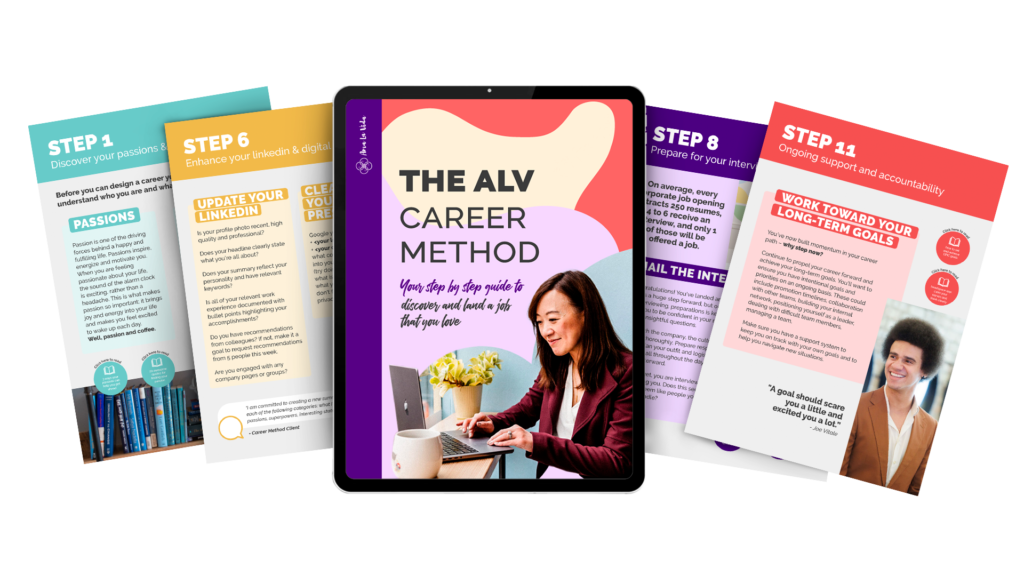
Download our comprehensive step-by-step guide to design and land a job you love!

Images from The ALV Career Method Guide
ALV Method Downloadable Guide

Over the last few weeks, many of my clients have wanted to talk through how to re-enter social situations. As Covid-19 lockdown restrictions lift, we have to manage the good, the bad, and the ugly that comes with it. So today, I’m sharing 5 tips to support you in re-entering the social world as things begin to open up.  First, I want to acknowledge that everyone will be coming into this from a different starting point. Re-entry social anxiety in a post-lockdown world can mean many different things to everyone. Some may be itching to go dancing in a crowded bar or travel all over the world, yet their comfort level around people may have shifted over the past years. Others may have secretly enjoyed the safety of being cooped up at home and are facing the reality of going back to “normal”. There is no right place to be or right way to feel. All of your emotions, whatever they are, are valid and worthy. Whether it’s going back to the office or facing the holidays with family, I hope these tips will help you reflect on what you need and let go of what isn’t serving you as we head into 2022. 1. Accept it will look different We all have clear pictures in our heads of how it used to be. We know what we liked and didn’t like, where we felt comfortable and what we avoided — that has all changed. It may not feel like it, but the last couple of years have literally altered our brains, and how we show up and move around the world has inevitably shifted. Regardless of what you’re venturing back into, it’s important to first and foremost accept that it will not look the same as before. The truth is, there’s still a lot of unknown even as things open up and we resume activities as we used to. Half the battle is accepting that all of these experiences will look and feel different. The point isn’t to change them or wish they were just as before, but rather to figure out how to best live through what is. That means letting go of all expectations and leading with curiosity and kindness as we navigate this new social landscape. Your outings might be shorter, your conversations may feel awkward, and you might realize you like or dislike new things. Let go and accept it! 2. Start small If you’re not even sure how you’re going to feel when you re-enter social situations, start small!  Think of one thing you feel comfortable with right now: that might be meeting a trusted friend for an outdoors walk or getting coffee with a coworker. There’s no right or wrong answer—what feels comfortable for me might not be comfortable for you. Start with the least intimidating thing and check in at the end of it: how did that feel? Would you do it again? What’s the next step? Take your time and be honest with yourself here – baby steps is the way to go! 3. Create space to recharge One thing I’ve noticed is that as soon as things started to open back up, I went back to my old ways of overcommitting to plans. I quickly said yes to every opportunity and just like that, every day I had something to do. It was exhausting! After the last two years, we’ve realized that getting back into the swing of things can take a lot out of you – that’s okay. Make space for it and prioritize recharging. You can do this by setting certain boundaries, like only making plans 2 times a week, or consciously creating a wind down routine before or after socializing. The key here is to know what types of activities help you recharge. The theme to all of these tips is individuality and realizing we all have different needs. What types of things feel like self-care to you? If you need a little help you can see self-care tips by your Enneagram Type or your Myers-Briggs type. 4. Know what’s in your control (and let go of what isn’t) As you re-enter social situations, remember you get to choose what you’re comfortable with. Whether that is indoors or outdoors, mask or no mask, small get together or big parties – YOU DO YOU! You can feel empowered in making decisions about what serves you and choosing what works for you. Take some time to reflect on this. Don’t be afraid to communicate with your friends and family about your needs and boundaries. This can come especially handy as holidays are around the corner. Some things you can consider: What is the group size I feel comfortable with? Do I want to wear a mask indoors? Outdoors? What things do I not feel comfortable with? What do I need to prepare for this social event? The flip side of this coin is that what other people do or think is not under your control. That means you can’t control whether everyone around you wears a mask, or if they agree with you or not. Stay firm on your boundaries but also honor others’ boundaries and let go of what is not under your control. 5. Embrace the awkward  After more than a year of video calls and working from home, there might be some awkwardness in how we all interact with coworkers, family, friends, and strangers. Embrace it! Naming your emotions takes their power away so say something like, “This is weird, huh?” or “I forgot how to talk to humans, didn’t you?” Adding some humor into an awkward situation can put everyone (including yourself!) at ease and bring some light into an otherwise very serious or anxiety-inducing situation.  Whether this re-opening is something you’re looking forward to or dreading, remember to be kind to yourself. These past couple of years have been tough on everyone and the route into our new normal won’t be easy. Honor your

Read More

Change Your Mind, Change Your Life I just started reading Joe Dispenza’s book Breaking The Habit of Being Yourself. The idea that you can manifest your reality by shifting your thoughts and feelings is fascinating to me. Joe says, “If you want a new outcome, you will have to break the habit of being yourself, and reinvent a new self.” Our mind and body must be aligned to achieve this new state of being that can manifest new possibilities, which can help you mentally prepare for your success. This idea shifts us from a state of reaction to creation, or more simply put, our thoughts create our reality. Soccer In The Sand I experienced this in action over the past month while playing soccer. First, I played in my first beach soccer tournament with friends in Seaside, Oregon. My initial self-doubt and fears almost stopped me from playing. I eventually quieted my disempowering questions: “What if I’m not good enough for the team? What If I let my team down? What if I don’t get along with my new teammates?” Instead, I envisioned the possibilities of positive experiences and ultimately said yes to new friends and good times. Throughout the tournament, I even insisted our team would make it to the championship game – even when it didn’t seem possible. While we technically did not make it, another team no-showed for their game against the championship team. This meant we got to scrimmage against the championship team instead! This was manifesting in action.   Mentally Prepare for Your Success  You can create success by mentally preparing for it. As the saying goes, practice makes perfect. But did you know mental practice leads to progress just like physical practice? A mental rehearsal (otherwise known as visualization, or imagining yourself performing an action) produces results! In a University of Chicago study, three groups were tested on how many free throw shots they could make. The first group practiced free throws daily for one hour, while the second group mentally rehearsed their free throws, while the third group did nothing. When they were retested after 30 days, the third group (no practice) did not improve as expected, while the first group (physical practice) improved by 24%. Guess how much the second group (mental rehearsal) improved? 23% – almost as much as the physical practice group! This practice helped the group mentally prepare for their success. Ready To Dominate I’ve been making it a point to carry this confidence with me into each of my soccer games. Cultivating belief in myself as a step towards achieving the outcomes I want. I mentally rehearse my success by visualizing a winning game. I envision what a strong offense and defense looks like. At my last game, I asked my teammate if he was ready to dominate – and he promptly replied “nope”, and said he was ready to be dominated instead. He was not the only one with this mindset. This team was number one in our division, and prior to this season, our team was consistently towards the bottom. Can you guess what happened? While we didn’t quite pull off the win, losing 7-6, my confidence helped me to mentally prepare for success and play one of my best games ever, scoring 5 goals! Your Mind Matters Not quite convinced yet? In another study referenced in Joe Dispenza’s book Evolve Your Brain, subjects who mentally rehearsed one-handed piano exercises for two hours a day for five days showed similar changes in their brain as subjects who physically performed the identical piano exercises! This fact shows that we can neurologically change without physical or environmental factors. It also suggests that we have even more control over cultivating our success than we realize. Belief in yourself matters. It’s what you need to get to the next level. Your mind is your biggest competition. Of course knowing this is one thing, but putting it into action consistently is another.  Are you ready to change your mind and change your life? If so, I invite you to explore and reflect on the following: What is one big action you want to take?  How would it feel to complete this action?  Embrace those thoughts and feelings now and mentally prepare for your success. Continue to channel these thoughts and feelings to manifest your reality. Notice how this influences your next steps. In Conclusion When you are seeking change, you cannot repeat the same actions and thoughts and expect a different outcome. Instead, recognize the power of your thoughts and mentally prepare for your success. Visualize the results you want to achieve. Focus on these empowering thoughts and feelings and notice how your outcomes shift. I look forward to what’s next for you! Take care, and here’s to your happiness and health!  ~Coach Sara

Read More

Whenever life feels stagnant or I feel like I’ve plateaued working towards a goal, it’s easy to fall into a spiral of critical thoughts. Instead of beating ourselves up trying to figure out what we’re doing wrong, what if we just flip the script and ask different, more intentional questions to help improve our self-awareness?  Researchers love to study happiness and daily habits of successful people. What studies consistently uncover is that people who reach the end of their lives feeling grateful and fulfilled with limited regrets do so by being intentiona in how they show up every day and in their relationship with others. But more importantly, in their relationship with themselves. Here are some self-reflection questions that can help us improve our self-awareness and be more honest with how we’re showing up and the directions we’re taking. Questions to Improve Your Self-Awareness 1. Am I doing this for myself or for the opinions of others? Anytime clients come to me to work on self-confidence, this is always one of the first questions I ask them to honestly answer. Living in a society that puts so much pressure on performance and appearance, it’s easy to fall into the trap of making choices based on how we want people to see us. But when we depend on others to make us feel a certain way, those external opinions end up controlling a lot of our lives. Take back your power and start making decisions for yourself. It might feel weird to refer to yourself first and what you truly want, but self-confidence and self-awareness is a muscle. We have to use it to strengthen it! 2. Are my goals my own or influenced by other people? For any goal you set for yourself, always get brutally honest and ask yourself this question. Setting goals is a huge part of life, but if we’re choosing them because we think it’s what we should be doing, or because we think we want what other people want, those goals probably won’t feel too inspiring or motivating.  Take a good look at your goals. If there are any that don’t feel inspiring, ask if these are goals you really want to be working towards.  3. Why are each of my life goals important to me? You’d be surprised how many people have a hard time answering this question. When it comes to any goals, asking “why” can help determine if this what we truly want or not. Uncovering your “why” creates an emotional connection to your goals. Our “why” is what gets us out of bed in the morning. It helps us maintain habits. It’s what lights a fire in bellies to take action when our brain is trying to convince us otherwise.  4. Am I afraid of failing or am I really afraid of succeeding? Failure is a regular part of life. It’s normal and it happens all the time. Think about this, we arbitrarily make up a goal in our head, and then we decide what’s going to happen. But if the goal doesn’t happen, we get upset and can be hard on ourselves. In reality, the definition of failure is almost always self-invented. So the question is, are we really afraid of failing, or are we self-sabotaging because we’re actually afraid of succeeding? If success isn’t something we’re used to, we might actually fear that more than failure.  Next time you fear failure, envision what it would feel like to actually succeed and see what comes up for you. 5. What do I need to say “no” to in order to protect my “yes”? We’ve heard it before “‘No’ is the new ‘Yes’,“ but are we actually practicing that? The pandemic forced a lot of us to reconsider how we spend our time, with who and doing what. Of all the things we used to schedule, what do we actually miss, if anything? Take a look at your calendar and see if there are any social plans that you aren’t thrilled about. If you were to cancel, what would you rather be spending your time doing? How can intentionally saying ‘no’ allow for more of what you want in life? 6. Am I being true to my values? Have you ever felt that nagging feeling in your gut like something just feels off? Whenever our behaviors go against our values, our body can sense that, hence the gut feeling. If spending quality time with our family and loved ones is one of our core values, working late can create conflict and trigger that nagging feeling.  Pay attention to when those feelings surface. When they do, just check-in to see if your behaviors are aligned with your values.  7. How can I be grateful for what I have, while still working towards what I want? Gratitude is Queen. Besides numerous studies proving that gratitude literally rewires your brain for happiness, improves anxiety, stress, overwhelm, sleep, mood, energy, and endless other health benefits, it just feels really darn good. Like really good. If we only find ourselves expressing gratitude for achievements or major life milestones, those moments might only come a handful of times. But if we find ourselves being grateful every day for the small and big things, that’s an entire lifetime of little moments of happiness.  There is tremendous power in being grateful for what is right now, even if we’re working towards something else. Remember, consistency and intentionality is the key.  Asking the hard questions can feel uncomfortable, but we can’t learn or improve our self-awareness by sticking with what’s comfortable. Embrace the uncomfortableness because that’s where the real change is. 

Read More

Does what you believe about yourself have the ability to impact your success or failure? The short answer is yes. When we are able to fight the brain’s natural tendencies to focus on the negative, we are able to be happier and more successful in life. The good news? It’s much easier to change your mindset than you may think. Through identifying the common mindset traps we find ourselves in, we can illuminate and reach our full potential. This is is the magic of changing your mindset.  What is a Mindset?  Mindset is one of the hottest buzzwords in coaching right now, and there is a reason for that. Mindset is a set of beliefs that shape how we make sense of the world. Our mindset influences how we feel, how we think, and ultimately how we behave and respond to circumstances and situations. The real test of our mindset is how we respond to and cope with life’s challenges. When I speak of challenges, I’m not talking about suffering, I’m talking about obstacles and setbacks that get in the way of us achieving our goals. This distinction is important because the last thing I as a coach ever want to do is diminish anyone’s experience. While it’s very easy to be positive when our lives are going as planned, the true test of our mindset is when things aren’t going as we expected they should.  Are you going to be the person who gives up or are you going to choose to learn and grow from the setbacks life throws your way?  Mindset traps and how to change them As a leadership and life coach, I am a firm believer that success and happiness is rooted in mindset. We can not have one without the other. To achieve your goals, your mindset must align with your aspirations. The most successful clients I have are dreamers of big dreams who recognize the magic of mindset shifts in order to achieve transformation. The first step is recognizing which trap you commonly fall into. While there are a number of traps, I’m going to focus on a few key ones that show up consistently with my leadership, life, and career coaching clients.  Fixed vs. Growth  Thinking vs. Doing Scarcity vs. Abundance Can’t vs. Can Destination vs. Journey How To Change Your Mindset It’s like learning your ABCs! Shifting our mindset is similar to learning the ABCs in a different language. Firstly, it requires you to have the motivation to believe it’s possible. Secondly, you’ll learn the sounds of the letters. You’ll take time to practice. In a number of weeks, you’ll become fluent in the ABCs. Similarly, with changing your mindset, you’ll need to recognize first that shifting your mindset will help you reach your goals. Secondly, it’s about learning the language of mindsets. From my experience, clients can recognize very quickly which trap they fall into. If not, hire a coach who can help. Finally, it’s all about practice and regular exercise. The science suggests that all it takes is 5-20 minutes per day and in a number of weeks you will rewire your brain. Think of this work as bicep curls for your brain, the more reps you do, the stronger you’ll become. At the very least, you’ll recognize that what you learn along the way is more important than the goal itself. After all, our goals are just one stop on our journey. At the very best, you’ll unlock the key to your happiness and full potential. You have one life to live that we know about, so how will you change your mindset today ? 

Read More

You know that voice inside your head; the one that’s always pointing out all the things you’re doing wrong, and all the things you could do better? Yep, that’s your inner critic, and we all have one. Much like everything else in life, your inner critic has good intentions (always bettering!) but is only beneficial in moderation. When that nagging voice begins to take a toll on your mental wellbeing, confidence, or self-esteem, it’s time to take the reins and tame your inner critic.  1. Name It Many studies have shown the importance of naming your emotions. Taking the time to name a feeling or emotion that comes up and labeling it, it’s helpful. Researchers have seen a reduction of activity in our amygdala. This is responsible for detecting fear and setting off a number of biological responses (think fight, flight, or freeze). There are many emotions that may come up with your inner critic. The first step to taming your critic is to name it by closing your eyes whenever you hear that voice come up. Imagine what it looks and sounds like, and then coming up with a name for it.  Questions to help you name your inner critic: You can name it anything you want! Some of my clients have named their inner critics Karen, Charlie, the wolf, and Judgemental Judy – it’s up to you! I always like to think of the movie Inside Out, my inner critic can look a lot like Mindy Kaling’s character, Disgust and that helped me give it a shape and look. Naming your inner critic allows you to get some space from that negative voice and realize that you are not a problem that needs to be fixed, but rather your inner critic is something outside of you that is showing up for some reason. This key differentiation starts to diminish the power of your inner critic so you can begin to tame it. 2. Fact Check  Beck’s cognitive model, also known as the Cognitive Triangle, proposes that events are not directly responsible for the way we feel. Rather, it is our interpretation of events that influences how we feel and view the world. This model implies that we can change the way we feel by changing the way we think. The first step is changing the way we think by fact-checking our thoughts with reality. It is easy for us to believe our inner critic right away and take everything it says as fact, but just as we would fact check a news article or a really unbelievable trivia answer, we should fact check our inner critic.  To fact check your inner critic, follow these steps (based on Cognitive Behavior Therapy): You can practice fact-checking in the moment for an instant de-escalation of your inner critic or as part of your daily journaling routine to deeply reflect and plan for the next time it shows up. Feel free to use this worksheet!  3. Talk to Yourself One thing we’re good at as humans, especially when we’re in a vulnerable headspace, is listening to ourselves and taking everything we think or feel as the whole truth. Now that you’ve named your inner critic and identified and reflected on your negative automatic thoughts, it’s time to take control back and talk to yourself.  Next time your inner critic speaks up, how can you talk back? What does your inner critic need to hear to quiet down its fears? If you’re working out and your inner critic says, “You can’t do this, you’re so out of shape.” Speak back with kindness and say, “Thank you for your concern, Charlie, I feel strong and determined and I know my body will take care of me” or it may be something more like, “You’re right, Charlie, this is really tough and I haven’t exercised in a while. I’m going to take a break, drink some water, and get back into it!” It may sound or feel silly at first, but I urge you to embrace the silliness — the whole point is for you to shift your relationship with your inner critic and you can start the process by doing the talking instead of only listening. Talking to yourself can take many different shapes. Here are some ideas on how to integrate this idea: Moving forward Lastly, part of taming your inner critic is to elevate your wins and be your own biggest fan. Make sure you’re celebrating your wins—big or small— so you can build a collection of feel-good moments that highlight your successes and remind you of how capable and strong you are and save those for a rainy day to help get you out of a funk.  Taming your inner critic is not a one-and-done thing. It is constant work and requires you to stay present, engaged, and active in your own life. Naming your inner critic is step one, and step 2 and 3 are meant to be used in a wash, rinse, repeat cycle. Add these tools to your toolbox, integrate them into your daily routine, and be kind and compassionate with yourself through the process! Remember, we’re always here if you need some help!

Read More

A new season brings change. Summer is fast approaching, and my world (at least here in Seattle) is starting to open up. For myself and my clients, the words commitment and intentionality keep coming to the surface as we navigate what this new season will bring. A commitment towards our goals and intentionality to realize them. A few weeks ago, I learned that outdoor adult soccer leagues would be re-opening in Seattle. Contact sparring was also re-starting at Taekwondo. It’d been over a year since I played soccer or sparred. As someone who identified strongly with my athletic side, I felt like I had lost a huge part of myself when my soccer and taekwondo worlds shut down with COVID. Now, 13 months later, the time I had been waiting for was finally here!  Disempowering questions lead to disempowering answers Leading up to my first soccer game back, my nerves and anxiety started to grow. Would I even remember how to play? How long would I last on the field? Would I be able to run? How terrible was I going to be? I had gained weight, I hadn’t been running, I was still rehabbing my injured hamstring, and each of these things along with the disempowered questions I was asking myself affected my confidence. The judger questions were also present on the Taekwondo side: Would I even remember the techniques? Would I be fast enough to make contact? Would my ankle hold up? How rusty was I going to be?  As Tony Robbins says, “Stay in your head, you’re dead.” Recognizing this negative pattern is the first step in overcoming it. Where we focus our thoughts impacts our feelings, and we can shift our focus by asking empowering questions. Once I noticed the judger pit I was falling into, I intentionally shifted to empowering “learner” questions instead. Check out Dr. Marilee Adam’s Choice Map for more on this topic. What was I most excited about? How would I connect with my teammates? How would this experience make me stronger? What was I grateful for?  Change creates change I’m glad I didn’t let my initial negative thoughts get in the way of putting myself out there. I reminded myself that participation and FUN were the goals, NOT perfection. My first night back at contact sparring and soccer was both sloppy and amazing, and the next two days when I could barely move was a big wake up call. My fitter pre-COVID version of me was at odds with what I’d become. I knew it was time for change and I was finally ready for it. Committed to getting back to pre-COVID shape. No excuses. Change creates change.  Small steps lead to big changes As a small step forward, I started listening to my favorite running podcast Marathon Training Academy for inspiration. The episode with behavioral goal and achievement expert, John Assaraf, was just what I needed to hear. He described the one question that changed his life – the defining moment when his soon-to-be mentor asked him if he “was interested or committed”. This set him on his path towards success. When you are only interested in something, your excuses get in the way when the going gets tough. When you are committed, your goal becomes a must. Making a decision to commit is a big first step towards taking action. Questions to get you ready for change If you’re ready for change, here are three steps to take action. First, reflect on what you want to have first. For me, it was getting back to my pre-covid soccer and running shape. Next, reflect on the type of person you want to be in order to get what you want. For me, it was someone who is consistent with their balanced workout and nutrition routines. Lastly, determine what you need to do in order to be that type of person. For me, that meant dialing up my nutrition and following through on the weekends.  Are there parts of your life where you feel that wake up call coming? If so, I invite you to explore and ask yourself the following empowering/learner questions. These are the questions I regularly walk through with my clients to get ready for change.  What do I want?  What do I need to do? Am I interested or am I committed? What excuses am I making? What am I ready to let go?  Who do I need to be? What do I need to believe? What else is holding me back? How will I plan for this? What is one action I will take towards my goal? In Conclusion When you are ready for change, you are committed (not just interested). Noticing your negative pattern is the first step to overcome it. Then, shift your focus by asking yourself empowering vs. disempowering questions. What do you want to have? Who do you want to be? What do you need to do to be that type of person? Let your answers be your guide to taking action. I look forward to what’s next for you! Take care, and here’s to your happiness and health! 

Read More