Category: Productivity

Tips for Better Content Consistency

Content is the main ingredient of every digital marketing campaign. Whether you are trying to expand your social media reach or build a stronger online presence, you need good content – content that the audience finds valuable – to be able to pull it off successfully. There is, however, something more important than putting out content for your audience, and that is putting out content in a consistent way. A lot of digital marketers underestimate the importance of consistency in today’s competitive marketing landscape. Consistency becomes a crucial part of success, which is why maintaining consistency is an important task. To help you improve your content consistency, here are six tips and tricks you can use right out of the box. Manage Content Production as Projects Good project management is the foundation of improving your content consistency. The only way you can put out content in a consistent manner is by making sure that production goes smoothly. You also want to manage time and resources in order to produce effective content. A lot of marketers and content creators are now using the Kanban method to make their production process manageable. Kanban is a way of managing work and optimizing efficiency using the power of visualization. It is one of the easiest methods to implement in digital content creation. You also have tools like Kanbanize making agile project management even easier. Kanbanize supercharges the Kanban methodology by making it digital, customizable, and highly flexible. You can get your Kanbanize account up and running within minutes. Set Your Pace Another way to improve consistency is by creating a pattern that is easy to follow. As tempting as it may be to put out content every day, you can start at a slower pace in order to put emphasis on consistency. One piece of content every week is better than one per day for three days in a row, and then nothing for the rest of the week. Remember that consistency allows the audience to keep up with your pace. If you are used to publishing two pieces of content every week on the same days, you will have an audience base that expects to see new content on those days. At this point, the audience base is more loyal than you think. This pace allows you to gain traction with your digital marketing efforts. Create a Guideline Whether you are producing visual content or writing articles, it is also important to maintain consistency in style. For videos and images, this means maintaining a consistent look across all visual contents. For articles, consistency in writing style and point of view is what you want to aim for. Maintaining a consistent style is a lot easier when content production is handled by a dedicated person. When the same person writes all of your articles, you can expect the writing style and point of view to remain similar. Add new team members to the mix, however, and consistency becomes a challenge waiting to be solved. The way to solve this challenge is by creating detailed guidelines on how content needs to be produced. Visual guidelines, brand guidelines, writing guidelines, and other similar tools are invaluable if you want to maintain that consistency and connect with your audience on a more personal level. Understand the Platform Next, you need to tackle the consistency of your content across multiple platforms. It may have been a good idea to share the same content across all social media sites a few years ago, but that is certainly not the approach you want to take today. Something as simple as posting a 16:9 video to Instagram Stories can significantly harm the engagement rate of your content. You want to adjust the format to 9:16 so that the content fits seamlessly with the media used to distribute it. The same is true with other platforms. Content that works well on Instagram doesn’t always translate well when posted on LinkedIn. You want to invest time and resources towards producing native content for individual platforms, as this achieves a higher impact and consistency. Get to Know the Audience Of course, you want to tailor your content to the audience segments you’re trying to reach. Different audience segments expect different things, but that doesn’t mean you cannot find a middle ground that lets you reach – and satisfy – a wide range of viewers at the same time. The only way you can find that middle ground is by getting to know your audience better. Take the time to review results of past content, do some A/B testing for new content, and make sure you utilize external data (i.e. data about users’ social media activities) to help you. One important tip to keep in mind is to never make assumptions about the audience. You are making content for them, so you want to be precise about the kind of value they expect and use this to produce impactful articles and visual content. Make It a Continuous Process Of course, we cannot talk about consistency in content production without talking about the fact that it is a continuous cycle. You can’t expect to produce one piece of content for all of your marketing activities. You need to refresh your content, write new content, and keep your online presence updated on a regular basis. Fortunately, turning content creation into a continuous process is also a great way to boost consistency across the board. The more you get used to the process of making content, the more seamless that process will be as well. Don’t forget to find ways to improve the content creation process as you get used to it more. You will find ways to write better articles, produce more informative videos without investing too much time and money, and new tricks to optimize your content creation process. Efficiency is a goal that every content creator should strive for. These are actionable tips and tricks that will help improve the consistency of your content.

Read More

When you want to be more productive there are so many different articles out there that it can be hard to know where to look. That’s why we’ve focused on one particular area that’s been shown, over and over again, to help boost personal productivity: handwriting.  You might think that it’s old fashioned. Perhaps it’s something you did in school? Maybe you think it’s too low tech when you have a keyboard ready and waiting, but there’s still a place for it in the digital age. In fact, we’re going to convince you that handwriting is the missing piece of the productivity puzzle you’ve been searching for. Take a look at these 11 reliable ways it can boost your personal productivity, and you’ll be a convert by the time you get to the bottom of the page.  You can improve your concentration First things first, we need to mention the grave issue of concentration fragmentation. This is something that’s risen sharply with smartphones, apps, and particularly social media. If you’re constantly exposed to a never-ending supply of novel stimuli (alerts, messages, updates, etc) then you’re never going to be able to sit there and concentrate on a high-value task.  What you think is only a 30-second glance at Facebook is actually a dip in your concentration. This dip can dampen down your productivity for the next 30 minutes. That means you’re just not getting the most out of yourself — it’s like trying to work in second gear all day long when everyone else is cruising at top speed.  Handwriting sets you free to get creative  Imagine if you want to embark on a career transition that takes working life in an exciting new direction. If you were only ever used to doing the same thing, day after day, and never looked up from your word processor or spreadsheet then you’d never be able to see the other opportunities out there, would you?  That’s exactly what happens when you limit yourself to sitting at your desk, typing away, every single day. Handwriting is a free-flowing and creative experience that allows you to add flourishes of style whenever the mood takes you. It’s about expressing yourself and getting creative, and they’re what will open up new ideas and sparks of inspiration for you.  It helps boost your memory Your memory is one of your greatest assets in the workplace, so why aren’t you using it more? When you’re sat in front of your Mac and it autocorrects and recommends constantly, you’re not really having to think all that much about the content you’re producing.  When you handwrite, on the other hand, you have to think for yourself so much more. Granted, when you first start it’s going to feel a little slower, but that’s because you’re actually giving your brain a workout. In time you’ll find that your memory has taken a step up and you can cruise through your day so much easier.  “I try to handwrite for at least 30 minutes a day. It’s something that I find really pays dividends over the long term because I can feel my memory getting better, and my concentration and focus improving. I’d recommend it to anyone who hasn’t tried it, you’ll be surprised how effective it really is!” — says Marie Fincher, Head of Content at TrustMyPaper.  It’s the simple way to reduce screen time There’s a whole host of apps out there that will send you reminders to limit your screen time so you can give your eyes a rest. We all know there’s really no substitute for pulling out a pen and paper. You’re instantly disconnected from the online world — and the myriad distractions it offers — and left to focus on one task. There’s a lot to be said for this back-to-basics approach, so why not give it a try? Planning your workload becomes so much easier  If you want to be productive you’re going to have to be able to plan your workload like a pro, there’s just no getting away from that. Many people resort to complex electronic calendars and scheduling apps that ping reminders at them all day long. However, there’s a much more effective way than that.  By having a handwritten to-do list on your desk you can quickly and easily make changes to your schedule. Allowing you to react to the events of the day. Circling key tasks, crossing out others, and grouping jobs as you rearrange your day is so quick and easy it’s a wonder more people don’t do it.  Inspiration is only ever a doodle away  One of the great things about handwriting is that it’s so quick and easy to stumble across a spark of inspiration that seems to just jump out at you. If you let your mind wander when you’re thinking over a problem, you’ll find your pen starts leading the way as it glides across the paper. A quick sketch, doodle, a couple of key phrases noted down; they can all add up to that big breakthrough you would have never have found if you were staring at a screen and refreshing your inbox.  Getting strategic is what it’s all about  Picture yourself going through a personal rebrand, what would that look like? Well, the point we’re making is that right now you probably don’t know, and that’s fine. Faced with a screen you would think for 5 seconds and then ask Google. If you were armed with only a pen and paper, however, you’d start thinking about the nuances involved. Gradually you would piece together a bespoke approach that’s better tailored to your needs. Once you start doing that you’re strategizing! Which is what all of the world’s most productive people do on a daily basis.  Free-writing lets your thoughts flow onto the page  Sometimes all you need to do is let your imagination run away with you as you put pen to paper. Free-writing is all about letting a stream of consciousness flow

Read More

Time management is a crucial skill in essentially every job, and it’s even more important for entrepreneurs and small business owners. As the leader of your business, you’re likely responsible for a wide range of tasks that are critical to your company’s success, from getting a small business loan to managing inventory. Strong time management skills enable you to get more out of each workday and allocate your resources more efficiently. These are some of the most effective time management tips for entrepreneurs. Take Advantage of Digital Solutions Every entrepreneur occasionally has to work long hours, but working harder doesn’t always lead to better results. There are a number of free and affordable online training software options to help entrepreneurs spend less time on tedious tasks and more on things that truly matter to their businesses. These powerful time management apps, for example, make it easier than ever to notice inefficiencies in the way you spend your time. Similarly, marketing analytics solutions enable you to closely monitor performance and make more informed decisions for your business. Make a Schedule Entrepreneurs often have a wide range of things to do on a single workday, and this can quickly become overwhelming if you don’t have a way to keep track of your responsibilities and prioritize the most important tasks. Whether you use a physical planner or an app like iCal or Google Calendar, you’ll find it much easier to manage your schedule when you have it written down. Many digital options integrate with other applications. Google Calendar, for example, automatically imports events from Gmail and adds them to your schedule. Give Yourself Time to Focus on Work It’s easy to get some things done while multitasking, but other responsibilities demand your full attention. You should give yourself some distraction-free time where you give the most important tasks your focus. Without dedicated time for specific tasks, you’ll probably end up switching between responsibilities and not making enough progress on any individual thing. It’s often tempting to try to get everything done at once, but you’ll be more effective if you work on major tasks separately. Finish the Most Important Tasks First People commonly work on the simplest or shortest jobs first before moving on to more time-consuming and difficult responsibilities, but this strategy will only make it harder to accomplish the things that really matter. Instead, you should consider completing tasks in descending order of importance. The easiest way to do this is to categorize jobs based on their relevance and whether they can be delegated. Important tasks that you have to do yourself should always be your top priority. From there, you can move on to other duties depending on your schedule. Don’t be afraid to delegate if you don’t have time to finish everything yourself. Take Breaks It’s easy to assume that working more will help you get more done, but pushing too hard often has the exact opposite effect. In fact, regular breaks are associated with significantly better performance, and you start becoming less productive after a few hours of working on the same thing. With that in mind, you should step away from work at least every hour to keep your mind fresh. In addition to these short breaks, try to get a longer rest once or twice per day. Ten minutes sometimes isn’t enough to cool down, especially if you’re working on high-impact projects. If you work 10 AM –  6 PM, for example, consider eating lunch at 12:30 PM and taking another break around 3:30 PM or 4. Splitting your day into two or three sessions will also help you schedule specific tasks for those times rather than working aimlessly throughout the day. You should have a clear idea of what you want to accomplish between breaks. Get Started as Soon as Possible Getting started is the hardest part of any task, especially when you have a lot on your plate. Things usually get easier once you begin moving in the right direction and gathering momentum. When you have an especially tough workload, try to put some time toward each task as quickly as you can, even if it’s just five or ten minutes. It might not seem like much at the time. However, it’s a lot better than putting things off until the last minute. Similarly, simply making a few changes in your time management habits will go a long way. You won’t be able to perfect your approach to time management overnight. At least you now have a place to start. If you’re not currently keeping a schedule, for example, download a time management app right now rather than waiting. The simplest way to improve the way you spend your time is to stop procrastinating. Time management might not be on your mind on busy days. However, it’s one of the most important skills for entrepreneurs to master. We’re hoping these tips will help you start using your time more efficiently. So you can get more done by the end of each day.

Read More
someone working on personal development

One of the ALV 9 Culture Commandments is Be a Perpetual Student. Even the smartest person in the room has something to be learned. Never stop asking questions. Learning is an opportunity, not a chore. Always be bettering. Learn. Grow. Develop. Repeat. This is really what personal development is all about, constant growth in pursuit of becoming the best version of ourselves. It’s easy, however, to get stuck in a personal development rut. So take a moment and ask yourself is my personal development pushing me enough? How can I take personal development to the next level? Learn Explore new resources. Consider books, podcasts, blog posts, classes, downloadable resources, or articles.  Use the internet and search for learnings on topics you are interested in.  Ask your friends or family what they are learning.  Find out what your boss or co-worker are currently interested in and try it out.   Don’t be afraid to download an app that lets you listen to audiobooks.  You can still read without taking time out of your busy schedule. I listen to audiobooks and podcasts while I’m driving in the car.   Get inspiration from those around you.  If you aren’t sure how, find someone that inspires you to do better and ask them what they are doing. You would be surprised how unique everyone’s personal development really is when you start to discuss the details. Ask others and try what they are doing and see if it sparks any ideas. Start looking at every situation as a learning opportunity.  Introduce yourself to someone you wouldn’t have before.  Go left instead of right just because.  Take a spinning class instead of yoga.  Just start mixing it up and see where it leads you. We are creatures of habit and although there are many great advantages to habit, it can also pull us away from trying new things. Attend an event Attend a conference. Join Toastmasters. Attend a free online summit. Register for a training. Join a local business.  There are so many great, free resources out there, be sure you are taking advantage of the opportunities in your area. If you’re unsure what’s available ask around or do a search. Most likely your peers or co-workers will know of something going on in your area.  ALV offers monthly Weducation events in Chicago. Check with your coach or click here to learn more.  Write better goals and commit A couple of years ago I worked with a VP who was eager to become CEO. She hired me, an executive coach, to help get her there. I will never forget the first session we had. I asked her what goals she currently had in place, and she laughed.  She told me she didn’t set goals, she just got stuff done.  As someone who has worked with many like her over the years, I understood where she was coming from.  Next, I asked her what goals she wanted to set and what she needed out of our coaching relationship. This time she was quiet. She had NO idea. While she knew she wanted to become CEO but was at a loss to come up with more than that. She knew she didn’t want to write her goals down, she just wanted to do the work. This was her number one mistake, and the reason she needed to work with a coach.   What gets written down gets done. This may seem like a silly point, but so many of us don’t actually take the time to document our goals in an effective way.  When you go to the grocery store without a list you inevitably forget to buy something. When you don’t make a to-do list for chores you lose sight of the actions and get overwhelmed by the mess. It’s no different with goals. Here at Ama La Vida, we believe in creating EPIC goals. So, what’s an EPIC Goal? We developed this framework because we know that goal-setting is incredibly important, but it’s equally as important to set goals that are aligned with your overall vision and can clearly be defined as a contributor to your success. EPIC Stands for: Elevating: Inspiring and motivational Practical: Reasonable and Achievable Impactful: Meaningful and Life-Changing Clear: Definable and Measurable Coach Danielle further explains this concept in this video! But, you’re likely wondering why you need to write your goals down. Write them better, get more specific, and make them more challenging. Be constantly reviewing them and adding new ones. Push yourself. Challenge yourself. Be sure you write your goals for you and only you.  Write down what is important to you in life and compare it to your goals. If your values don’t align with your goals, go back to the drawing board and write new goals. Have a focus I spoke to one of the co-founders of Ama La Vida, Foram Sheth, around taking your personal development to the next level. She pointed out the value of focus. She said, “Focus on one thing and work on it for 30 days before you add on another task. When we get excited about our development, we want to do EVERYTHING. but then it’s easy to lose momentum and get sidetracked. Find something you can do consistently for 30 days, this will help you build a habit and get into the swing of things.” Plan for a bit of failure Ama La Vida Career Specialist, John Roccia, shares “If you succeed on your first attempt at something, you almost certainly don’t have a robust framework for your success… You should go into any endeavor with a plan to fail. That means while of course, you’re trying to succeed, failure shouldn’t shock you or catch you unprepared. You should know that failure is a very real possibility, you should expect it, and you should have a clear framework for evaluating that failure and squeezing all the information out of it that you possibly can… gather your data, evaluate your methods, and adjust your

Read More
man going for a morning run because he believes in making his mornings matter

Humans are wired for structure and routine. The certainty they provide creates order in the midst of chaos. But I’m not talking about the type that has you thinking, feeling and doing the same thing every day without any conscious thought. I’m suggesting you need a structure that provides you with balance, clarity, energy and focus to actually realize your goals.  Daily structure provides the space we need to maintain our sanity throughout the day. The consciously created morning routine is the calm in the storm. Starting in 6th grade I was regularly getting kicked out of school for fighting, skipping class, and cussing out teachers. My broke, single mom of four kids could barely keep us all afloat. I was reckless, angry and headed down a very dark path until I met a mentor that helped me clean it up just enough to graduate early from high school and join the Marine Corps. Over the next four years, I went on three deployments, was meritoriously promoted twice, and recognized as “Marine of the Quarter.” The military provided the structure missing from my childhood. In the US Marines, structure is a way of life. Wake up call is at 5:30 am and you’re down in formation ready for physical training by 6 am. After the morning run, you clean up, shower and shave before 8 am. Although each day was a bit different, and some were busier than most, there was clear order and a chain of command. We knew where we needed to go, what to do once we got there and who would yell at us if we didn’t get it done. We thrived as a team because we had the structure and sense of direction a team needs to succeed. Comfort Zones and Discipline Leaving the comfort of comradery and unmistakable structure and sense of purpose, many veterans find the transition difficult. There’s no wonder why so many fall on their face once they leave the service. The vacuum caused by a lack of meaningful structure is the reason humans lose their way. Too many return home leaving too much up to chance or circumstance. If you’re not willing or otherwise unable to build systems in your life that will help you succeed, you are destined to fail. But structure and routine aren’t just for Marines and troubled teens. You need them too.  Had I known that it was even possible to alter my mindset, mood, and motivation through my own personal action, my childhood and my military transition would have been quite different. Now, everything has changed. I believe, with the right structure and support, any dream can become a reality for every single person willing and ready to work for it. Coaches, mentors and great friends and family provide the support but, if structure is lacking in your life, you must create it for yourself. Let this morning routine serve as a starting point. The discipline it takes to damn near religiously follow this sort of structure is one of the first steps needed to maintain sustainable success. The following 3 habits are the missing links in your routine to make you more positive, present and proactive so you can enjoy the life you’ve created. Don’t let off now, read on to learn the new habits to take your mind, body, and soul to the next level every single morning.  Adding these to the start of your day is a surefire way to transform your life. These habits should be used in addition to the habits learned in Part 1. If you missed out on that, catch up here.  Now, let’s jump back in!  Mindset – Meditate What? Mindfulness is simply being aware of your thoughts, feelings, emotions and experience. Do you hear the birds chirping? Feel your heart beating? Do you recognize that you’re a bit tired and weary today? Meditation is a life changing practice that brings mindful awareness to all of that. This is not a fad. It’s been bringing peace to people around the world for centuries. No single habit will inject as much space, energy and clarity into your life than regular and consistent practice of meditation. Sit down and enjoy!  Why? Too much stress? Meditate. Anxious or angry? Meditate. Feeling down or depressed? Meditate. Trouble sleeping? Meditate. Short-term memory loss? Meditate. Want to completely and drastically change your life, outlook and perspective in a matter of a few weeks? Meditate. Meditation provides an abundance of mental, emotional, psychological and social benefits. There’s a whole host of scientifically backed benefits of the regular practice of mediation, if you’re into that kind of stuff. Speaking from personal experience, meditation has changed my life, saved my relationships and clarified my path and purpose. With regular practice, I’ll bet it will do the same for you.  How? There are a number of different meditation practices and platforms for learning more. Find the one that best serves you. The 6-Phase Meditation is a great way to learn the fundamentals of different meditation techniques. If you’re interested in a more straightforward way to meditate, and learn about the human mind, try the Waking Up app. For more basic guided meditations, check out Simple Habit or Headspace. Be sure to download our ALV meditation guide. At the most basic form, you can start the practice of mediation by sitting comfortably upright in a quiet room. Next, follow the feeling of your breathe as you inhale and exhale. Your mind will start to wander and once you notice that it has, gently guide your awareness back to the breath. Don’t let those thoughts that say “it’ll never work or “this is stupid” or “meditation isn’t for me” derail you. That’s your ego, and it’s scared of the freedom you will gain once you break from its grasps. Acknowledge the thoughts that pull you up and onwards and let go of the those that no longer serve you. Following the gratitude practice from Part 1, meditate for 5

Read More
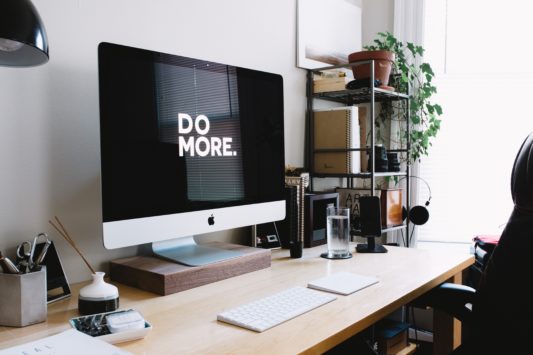
computer with screen saver that says "do more" as a reminder to be more productive

Text messages, email notifications, and that lingering impulse that eventually leads you into scrolling through your Instagram feed. Let’s face it: technology has its benefits, but the distractions caused by it can be a major stumbling block when it comes to being more productive and your mental health. According to a study from UC Irvine, it takes the average person 23 minutes to fully regain concentration following an interruption. To make matters worse, numerous studies have found links between habits like increased social media and smartphone use to anxiety and additional psychological issues.  Given that we’re already dependent on computers and phones in our daily lives, the enormous distractions caused by tech on top of everything else can be debilitating. The good news is that we can curb these pitfalls, and it all starts with proactively taking measures to avoid those distractions in the first place. To help you on your journey, here are a few methods to get yourself into a much better space.  Turn your Phone onto Airplane Mode Hit the issue directly on the head by halting the numerous distractions caused by mobile devices altogether. Not only will the focus-grabbing messages and alerts stop, but you will be less inclined to mindlessly check your phone with the knowledge that nothing new will be there under that setting. Putting your phone onto airplane mode and out of sight altogether will allow you to be much more present in your work and with anything else that you need to accomplish. Download Usage Apps For those of you who feel like going straight onto airplane mode is too much of a plunge, apps like “Usage Time” and “QualityTime” are a great place to start. These apps allow you to set limits and restrictions on any apps on your phone, including messages and other highly distracting functions. However, apps like these also give you the important (and sometimes shocking) data as far as how many times you’re unlocking your phone and the total amount of time spent on it. On a personal note, just seeing the sheer amount of unlocks and time dedicated to my phone has served as a massive deterrent for yours truly. Similarly, there’s a good chance that you’ll realize that so much of the time spent checking your phone could be used to focus your energy on significantly more important areas in your life.  Set Specific Times in the Day to Check Emails Beyond the obvious distractions from our mobile devices, we’re also bombarded with email notifications on our laptops and work computers. With what we already know about the issues with distractions and our focus, creating set times throughout your day to check emails will help you keep your concentration on the task at hand rather than jumping sporadically from thought to thought. Depending on the potential urgency of the emails that you receive day-to-day, it will obviously be necessary for some to set these times more frequently during the day than others. Develop a plan (and adjust accordingly) as far as when you’re going to check your emails and don’t allow notifications and the perceived need to respond instantly to everyone’s requests take you away from what’s in front of you. Close All Unnecessary Pages and Documents Putting aside the numerous notifications we receive, many of us are also driving full speed into tab overdose territory. One contributing factor here is that operating systems and software updates have made it easier for us to cram more and more content onto our screens concurrently. We think that we’re being more productive, but the myth of our ability to multitask has been debunked time and time again, and we end up decreasing the overall quality of the projects we’re working on. Eliminating clutter is also an unequivocally good thing. All of those pages and documents will still be there when you’re actually ready to attend to them. Give yourself the time and space to get to where you need to be on individual tasks rather than thinking you can complete everything at once. Eliminating distractions is no easy task and will likely remain a work in progress as technology continues to increase its prevalence in our lives. However, by starting to incorporate these methods into your routine, you will almost certainly see positive results and be more productive. Do you have methods for eliminating distractions that I didn’t mention? Feel free to share any ideas that you can bring to the table in the comments below.

Read More

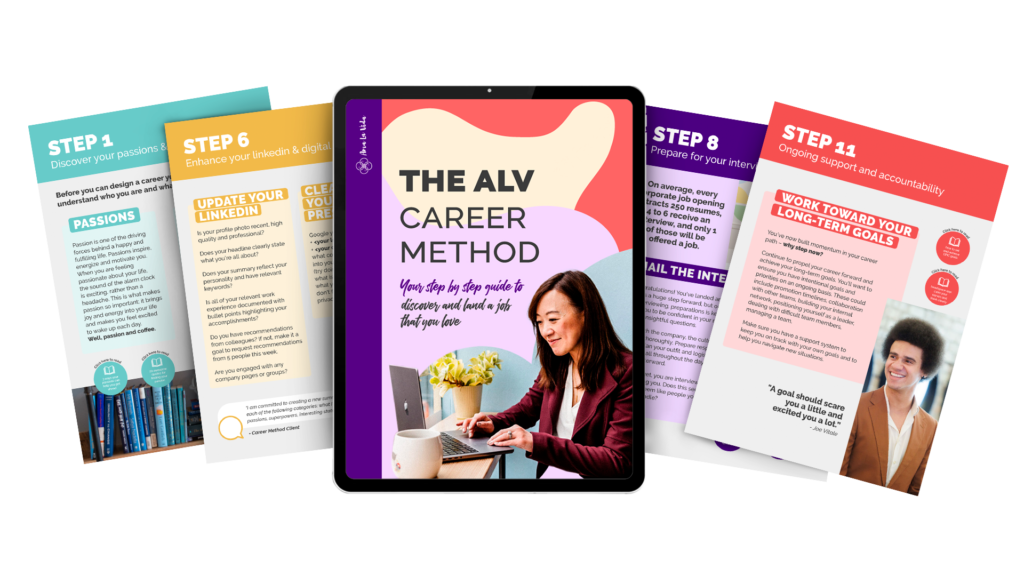
Download our comprehensive step-by-step guide to design and land a job you love!

Images from The ALV Career Method Guide
ALV Method Downloadable Guide

mornings ready to be mastered

The following is Part 1 of a Master Your Morning series meant to help you start each day the right way. Over the coming articles, I’ll introduce a handful of keys habits to implement to your morning routine. Adjust these ideas to match your age, interests, and ability to start each day proactive, positive and present. It’s a choice to let excuses, ego or lack of effort get in the way. Once you manage to overcome these blocks and master your morning you open the door to a new realm of personal power, freedom, and growth. Feels good, doesn’t it? What are you waiting for? Let’s get started! Why Did I Want To Master My Morning I spent all last spring selling nearly everything I own. I sold my car, gave away clothes and purchased a one-way ticket to Costa Rica with no real plans on when I’d return. For a full year before I decided to walk away from what I once thought was my dream career, I was depressed, overstressed, and overwhelmed. I felt stuck in a career and I couldn’t imagine living this way for the next 20+ years. Really, I was unhappy with myself. I dreaded the day and hated the life I had created. It seemed I was at the mercy of my bad mood and, after a back injury kept me from the gym, I crumbled to the lowest point of my life.  I was sick of living life looking forward to retirement. I was desperate. It wasn’t until I stumbled across a video that described the power of a morning routine did I realize I could start to break away from my bad mood and attitude if I set out to create a routine for myself. I realized I was living a life dictated by chance and circumstance, not one that I consciously created. I learned in that video that it’s rarely some big break that makes someone successful, but rather a set of planned habits, routines, and behaviors that they start up to build and sustain their success over time. There is a method behind the magic. I learned that in order to climb out of the hole I had dug for myself, I’d need to take complete ownership of myself and the best place to start was my habits. It’s true, either you make your habits or your habits will make you so I dove in an attempt to take back control of my life. It worked. How I Started Mastering My Mornings I started to build my morning routine and have worked to master it every day since. This simple yet life-changing daily practice laid a foundation of freedom that carried me on what ended up being a 10-month around the world backpacking trip. The trip was so incredibly rich with experience and growth. It was truly better than I could have ever imagined, and I’m a completely different person than I once was, but none of it would have happened, had I not made the decision to take back my life nearly 2 years ago. If I would have not begun to master my mind, body, and mood when I was at the lowest point of my life, none of this would have ever happened. In the age of information, ignorance is a choice and I was ignorant. I was ignorant to the fact that I, and I alone, was in charge of creating a life that I love. This morning routine laid the foundation for me to do just that and more. I’m more focused, productive, patient and positive than ever before because I am now no longer living a life dictated by bad mornings and moods. I’ve instead consciously created habits that get my mind, body, and motivation on track so I can go out and have an amazing day. Although quitting your job and moving away might not be for all of you, intentionally initiating this morning routine is. After some trial and error, I created habits that first pulled me out of my darkest days and then pushed me on a trip around the world. I’d like to share it with you. We’re going to start with mindset. Mindset – Gratitude What? The habit of gratitude is a subtle yet incredibly powerful practice that shifts your perspective to all things positive.  It allows you to direct your focused awareness to and actively look out for the good things going on in your life. By training your brain to notice the good things about each day, like some sort of magic, more things to be grateful for appear. No matter where you are, what has happened or how you feel, there is always something to be grateful for. Do not miss this opportunity! Why? Gratitude increases energy and empathy and reduces anger and aggression. It can improve your sleep and increase your self-esteem. By saying “thank you” and being grateful we can strengthen our relationships and resiliency and even make new friends. Who wants to be friends with someone who can’t manage common courtesies? Don’t let that be you. There are a number of subtle yet serious health benefits that come along with this habit not including the fact that it is absolutely free. With gratitude, you get to create your life by choosing what to focus on and there’s no personal freedom as powerful as that. How? It’s time to acknowledge how far you’ve come. It’s time to appreciate your unique skills, strengths, and abilities. Now is the time to acknowledge the people in your life and all of the opportunities that have made you who you are at this exact moment in time. Each morning after you jump out of bed write, type or tell someone the 3 things you’re most grateful for in your personal and professional life. Next, take time to acknowledge 3 things you are grateful for about yourself. There’s a reason you’re here and the reason you’re reading this.

Read More
spring time with flowers

Did you let out a big sigh of relief last Wednesday? I know I can’t be the only one who is ready for a change in this ridiculous winter weather. Spring is officially here, and with this new season comes longer days, less hurried walks between the car and the office door, and a reminder that growth and change are underway. You know I couldn’t make it through a time of transition without a newsletter talking all about it, right? Here are my thoughts on what spring means to me, and suggestions on how to embrace all that this season has to offer no matter what stage of life you’re in. Release what is no longer serving you. Spring cleaning doesn’t just apply to your physical space – it applies to your personal life as well. Throw open the windows of your mind and let go of what you don’t need. Negative self-talk that holds you back from taking the next step in your love life? A half-finished resume that isn’t landing you any interviews? A cluttered workspace that distracts you from getting into the zone? Whatever doesn’t have a purpose or a place is worth considering whether it’s truly worth the space and effort. Plant seeds that will grow into flowers. When I think of spring, I imagine strong and steady development. As the season passes, the magic of what’s been brewing underground – complicated systems of roots, nutrients, soil, and water – begins to poke upwards toward the sun and reminds us that good things are worth waiting for. Consider this time as preparation for things your future self will thank you for. Want to be in a new role by summer? It’s time to tighten up your application materials. Dream of being healthy enough to chase your kids around the yard until they wear themselves out? Lace up your shoes and get moving. Practice patience as you form habits that will build upon themselves. Know that the work you are putting in today will pay off – and enjoy the process along the way. Connect and celebrate the ties that bond us. With winter officially on its way out, it’s easier to make and keep plans without weather getting in the way. Now is time to emerge from your cocoon and reconnect with the ones you love. Remember that function is more important than form, so if your house isn’t perfect or your meal isn’t Martha Stewart approved, it’s all good as long as you’re acting from a place of love. Some of my favorite ways to connect in the spring are potlucks with friends (what light and fresh recipes have you been eyeing?) and networking with folks in my industry (this includes mentorship, taking continuing education classes, and attending events to meet movers and shakers in my field). Shake off the dust and get out there. Cheers to winter for the coziness and slow moments it brought, and welcome spring in all its new and bright and sunny (!!) glory. –Coach Teague This week’s challenge For each of the three categories above – releasing the excess, focusing on personal growth, or strengthening connections – choose a meaningful and achievable goal that you can accomplish within the next week. Feel overwhelmed by the prospect of doing something outside your comfort zone? That’s okay – it’s where the magic happens. Starting now, you’re a person who gets things done even when they’re not easy. (Bonus points if you forward this email to a friend and work on your goals collaboratively. Teamwork makes the dream work!) We know you want to learn more. Here are some of our favorite additional resources: “Virtually every time I push my clients to go deeper with their gathering’s purpose, there is a moment when they seem to wonder if I am preparing them for World War III. Yet forcing yourself to think about your gathering as stand-taking helps you get clear on its unique purpose.” A 6 Step Guide to Spring Cleaning Your Social Media Feeds, because our closets aren’t the only cluttered spaces “My question is what, if anything, is wrong with being chilly? It seems like a good, efficient way to get along.” Spring Cleaning: Meditation to Tidy Up the Mind (initiate zen state now!) Declutter your life and make room for possibility (by ALV Coach Erin)

Read More

Congratulations on surviving the polar vortex of 2019! If you didn’t experience the sub-zero temperatures and feet of snow, consider yourself lucky. Since we’re nowhere near the end of winter, here are my recommendations for the next time you’re working through a bout of bad weather. Use your commute for good. I used to have an epic drive to and from work – it was so extreme that I would routinely hear gasps when I told coworkers where I lived. I also absolutely hate driving, but there were no public transit opportunities available to me. This was a bad combination! I quickly learned to make the best of my commute and was able to put this skill to use as I spent time stuck in snowy traffic over the last week. Utilizing podcasts and audiobooks helps me to work on personal development even when trapped in my Honda Civic (and driving is the only way I can focus on listening to something). For our entrepreneurs, I highly recommend The Pitch by Gimlet Media, Side Hustle School, and RISE by Rachel Hollis to help stretch your creative muscles. Get clear about work-from-home expectations. As Nicole mentioned in her last letter, remote work is on the rise, though this isn’t yet a standard for every employer. If you’re unsure about how to handle work when the roads are bad (or if your children don’t have school for the third day in a row, or your car dies because it’s so cold…), ask! Some employers are willing to make exceptions based on extraordinary circumstances, and we saw a lot of that happening over the last two weeks. Some basics for sporadic remote work: Make sure you have an Internet connection and can access all necessary documents and computer programs (perhaps you can use your home computer, or you’ll need to take a work laptop home) Stay in contact with your team (sending your cell number out as the day begins and staying logged onto any Skype/Slack/Messenger programs is helpful) Communicate what you’re working on with your boss (so she knows you’re not just sipping tea and watching the snow fall). Use found time to focus on what matters. In the case of bad weather, things tend to slow down around the office. Perhaps your coworkers are deemed non-essential and don’t need to come in, or customers are unable to make their appointments. When you find pockets of quiet time during these chaotic days, make use of them. I was able to get some work done on a long-term project since I finally had some uninterrupted time to focus, and I was able to thoughtfully check-in with some of my newer team members about the growth I’d seen in them lately. Last but not least – I called my grandma. Talking to her is always the highlight of my day, and I loved escaping to the break room and taking in a peaceful view of snowy trees while laughing with her and making sure she was safe at home. Cheers to knowing that warmer weather will eventually come our way again – but until then, leaning into the coziness and slower pace that winter can bring. This week’s challenge This recent wild weather has me considering the value of hygge – I certainly can’t pronounce it right, but I know the concept is all about embracing the freezing cold (instead of fighting it!) and giving yourself what feels good and cozy throughout the winter season. What else are you fighting? What current state of being would be easier to accept instead of resist? I’m not talking about monumental issues that deserve advocacy, but smaller ones – like hating your commute, or dreading your email inbox. This week, identify one aspect of life you’ve been dreading to accept – and then lean in and embrace it. We know you want to learn more. Here are some of our favorite additional resources: Embracing vulnerability over perfection…: Do You Keep a Failure Résumé? Here’s Why You Should Start. …while making sure you don’t get too vulnerable: “When does sharing become oversharing?“ The latest from LinkedIn: New Ways to Keep a Pulse on the Companies You Care About Because love is in the air: This American Life | Episode #486: Valentine’s Day

Read More

Remote work is part of our future. Period. In this article, I talked about how 63% of employers now have remote employees and how you can still create a strong culture even if your team is spread out. But so many people I know are still trying to fight it. They want the butt in the chair. They want the false sense of security that accompanies keeping an eye on people. And I can tell you for certain that a physical presence does NOT mean an employee is working. It All Comes Down To a Lack of Trust If you don’t trust your people to get their work done no matter where they are then: You shouldn’t have hired them in the first place You as a leader have created an environment where people are motivated by the wrong things Change isn’t easy. But the best leaders are the ones who recognize its importance and force themselves to evolve their practices even when it’s uncomfortable. I’m a big fan of Jellyvision’s CEO, Amanda Lannert. I was listening to her speak once, and an audience member asked this question: “I can’t stand that my employees are always on their phones in my weekly team meeting. This new generation just can’t put them down. How do you get your team members to put the phone down and focus on what you’re saying to them?” Amanda said, “That’s a battle you won’t win. Can you make the meeting more engaging? Does it even need to be an hour-long meeting at all or can it be a 15-minute Slack frenzy?” The audience member looked stunned and somewhat disappointed. I think she was hoping for some shared moaning and groaning about these youngsters. But instead, she got innovation. A new way to even think about how to get the job done. In my head, I gave Amanda’s response a big ole “amen!” So we can all moan and groan about the way to the world is evolving. About people wanting to stay home and work in their sweatpants.  We Can Embrace Remote Work There are new ways to motivate and engage our teams. We can celebrate the positives of no commutes and flexible schedules. We can coach our team members and hold them accountable to their commitments whether they are in Baltimore or Buenos Aires. Hybrid schedules of some in-person days and some remote days can be created. We can tailor schedules to the times when people are most productive. There will always be business objectives to accomplish, and so I’m not saying it should be a complete free for all. We still need to find times to check in, to collaborate, to have meetings. I’m simply saying it’s time to open our minds. Consider new ways to get the job done. It’s time to evolve our thinking about remote work, or sooner or later, we will be the ones left at home. This week’s challenge Think about one thing you do each week that has just ‘always been done that way.’ Challenge yourself to think of a new way to approach it. Maybe the meeting can be accomplished in 20 minutes instead of 60. Perhaps a time-consuming process isn’t relevant anymore and should be tweaked or eliminated. Maybe a new technology can help you do something more efficiently. This week, really challenge yourself to evolve forward. We know you want to learn more. Here are some of our favorite additional resources: If you’re changing careers: 12 Companies that Let You Work Remotely Watch a TED Talk by Air BnB Exec Chip Conley: What Baby Boomers Can Learn from Millennials – And Vice Versa Start innovating: How to Train Your Brain to be More Innovative Get your own toolkit: Download a Digital Design Thinking Toolkit from IDEO

Read More

At the end of every year, I love to reflect on the prior months and acknowledge all the accomplishments I’ve made, where I may have stayed stuck, and how I envision moving “onward and upward” in the new year. January provides that metaphorical clean slate, the opportunity to start fresh with lessons learned and new ambitions to achieve. Over the years, I’ve learned that habits are a necessary element of successful achievement of any goal. However, it’s not always easy to build the powerful habits that fuel success. Any item on our “to-do” list requires energy, but the beautiful thing about habits is that they are naturally ingrained in us after a period of continuous repetition and a drain in energy becomes less of an obstacle. Not all habits become effortless of course, but there are trouble-shooting techniques for those times when you need an extra boost of motivation. So, how can you create powerful habits that could change your life? 1. Self-Awareness “New Year’s resolutions” don’t usually stick because they don’t become habits. We pick those resolutions we always hear about; eat a low-carb diet, exercise five days a week, wake up extra early every morning, for example. But how do you know that will work for you? A lot of the time it won’t, so building self-awareness around what works for you and what doesn’t through trial and error is essential. Obviously, if you’re naturally a night owl, becoming an early-riser may not be one of your resolutions. 2. Step Back Take a step back and understand how even the seemingly insignificant habits are actually powerful and can have a massive impact for you over time. For years, I wouldn’t make my bed or keep an empty kitchen sink every day, thanks to college. But as I got older, I started to realize the few times I did, I felt calmer. My world was a little less chaotic at the end of the workday. I started to do it daily and now I can’t leave my place without a made bed and a clean kitchen. It became part of my mindless getting-ready-in-the-morning routine. I come home and can sigh some relief that my place is straightened up and I’m ready to cook a healthy dinner in peace. It motivates me to cook a healthy dinner, rather than GrubHub from the nearest pizza place. Bigger picture, people! 3. Identify Your “Why” Speaking of bigger picture, know WHY you want to change a habit or build a new one. Will it serve a greater purpose in your life? How will it help you achieve your long-term goals? How important is that to you? If it’s very important, write it down and post it on your fridge so you don’t lose sight of its bigger purpose. Waking up an hour earlier to get your workout in doesn’t sound like much so it’s easily skipped, but if you do it consistently and daily, the beneficial effects will compound over time (check out The Compound Effect summary here). Your WHY is in the long-term, and yes, each day does matter. 4. Don’t Give Up There’s no rule that New Year’s resolutions or intentions need to start on January 1st (and suddenly end in February…). Don’t feel like a “failure” if you discovered your resolutions don’t work for you, prompting you to just give up. Adjust your intentions accordingly and try, try, again, with compassionate patience. Each day presents an opportunity to start new, even if it’s June! It may take time to figure out that sweet spot of powerful habits you can get on board with. It took me years to figure out that yoga and running were my exercise modalities of choice. Now I find it easy to get to the yoga studio or put my running shoes on, most days… let’s be real. And if you’re feeling the overwhelm, work on one habit at a time. You may find better success that way. 5. Daily Disciplines To be honest, habits just don’t form unless we do them daily. I don’t believe that there is an exact science to how long it takes for a habit to become routine, but it does require consistency. It requires showing up when you’re not feeling it, every single day. That’s the hard part, but it also goes back to number one above. If you notice your life is not being improved by a habit you’re trying to change or build, it may not be right for you. Try a different one that helps you achieve the same greater purpose. However, if it is improving your life, stick with it. That’s the most important thing. 6. Scheduling Maybe you need some help in keeping a daily “practice” or one of your goals is to finish those work-related projects that you find hard to accomplish without some discipline. Schedule it! When you block out time on your calendar for weekly to-dos including exercise, you’re more likely to do it. Better yet, physically write everything down in a planner or on a calendar that’s hung wherever you’ll consistently see it. Block the time and truly commit to it. Remember your WHY and consider that time sacred. 7. Tracking What’s even more fun than writing and scheduling your to-do list? The physical act of crossing it off as done! Jerry Seinfeld used the “Don’t Break The Chain” technique when he committed to writing comedy every day. He would hang a year-at-a-glance calendar on a wall, and every day that he wrote new material, he’d cross the day off with a big red X. As the chain grew longer, the more motivated he was to keep showing up daily to write. Ideally, habits never break the chain. Many ways exist to track your progress when building a habit. Just Google “habit tracking apps” and apparently there are the “24 Best Habit Tracking Apps” for 2019, according to lifehack.org. Who knew! If you use a planner to schedule, you can

Read More

The holiday season can be one of the most stressful times for many individuals and families. So we decided to focus on mastering and managing stress. As always, we’ve captured our top 9 takeaways so you can continue to show stress who’s boss! Managing Stress Tips 1. When you’re stressed – call it This is the first component of our CALM methodology for managing stress. In order to start to tackle your stress, you first have to be aware #1 that you are stressed and #2 what has caused it. Coach and co-founder Katie Bennett talks about the physical and emotional reactions you may have to stress in her coach insights video like headaches, stomach aches, lack of productivity or lashing out on loved ones. Take note of these. Let these be indications to you that you are under a great deal of stress, and once you have made that realization you can start to implement strategies to combat your stress. 2. Ask for help Sometimes we feel like we need to be able to do it all, and we feel shame or disappointment when the demands of our lives become more than we can handle at a given point in time. As I mentioned in my blog about how I tackle stress, asking for help is not something to be ashamed of, it is actually a valuable skill to develop both in the workplace and at home. First, prioritize what’s mission-critical and what is most effective to be done by you. For the rest, delegate, delegate, delegate. Having a friend, partner or colleague take even something small off your plate will immediately clear space in your mind and decrease your stress level. 3. Laugh This third component of our CALM methodology is one of the most simple but effective techniques for mastering stress. As further described in this article, laughter relaxes the body, boosts the immune system, releases endorphins and burns calories. So the next time you are feeling that stress build up, watch a funny movie, read something comical, surround yourself with people who make you laugh and begin decreasing your stress and increasing your health. 4. Meditate The M in our CALM methodology encourages you to meditate to prevent and master stress. There are a variety of traditional meditation techniques which can be extremely soothing and effective. However, we encourage you to think outside the box and the traditional definition of what qualifies as meditation. Anything that helps you relax your body and quiet your mind can be considered a form of meditation, from talking a walk to doing yoga to reading a book. Explore various techniques and select the one which proves most effective for you. 5. Be in nature In our monthly social media challenge where we asked you to show us how you destress using #alvdestress, we saw a number of outdoor photos including our winning photo which you can view here. There is a calming and healing quality to nature as John Muir captured in this quote, “Everybody needs beauty as well as bread, places to play in and pray in, where nature may heal and give strength to body and soul.” This article talks more about nature’s impact on well-being including stress reduction, pain management, and mood improvement. Next time you are feeling stressed take a walk. Go for a hike. Sit outside (weather permitting). 6. Understand your realm of influence Sometimes our stress is a 100% exercise in futility. We stress endlessly about things we have absolutely no control over. We spoke with global stress expert and founder of Stressmaster International, Jim Peterson, in December’s ALV Live who said this, ” The first thing you do when you’re under stress is you need to understand if you have control of it. Some people live in the past. They live in regret and the people that may have hurt them. They dwell on the past. Some people worry about what can happen. We live in these time zones, but the only time zone we have control of is here. Live in the moment!” Understanding which of your stressors you have control of and which are simply out of your realm of influence will help you focus your attention on the things you can change and begin to let go of the things you cannot. 7. Retreat, rethink, respond This advice was shared by an ALV member in our Facebook member community, ALV Connect. She reminded the group to take a pause before reacting when facing a stressful trigger. Without time to retreat and rethink before responding, we often say things and make decisions which only lead to greater stress down the line. So when something is stressing you out and your knee-jerk response is to spring to action, take some time to think through the implications first, and you will save yourself a lot of time and stress in the long-run. 8. Do the ALV 999 This strategy is an incredibly effective one to put your stressors into perspective and builds on point 7 around reflecting first acting second. What you do is reflect on the following as I did in this video: will whatever is stressing you out right now matter in 9 minutes? 9 months? 9 years? When I am completely consumed by something bad or embarrassing or frustrating that has happened, I often think to myself, “In the course of a lifetime what will it matter?” And most the time, the answer is it won’t matter in the long-term. 9 years from now you probably won’t even remember this experience, so allow yourself to cool down and regain control. 9. Breathe in. Breathe out. As Jim mentioned on ALV Live, “When you are under stress, you do not breathe.” Such a seemingly obvious thing to do, yet we allow ourselves to slow our breathing and reduce our oxygen intake when we are stressed. Simply focusing on your breathing for a few minutes can help restore your body and bring

Read More