Category: Productivity

Life is busy! And somehow, it seems to get busier and more demanding. Whether you’re a new hire at a company, parent of three, or a high-level executive, trying to do it all can be challenging. You are only one person. You have a finite amount of time and can only do so many things in a day or workweek. That’s why it’s so important to prioritize. Prioritizing allows you to accomplish what you need to do, recognize what is important, and stay sane along the way.  Take some time each week to step back and analyze. Think about what is going on, what are your deadlines, and what is the big picture. After that, think about what is important to you in life and your values. Write everything down and assign them a category.  Priority #1: These are your most important tasks—things that must be done this week. Priority #2: These are tasks that need to get done at some point this month. Priority #3: These tasks are low priority but shouldn’t fall off the radar. Once you have your tasks categorized by priority level, write them down in a place where you’ll remember them (and actually take action on them). I use my Google calendar to prioritize my days. It’s a great visual for me and I see it every single day. Find something that works for you!  Remember to take deep breaths, prioritize effectively, and record your tasks in a way that you’ll remember them. Communicate your priorities to others when you need to and recognize that you are doing your best! “It is not a daily increase, but a daily decrease. Hack away at the inessentials.” – Bruce Lee ~ Brooke

Read More

Tell me if this is familiar: You have raised your hand to do something, and when you raise your hand it feels good. You feel confident that you can get it done. You even have a bazillion different ideas for it. So, you commit! You mark it on your calendar, your colleague sends you a reminder, it’s so far off….so you’re all good. You start it nice and early – your mind still buzzing with all the ideas you had when you made the commitment. Then something else comes up, and something else. And believe or not, something else! This commitment falls to the bottom of the list (and in some cases, off the list completely!). Now it is late. You feel defeated. Your colleague is not happy, as they needed what you committed to. You can’t remember where you were going, so you need to start again. This is no longer the fun task you thought it would be. Now it’s something that you don’t want to do. Anybody with me here? I am the Procrastination Queen I have become the Procrastination Queen and I am looking to break my crown. The weird thing about this is that I am not a procrastinator about all things. I’m typically organized and respond to things in a timely manner. I’m reliable and a good collaborator. And I’m even learning how to set healthy boundaries! Yet, every time I have this specific task, I find myself in the weeds. It’s not even that I don’t like this task, I do! It allows me to be creative and contribute to my organization’s overall goal! So, what gives? Apparently, I am what they call an “overcommitter”. I say yes to many things because they are appealing and I want to help – even if it may overwhelm me! I found this out when a colleague shared this great resource of a quiz that helps you identify what productivity method works best for you (take yours here). My result said I need to do a “Commitment Inventory” and that saying “no” would help me be more productive, and some other stuff. My first thought was, “UGH, just one more thing to do!” This did not make me feel more productive. It also didn’t help me get the late task done! As I was approaching this late task, I took a second look at my results. Maybe there was something in the “other stuff” that would help me (please feel free to read my results here). I will admit that I am not going to do a commitment inventory, but it did confirm some things I know about what I need to do to continue to be successful and stop procrastinating! How to stop procrastinating I am not saying “no” enough  I need to outline what things are the highest priority and which things I want to put my energy to (my challenge here is that I LIKE all the things!). It is recommended that you can rotate your highest priority at any given moment. For example, this quarter, I committed to a process improvement project. Next quarter, I say no to that since I want to work on product offerings!  When I coach clients, I often suggest creating a list of negotiables and non-negotiables, and then rank them for level of negotiability. This creates a roadmap! It shows you what is most important, what to say yes to, and what to turn down if it doesn’t align with your priorities right now. Work in bursts This is a technique I actually use and recommend regularly to my clients. There are so many ways to do this successfully! Choose whatever works best for you. Some people like the Pomodoro Method or time blocking, where you can set a timer, then get up once the timer goes off. I like to work with music playing in the background and will set a number of tracks to listen (and work) to before I take a break.  The “work in bursts” method is focused on accomplishing what you can in a given time frame. Remember that it’s not necessarily about finishing the task. One key to having this method work is to be sure to take a break when your time is up.   Identify when you’re most (and least) productive Identify your “prime” work hours. Once you do that, use that time for your hardest tasks. That heads-down, deep work. Save your busy work or low-hanging fruit for the times when you know you will not be able to concentrate as well.  This is different for everybody. Some people enjoy the early morning hours and are their most productive then. Others need four or five hours to wake up slowly and work best into the night. And others might like to alternate deep work with easier work. Find what fits you. Be mindful that as your life and priorities change, these times may also change! To do or not to do lists?  This is a tough one! I love a list and have been known to add something to my list just to cross it off. The thrill of crossing something off a list is exhilarating! This leads to a feeling of accomplishment and that leads to being more productive and helps to stop procrastinating.  One way to combat the never-ending “To Do“ list is to choose one to three of your highest priority tasks to do during your productive time. This creates more of a check-list than a To Do list. As you complete these one to three things, you check them off your list. It is okay to break your bigger tasks down into smaller pieces and do them that way. This builds accomplishments quicker and makes the tasks feel more achievable! Celebrate the wins This is super important to break the procrastination cycle! Use this in conjunction with breaking down your tasks into smaller pieces. The more you accomplish, the more accomplished you feel. This

Read More

What’s the first thing that comes to mind when you think about journaling?  Is it the fascinating world of Pinterest-worthy creations where each notebook represents a unique work of art? Does it take you back to your teen years when keeping a diary was a way to document your life? Maybe the idea is more practical, thanks to the rising popularity of organizational systems like Bullet Journaling. Whichever of these things you associate with the word journaling, you are absolutely in the right. There’s nothing as versatile as a blank notebook or an empty document page in your favorite note-taking app. What most people don’t understand, though, is that journaling isn’t just a form of self-expression, personal historiography, or super-productive organization. It can also be a beneficial daily habit that can help you gain more control over your life. So, if you’ve been toying with the idea of starting a journal but still aren’t convinced, here are the following top reasons to get to it this year. 1. Collect Your Thoughts If we look to the most traditional form of journaling, we will inevitably think of keeping a diary. Historically, these records have been around for centuries. From the ancient Egyptians, people have always had an inherent need to record the events and happenings in their lives. Journaling changed from being a historiographic method into a way to express one’s thoughts, feelings, opinions. And consider how effective putting thoughts to paper is at defining opinions, pinpointing emotions, and helping us make sense of external experiences. It should come as no surprise that journaling is such a great way to achieve a state of mindfulness. By turning the gaze inwards and allowing ourselves to express our innermost thoughts, we’re conducting a form of self-care. Doing a bit of mental cleaning up, ridding ourselves of overwhelming reflections, and freeing up cognitive power to focus on the things that matter the most. So, if you’re looking for some clarity in life, starting a journal might just be the perfect way to achieve it. Pro Tip: If you’re unsure how to start journaling, make it into a daily 10-minute task. You can go freeform or you can also use a pre-made template. 2. Keep Track of Your Life Starting a journal doesn’t have to mean keeping a diary. After all, there are a million ways to use a blank notebook. And, while you may not be interested in expressing your opinions and feelings about your daily happenings, you might benefit from keeping tabs on what’s going on. For a lot of people, journals are simply trackers. My own journaling journey started with needing a system to track my wellbeing. As I was experiencing sleep issues, I decided to create a method that would help me identify potential disruptors. After about a month of collecting data, the results were unanimous: my ability to fall asleep was directly related to my work hours. The longer into the afternoon I worked, the more difficult I found it to rest during the night. Without keeping a journal, I don’t think I would have gotten to the root of my problem. Nor would I have realized just how often I ordered take-out or re-watched my favorite Friends episodes. As they say, you learn as long as you live! Pro Tip: If you’re a fan of digital solutions, there’s a great app that combines long-form journaling and habit tracking called Tangerine. It allows you to set reminders for all the journaling actions you want to complete during the day. 3. Set Goals & Go After Them Are you looking to invest in your personal growth, start a business, or check off items on your bucket list? Perhaps you’re just searching for a system that’ll help you get through the day’s assignments with a bit more ease? Or, you might be on to the next brilliant idea and need a space to work it out? Most people’s project management skills come down to preparing mental notes. Unfortunately, these can easily get lost when there are many tasks to finish or urgent matters to attend to. But, writing them down makes for an excellent way to keep a hold of the day’s obligations. To make the absolute most of your notebook when chasing your goals, break up your tasks into actionable items. Pro Tip: Learn how to set EPIC goals. Essentially, the practice refers to a better way of defining short-term and long-term objectives. E.P.I.C. goals are elevating, practical, impactful, and clear. 4. Boost Productivity Most people want to become more efficient at what they do. With limited time resources and an ever-expanding list of obligations, we’re all chasing productivity in one way or another. There are several ways in which keeping a journal can help you become more productive. For one, if you’re using it to define your goals, it automatically becomes a behavior training tool. Seeing that checking off an item on a list gives us a sense of accomplishment. Regularly doing so can help us learn to prioritize that positive feeling over the pull of procrastination.  Secondly, journals often come with some form of a planning template. Or, even if you’re using a blank notebook, you can make one for yourself. Having a visual representation of your calendar and responsibilities can give you a better sense of how much time you have on your hands. Pro Tip: If your main reason for journaling is to improve your productivity, you can do your journaling in a pre-made planner notebook. Alternatively, if you’re the visual type, you can purchase a large wall/desk calendar and do all your writing and task-setting right on its pages.  5. Relieve Stress & Anxiety Did you know that keeping a diary is an excellent way to improve and nurture your mental health? The benefits of expressive writing have been known for quite some time now.  In the 1990s, psychologist James W. Pennebaker conducted a series of studies to look at how writing or verbal disclosure impacted

Read More

So many of us are all too familiar with the term burnout. Burnout is a constant state of physical and emotional stress and exhaustion. With everything going on in the world right now, the burnout feeling is very real. We have our ups and downs, our good days and the bad. Time keeps going and it has a strange surreal feel to it. The days blur together and before you know it, another month has gone by and you wonder what you have to show for it.  With everything going on, it’s normal to feel burned out and like everything is a little harder. Especially when there are so many factors outside of our control. When we are feeling burned out, we are unhappy. It is a disempowering feeling when we focus on how these burnout factors are beyond our control. The good news is there is science out there that suggests there is even more we can control than we may think, despite so many circumstances being outside of our control.  Where Happiness Comes From According to Sonja Lyubomirsky & Kennon M. Sheldon’s book, The How Of Happiness, Happiness is something we can successfully pursue. While they argue that 50% of our happiness comes from our genes, and 10% from our circumstances (like work, COVID, etc.), that leaves a significant 40% left that drives our happiness – and that comes from ourselves! Prescribing to this model gives us more control of our emotions. Today we are going to focus on some of the areas within our control to avoid burnout and stress and instead start to increase our productivity and happiness!  A Formula for High Performance  Avoiding burnout doesn’t have to be complicated. One framework that resonates with me is called the Bulletproof Productivity System. We control what we can to feel our best.  If we focus on what we want to do (clarity) in the right way (efficiency) and are enjoying the journey and the result (fulfillment), then we feel productive instead of burned out. In this model productivity is the goal. The formula is as follows: Productivity = Clarity + Energy + Focus + System – Distractions. Make sure you touch upon all five to feel your best! Clarity Finding clarity is all about shifting your mental state to a clear mind. When we are feeling stressed or overwhelmed, it’s impossible to objectively look at a situation and see what is needed to achieve the outcomes we desire. Shifting our state is key to get into the right headspace to feel and do our best. One simple strategy you can try to shift your state is by taking a few deep breaths when you are feeling overwhelmed and ask yourself a few core questions: What is the outcome I want? What is most important now to achieve this? What do I need to do to make it happen? Our brain will answer the questions we ask it, so keep them objective and empowering and see where those answers take you.  Energy Managing your energy is key to being productive and to avoid burnout. Even if you know what you need to do and the best way to go about doing it, as the saying goes “you cannot pour from an empty cup.” What is one change you can prioritize with your health today? An extra hour of sleep? Optimizing your diet? Or increasing your physical activity? Any of these steps can lead to big energy gains. Focus Improving our focus is another key to productivity and avoiding burnout. When our attention is divided, it is yet another energy drain and we can’t perform at our best. We as humans are meant to be task switchers instead of multi-taskers. Plus studies from UCIrvine and others show that it takes over 23 minutes to resume a solid level of concentration after being interrupted. Other studies show we experience 7-8+ interruptions per hour. With both of these in mind, we are NEVER concentrating well – no wonder we feel burned out! Just recognizing this reality is a way to help avoid this, along with creating structure. Try to focus on one thing at a time, limit distractions, and build your focus through strategies like meditation and planning.  System While you may have the right mindset and environment to avoid burnout and be productive, if you don’t have the right tools or approach you are still out of luck. Making your ideal outcomes a reality requires an organized plan to see you through. Create intentionality with your day by planning ahead, building a schedule, and staying organized.  Distractions Distractions are any sort of thing that gets in the way of you feeling your best and being productive. While we probably can’t change them all, start taking control by developing a plan to start minimizing some of them today. What environmental factors aren’t serving you towards your goals? What will you change?  By leveling up in all five of these areas, we control what we can to feel our best.  Looking for Burnout Support? Building and maintaining your momentum to overcome burnout can be tough, and coaching can help! Partnering with a coach is such a powerful tool to help you set and achieve your tools. If you are ready to overcome your burnout and avoid it for good, with the structure accountability and support of coaching, schedule your free coaching consult with me today! I look forward to connecting with you. 

Read More

With everything going on in the world right now, the struggle to find motivation and productivity is real. The need to overcome procrastination is also real, but can feel so far away. We have our ups and downs, our good days and bad. Time keeps going and it has a strange surreal feel to it. The days blur together and before you know it, another month has gone by and you wonder what you have to show for it. Can you relate?  When times feel uncertain, it’s normal to feel the energy drain, and that makes everything feel a little (or a lot) harder. Not wanting to deal with reality (aka avoidance) is a classic procrastination type. Knowing your procrastination type (the reason why you procrastinate), is a great strategy in and of itself to turn your lack of action into results.  The Classic Procrastination Types Here is a summary of the classic procrastination types by lifehack.org and what you can do about them. Which one(s) best describes you? You may align with more than one of these types, like me (I am a blend of the Perfectionist and the Crisis-Maker – who’s with me?!) The Perfectionist Questions to ponder: Are you the type who never seems to get ahead because you are too busy sweating the small stuff? Do worries about writing the perfect sentence stop you from getting your thoughts down on paper? Does figuring out everything and everything about a first step stop you from moving forward? What it is: You are afraid to move forward and fixate on the details because you need things to be perfect.  Tip to overcome: Assign time limits and redefine your standards. The Dreamer Questions to ponder: Do big ideas excite you? Are you more of a strategy person than an implementation person? Do the brass tacks of a project sound daunting to you? What it is: You enjoy setting the vision more than executing the plan and taking action. Tip to overcome: Create specific, bite-sized goals, set deadlines, and track your progress. The Avoider Questions to ponder: Does constant worry about what others will think get in your way of taking action? Does self-doubt stop you from taking risks and trying new things? Do you prefer to stick to the safety of projects and tasks you already know? What it is: You are afraid to take on tasks you think you will fail or will disappoint others in the process. Tip to overcome: Like the dreamer, create specific- bite-sized goals with clear deadlines, complete your most challenging tasks first, and cultivate belief in yourself. The Crisis-Maker Questions to ponder: Do you often find yourself finishing work at the eleventh hour? Are you overly optimistic about the time it will take to complete a task? Do you find it hard to focus on one thing at a time and find time just flies by? What it is: Like I’m doing right now, you wait until the last moment to complete your work because a deadline is exciting.  Tip to overcome: Realize that last-minute work is most likely not going to be your best work, and implement time management tools such as the pomodoro method.  The Busy Procrastinator Questions to ponder:  Do you feel so overwhelmed that you feel like you don’t know where to start? Do you find yourself working on busy work just to keep busy? Do you find your most important projects never seem to get done?  What it is: You struggle to prioritize the many things on your plate, so you hold off on taking action. Tip to overcome: Learn to prioritize properly so your time and attention is focused on what matters most.  Negative Effects of Procrastination If you’re like me, you don’t want the rest of the year to be a blur. You already know that procrastination is negatively impacting you. The time spent putting things off is usually accompanied by guilt or stress related to the feeling that we should be doing something that we aren’t. These feelings often negate the enjoyment of any other activities we are choosing to do instead of the task at hand. This stress adds up and can impact both our mental and physical well-being. There is data that backs this up as well. In one such example from a 2007 study, FSU psychologists examined procrastination in the classroom. Early on the student procrastinators reported lower stress than non-procrastinators, but later in the year they reported higher stress and illness compared to the non-procrastinators. Procrastination does not serve us long term! Need Procrastination Support? Building and maintaining your momentum to overcome procrastination can be tough, and coaching can help! Partnering with a coach is such a powerful tool to help you set and achieve your tools. If you are ready to overcome your procrastination for good, schedule your free coaching consult with me today! I look forward to connecting with you. 

Read More

Working remote can provide so many benefits! There can be more flexibility in your schedule, quality time with family, and a shorter commute each day. Yet, exhaustion can occur from countless zoom calls, excess screen time and communication challenges. Remote work is not always easy, but it is possible to be productive while also finding that balance! I’m sharing my favorite remote work hacks to help make your work from home lifestyle a bit easier. Have a Back-Up WiFi Plan After navigating endless wifi challenges from the unstable internet that comes working in a rural location or a cafe, I’ve learned the importance of a reliable wifi back-up plan. Give yourself peace of mind by having a back-up plan ready. Unexpected interruption in your connection when leading that important Zoom meeting or trying to make a deadline, is the worst! Here are some back-up wifi options: Calendar Everything I mean…everything! Put it all in your calendar- your meetings, your designated work time, your lunches, your workouts, your breaks, all of it. If you can plan it out before the week begins, great. If you can plan it out the morning of, also great. Why? Not only can this help you to use your time productively, but it can also support you in taking the much-needed time in the day for YOU. By including those blocks of time for ‘you time’ like a workout, meditation, lunch with a friend, or a passion project, you’re ensuring you get the time in your day to refresh and refuel.  Have a Designated Workspace Just as you want to make your home a place you enjoy living, make your workspace a place you enjoy working. As a remote worker, your personal life and work-life strangely collide. The key is to create a separation for your workspace within your home. If you have a separate room for an office, that is a great way to create a designated space. If not, find a well-lit corner of a room that you feel can provide the privacy and comfort needed to work.  Ensure that your workspace is set up to support your mood and productivity. You can do this by finding a space with great lighting, separated from distractions, and that is ergonomically friendly. That means no setup that requires you to hunch over your laptop on your bed or in a painful wooden chair all-day. It’s worth investing in upgrading your chair and desk arrangement to provide that comfort. Here is a helpful article for some ergonomics 101 to boost your work setup within the home. It’s also important to add things to your space that help boost your mood and productivity. This can look different for everyone but here are some tips to help you create a space that you love. Set Boundaries! Easier said than done, right? Boundaries take practice but once you master them, you’ll be amazed by the impact they can create. When you have everything needed to work within your home’s comfort, it’s easy to blur the separation between work and outside life. It can often feel convenient to reopen the laptop, respond to a slack message, or tweak that meeting document. Yet, working from home or remotely does not mean you’re available every waking hour of the day.  The key is to know (or set) your designated work hours, communicate effectively across your team, and truly log off at the end of each workday. Create a habit of logging off and disconnecting at the end of the day. You can do this by silencing all notifications, putting the laptop away, and separating from your dedicated workspace. You have the power to set the proper expectations and not be overly available. It’s essential to protect this much needed time for yourself away from work to avoid burnout. Overcommunicate Communicate, communicate, and overcommunicate. When you lack face-face communication and all updates are made by virtual means, clear communication is key. You want to ensure that all details are received via the best system possible. Ensure that you know the best communication channels amongst your team and when to use them (i.e. slack, email, text, call). Be aware of how your team operates and the best medium for each circumstance. Also, ensure that you communicate with urgency when needed. For example, if you’re sending a request on a tight deadline, flag it as urgent in the email subject line or slack message.  Reiterate any and all important details in your messages to be 100% sure that nothing is confused or misinterpreted. Finally, some things are more efficient to chat out verbally rather than in writing. In that case, use Zoom or a call with your team member to discuss it. With remote communication, it’s better to overdo it than underdo it, air on the side of caution. While I love working remotely, I realize that it’s not the ideal situation for all. It can be challenging to find the proper balance and separation between work and personal life. I hope these tips help make remote work more manageable and enjoyable for you to adapt to working in this new normal. I’ll leave you with some words of wisdom by John Wooden: “Things work out best for those who make the best of how things work out.”

Read More

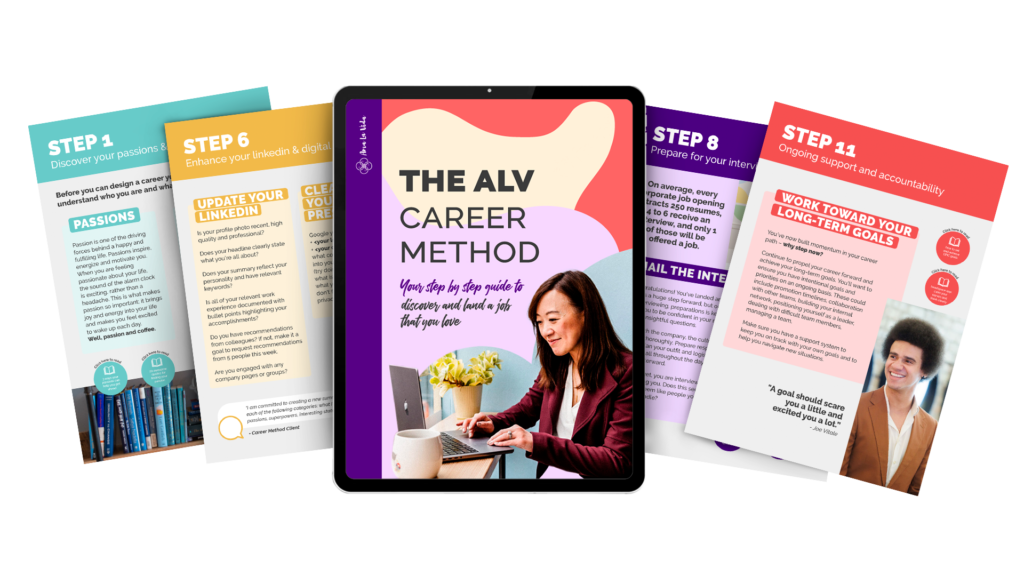
Download our comprehensive step-by-step guide to design and land a job you love!

Images from The ALV Career Method Guide
ALV Method Downloadable Guide

Time management is a struggle we all face, no matter what we do in life. From high-powered CEOs and girl bosses running their own digital companies to stay-at-home parents and college students, everyone would benefit from becoming a little bit better at managing their time. We’re going to dig into eight of the best time management hacks that will help you become better at handling everything that comes your way. Read on, apply the knowledge you’ll gain from this post, and you’ll feel less like you need an extra hour squeezed in between the morning and the afternoon.  1. It’s All About How You Begin What you do first thing in the morning sets the tone for the rest of your day. Establishing a morning routine will set the tone for your day, so do your best to avoid snoozing the alarm, and get up when you open your eyes. If you like to lounge around in bed a bit, set your alarm a bit earlier, so you’ll have the time to indulge.  Also, if you get to work and jump right into emails without taking ten minutes to assess your day, improper prioritization can occur. You need to see what needs to be done first, so you know how to prioritize and schedule your day! 2. It’s Also About How You Finish Just like you need time at the beginning of your day before jumping in head-first, you need time at the end of the day to get ready for tomorrow. You can use this time to go over your to-do list, what you still need to get done tomorrow, or write down any last minute thoughts that you don’t want to forget. Once you’re home and ready for bed. It’s important to manage your evening so you can decompress and get a great nights’ sleep. Whether it’s writing everything down for tomorrow or winding down with some tea – find out what works for you! 3. Try Not To Multitask Even though some people think they are great at it (and some actually are), multitasking is not all it’s cracked up to be. Yes, you feel like you are getting more done, but you may actually be draining yourself faster, and your focus will likely suffer. Ideally, you will focus on one task at a time. Dedicate all your attention to what you’re doing at that moment, and don’t allow for distractions – no phone, no social media, no inbox, no nothing. On the other hand, there are tasks you can jumble together – cooking and listening to an audiobook, running and listening to a podcast, commuting and doing emails (unless you are driving, of course), and so on. Only multitask when you can still focus on the tasks at hand without compromising execution quality. 4. Set Smaller Tasks This is one of my favorite time management hacks! When we are faced with a large task, we often experience project paralysis. The sheer size of the work that needs to get done instills fear and insecurity. All we can see is how much work there is to be done and how long it will take. Instead of focusing on that one big task, write out a smaller set of tasks for each larger one. For instance, if your task is to clean the entire house, create smaller chunks! Change the bedsheets, wipe surfaces in the bedroom, change the curtains, do a load of laundry, etc. You’ll get more done through the sheer positive impact of ticking things off your list. The more you do, the better you will feel, and the more energized you will be for the next task. And, of course, you won’t fear the big project that once seemed so insurmountable. 5. Set Personal Deadlines If you have a major deadline for a task – any task – set yourself another one, just for you. For example, if you need to turn in a paper on Monday, set an internal deadline to complete it by the previous Wednesday. That way, you can both get ahead of yourself and provide some cushioning for the unexpected. Remember that you will have to enforce this personal, earlier date, even though you know there is another one. It might lead to a bit of procrastination, so be aware of that and do your best to prevent it. 6. Write Everything Down Writing things down is the best way to prevent wasted time, and it is the ultimate time management staple. No matter how well you believe you will remember something in the moment, you won’t always be able to. As more and more time is injected between the actual action and the expected result, your brain will be cluttered with other information. It simply won’t be able to keep up, and that has nothing to do with you. It’s just the way our minds work. Keep a notebook on you at all times (or use your phone), and write everything down. If you keep different schedules, notebooks, or time management sheets for different aspects of your life, add the new task or thought to the right list when you have the time. This way things don’t slip through the cracks! 7. Schedule Time For Yourself No matter how busy your life gets, you always need some me time. Whatever you choose to do with this time, make sure you do with it what you choose – however paradoxical that sounds. For example, people will often tell you that you should use me time to rest, exercise, meditate, and so on. All of this is certainly desirable! But if what you want to do with your time is blitz through a to-do list so you can stop thinking about it, do that. Me time is about allowing yourself the choice to do whatever you want and need. Since we deal with the things we impose on ourselves better than the things others want us to do, this is a great

Read More
10 motivational books

What do you feel when you hear about the success of other people? What sensation occupies a large part of your soul? Is it joy or envy? If you feel joy and pride, then you too are moving on the right path of self-development. But if you are jealous of those who are more successful, then it’s time to rectify the situation. That’s why you should consider this list of ten motivation books on self-development. They have been all translated into many languages and have helped readers around the world discover new opportunities and start a better life. Let’s get started. You Have a Very Powerful Engine within Yourself That Can Be Boosted with Literature! Great power is hidden inside each of us. However, artificial limitations and our stereotyped perception of reality do not allow us to realize our full potential. The most effective way to discover it is to arm yourself with specialized literature and finally start looking at things with different eyes. Below we have collected the ten best self-motivation. Read them all and you will be surprised how you could live before the discovery of this knowledge. 1. “The Power of Positive Thinking”, Dr. Norman Vincent Peale How can positive thinking change our life? Not all situations that happen depend on us. However, the outcome of these situations directly depends on how the person reacts and perceives every event. Yes, it is possible to sound like autosuggestion, but studies show the placebo still takes a significant place in the field of medicine. The author touches on the power of faith in his work. No, there isn’t a direct reference to religion, because everyone is free to choose their faith on their own. However, it will help you find the necessary faith that a person has lost – faith in oneself. There is nothing more significant than inner confidence. Having gained it, a person gains invisible wings that will lead him or her through all the obstacles. After all, if you do not believe in yourself, then why should others? 2. “Willpower: Why Self-Control is The Secret to Success”, Roy F. Baumeister, and John Tierney What is the main meaning of the phenomenon of willpower? Willpower is a mental strength that can sometimes seem impossible to achieve. However, after reading this book, the reader will discover new boundaries of the permissible and the possible. If you want your life to be in your hands, then this knowledge will become indispensable for this purpose. You’ll be surprised how achievable strong willpower is. All you need are some clarifications and guidance which is exactly what this self-motivation book can provide you with. 3. “Habit Stacking”, S.J. Scott Are you satisfied with your habits? If you want to introduce habits that will improve your life for the better this is the book for you. Our everyday lives consist of strong habits, which are quite difficult to overcome. But with some proven tips you can take the journey towards necessary change. This book is a collection of 127 habits that are tested by time and people, and they definitely give a positive result. The author suggests starting to change yourself gradually and slowly but surely strengthen each good habit, which together will make your best version of yourself. 4. “Quiet: The Power of Introverts in a World That Can’t Stop Talking”, Susan Cain What does the world have in store for introverts? Some people believe the modern world is becoming a bad place for introverts. Success revolves around strong communication and teamwork skills. In addition, the very concepts of introverts and extroverts as psychological categories have long been causing a lot of controversy among psychologists, and it has already been proved that it is impossible to belong to a certain type of personality exclusively. Then where did this opinion come from that introverts are not suitable for life in our world and cannot be successful? It is not true. If you see the whole world in yourself, then this book will help you strengthen your abilities and realize your best differences from those who are constantly in the spotlight. 5. “The Art of War”, Sun Tzu Are you aware of your inner battles? Our whole life is a war in one or another way. And most often, we ourselves are our main adversary. That’s why you should know how to defeat your enemy. Do you agree that nothing good will come of the internal struggle? Only through peaceful negotiations, a better result can be achieved. Find out what inner harmony is, how to feel it, and how this awareness will help you overcome all obstacles in life. 6. “23 Anti-Procrastination Habits”, S.J. Scott Is there a recipe for combating procrastination? Maybe there is no failproof recipe but if there is a will, there is a way. This is a consistent guide on how to really wean yourself to put off all affairs for an indefinite future. This self-motivation book helps you to develop an “anti-procrastination mindset.” You’ll learn which habits you need to form and make a part of your life if you want to stop living the overwhelming life of a procrastinator. Learn about the roots of your procrastination habits and the best ways of overcoming them.  7. “The Four Agreements:”, Miguel Ruiz Have you ever wondered, what will help you gain complete freedom? Or how to get rid of the cage in which we lock ourselves? Are you interested in finding out the answers? This work can be a key to freedom for everyone who sits in the “cage.” Your head will work like never before. It’s time to dispel the smoke that has enveloped you, through the strict guidance of the writer. 8. “The Magic of Thinking Big”, David J. Schwartz Do the little things trouble you? Do you feel captivated by daily problems? In fact, we are able to solve any problem, or at least change our attitude towards it and see the essence from a different

Read More
tips to manage study time

If you’re entering finals week, you’re probably more than a little stressed. Even if you’ve taken exams plenty of times, it’s still a nerve-wracking period as you want to excel and conquer your finals. To help you make sure you ace your exams, we’ve put together a list of effective tips to manage your study time during finals. These tips will not only make sure you get the most out of your studying, but it’ll also help with your focus, and give you the confidence to vanquish your exams from start to finish. Let’s dive right in, shall we?  Here’s our list tips to manage your study time! Know how to prioritize  While it might be tempting to start studying for your favorite subjects first, it wouldn’t be an efficient way to utilize your time. The last thing you want is to be spending more time on the subjects that you like, instead of the ones that need it the most. To excel in your exams, you should be allocating time to subjects that you’re not as adept at. If you’re better at chemistry than you are at math, for example, you’d want to give a bit more time to it first. Knowing how to prioritize your subjects is key – you don’t want to take away time from the subjects that need it most.  Avoid cramming   We’ve all been there before, it’s the day before the exam and you’re panicking because you’ve left studying at the very last minute. As you freak out, you try and shove the entire semester’s content into your brain in a span of 12-hours. Unsurprisingly, cramming is incredibly toxic, and you’re most likely going to forget all the information because you didn’t have the time to properly digest it. Instead, start studying early. Take some time to organize your notes from class, and have an idea of what you understand and what you need to clarify. By taking time to digest the information, it’ll make studying for your exams a whole lot easier. Have an action plan in place  If you don’t have a proper plan in place, you’re probably going to get distracted and end up spending countless hours scrolling through social media or watching YouTube videos. Instead, try to have a detailed action plan in place so have a better idea of what you’d like to achieve during the day.  Your action plan should consist of more than just studying for a certain subject. Instead, you should have a more detailed breakdown similar to the below:  8 am – 10 am: Read through chapters one to three of Marketing Essentials  10 am-10:15 am: Breakfast break  10:15 am – 11 am: Work on case studies in chapter two Your action plan should also be achievable, you shouldn’t be trying to read an entire textbook in an hour. With this detailed plan in place, you’ll also feel accomplished after you’ve completed everything you’ve set out to do for the day. Completing everything on your list also means that you’re free to relax and enjoy the rest of the day without feeling guilty. Do your practice tests  Practice tests are there for a reason. Teachers have provided you with them to provide you with insight and tips as to how the actual exam is going to be like. Practicing these tests will get you ready for the types of questions that are going to be on the actual exam.  You’ll also feel more confident as you’ll have a better idea of the test structure which will also help in reducing any test anxiety that you may have.  Get rid of all distractions  Let’s face it, in this technological age, distractions are aplenty. While you’re studying for your exam, you could also be checking your email, taking a look at social media, and playing on your phone. The truth is, multitasking doesn’t exactly help us in absorbing information.  If you plan on heading to the library to study, leave your phone on silent mode and maybe even install an application such as Offtime or Moment to help block these social media apps for some time. Use the time that you have to focus on studying and remembering the material. You’ll absorb information so much better, and be way more efficient with your time.  Remember to take breaks   We’re not talking about 30-minute breaks after studying for 5 minutes, we’re talking about a 5-minute break every hour. These breaks will give you a quick breather, and help you in retaining information in the long-run. Take a short walk around the area, do a quick stretch, or grab a snack.  Use some study apps  If you’re planning on using study apps, make sure that you’re not going to be distracted by social media or any other apps that you’ve got downloaded on your phone. There are, however, plenty of study apps that can be useful, and help you in optimizing your studying. While some of them are free, you may have to pay a small price for others.  Some applications can help you in creating mind maps and flashcards, others can help you with planning your study time and let you know where you can maximize your efficiency.  Motivate yourself  After countless days and hours of studying, it can be mentally draining and hard for you to remain in a mood to study. To keep going, you’ll need to motivate yourself and include some breaks that you can view as rewards.  These rewards don’t have to be anything overly fancy, it can even be something as simple as reviewing two chapters of a certain subject before heading to the store and grabbing a quick ice cream.   While you shouldn’t be rewarding yourself every 5 minutes, there’s absolutely nothing wrong with an occasional reward or two to keep your brain feeling fresh, and to snap you out of that studying haze.  It’s all about nutrition  The last thing you’d want is to fall ill during the exam period. To

Read More
habits of successful people

It’s common for people to want a little more out of life. Many are typically harder on themselves than they are on anyone else around them, so when you’re stuck in your day-to-day routine and you feel like you’ve lost direction, you can find comfort in knowing you’re not alone. Oftentimes, some of your biggest role models in this world have all gone through the same obstacles you have. If you want to change and grow for the better, it’s time to start thinking about your lifestyle and how it encourages success. Success is a hard word to define because it’s vastly different for everyone. There are numerous ways to measure it; some of us see success in the amount of money we have while others think of it in terms of their career. One agreeable way to characterize success, however, is one’s quality of life. In other words, if you’re happy, healthy, and living life to your best potential, chances are you’re on the right track. Here are some habits of successful people that you should pick up. The 6 Habits of Successful People: Budget While money isn’t the only measure of success, the way you handle your money can definitely make your life more or less comfortable. Managing your finances to be able to go shopping, go on vacation, and pay your mortgage at the same time is an acquired talent– one that comes with much time and effort. So, it’s important to teach yourself to limit spending and save money so you can do the things you want to without digging yourself into a hole. The first step to successful budgeting is assessing your needs and wants. What can you live with and what can’t you live without? Cut out those pesky monthly payments from services you rarely use or minimize the expenses you can’t go without by doing your research and opting for cheaper alternatives. Did you know major payments like mortgages can be reduced through refinancing? This can give you more freedom to spend or save as you please and live your happiest life. Invest Many well-off individuals who have few concerns when it comes to money have something in common– they have two sources of income. While having a side hustle is a sure-fire way to pull in more money, not everyone has the amount of free time a second job requires. An easy way to increase your wealth without working two jobs is to invest the money you already have.  Investing isn’t as scary as it seems initially. If you don’t know much about it, there are still ways to invest with little prior knowledge or little money, and you might even be doing it already. Efforts could be as small as putting your money into a savings account to generate a nest egg plus interest from the bank. You can also allocate a portion of your salary to your company’s retirement plan, which similarly builds interest the longer time passes. Or, look into some common investing apps that will guide you through your first investment.  Seek new learning opportunities It’s easy to coast through the day going through the motions. Workdays become monotonous, motivation is lacking, and you’re used to doing the bare minimum. However, whether at work, in school, or out in the real world, there is so much to discover. Successful people find time each and every day to seek new learning opportunities, no matter how small.  The best way to stand out amongst others in the professional world is to expand your knowledge and find ways to utilize it, especially when it involves your career. Pursuing new information and refining skills so that you can share it with others demonstrates leadership qualities and helpfulness. It can stimulate your thinking and encourage growth, so when you see something you could learn more about, take that chance and better yourself.  Help others So many well-known people claim that the greatest gratification in life doesn’t come from money, but from helping others. Many find a greater purpose in putting efforts toward making other people’s lives better, whether that means volunteering, donating to charity, or simply being kind.  Find ways to help your peers in your everyday routine. Volunteer your time or just a shoulder to lean on when you notice someone in need. Not only will the gratification lift your spirits, but it can make someone’s day, or even be a major saving grace for others. Offer kind words, let others know how much you appreciate them, and you’ll find that your mood improves along with your interpersonal relationships. Spreading happiness and good vibes can be contagious, so start the trend if you want an overall better life.  Think positive People of all backgrounds and qualifications go through tough times. Life throws obstacles at you that make you want to throw in the towel. It doesn’t matter if you’re a CEO or it’s your first day on the job. What sets you apart from the rest is the way you handle the difficult situations you’re faced with. Instead of getting upset, complaining, or quitting altogether, you should change your way of thinking.  When your car breaks down, you’re passed up for a promotion, or you’re simply in a bad mood, force yourself to change your mindset. It can be hard, but when your car dies, think of how thankful you are that you’re safe and sound. When you don’t receive the promotion, come up with ways to become a better employee. Twist your normal ways of thinking to be more positive. A positive mindset will help you stand out and make for a happier life. Set goals If you don’t have a sense of where you want your life to go, it can be difficult to find the motivation to grow. Even if you don’t have a specific vision for your future, it’s still helpful to set smaller goals. This gives you a sense of direction and motivation. It can drive your focus

Read More
creative ways to stay focused

Do you feel like your brain is buffering every five minutes or getting distracted by Instagram, Facebook or Twitter-like a kid in a candy store? We all struggle with focus, but when we have strict deadlines to keep up with, being productive should be at the top of your list. Here are some creative ways to stay focused and productive. Have an office If you work from home you’re really lucky. You can work in your pajamas and get a snack whenever you want. However, all that freedom can be really horrible for your productivity. So, unless you have a few fool-proof ways to be more productive while working remotely, it’s best to leave your bedroom for sleeping and find a different space for your work. You can easily hit your local coffee shop or library—this will help make you feel more professional and allow you to keep your private and business life separate.  Remove distractions Today, distractions can be found everywhere you turn, and no matter how good you are at multitasking, your quality of work will suffer when you’re distracted. So, make sure to close all social media tabs, put your phone on vibrate and dedicate your full attention to your work. You will not only work faster but also improve the quality of your work. If you just can’t stay away from distractions, you can turn to apps like Freedom that block certain distracting websites or Forest, that’ll keep you focused and away from your smartphone.. Other resources like Forest can also keep you focused when you have a lot of work to do.  Get a whiteboard Even with organizational apps, reminders, tasks and tech mapping, good old whiteboards are still the best way to keep your work in check. Create smaller work sections, add the items you need to complete and once they are done, you can just erase them—that part is so satisfying!  Have a change of scenery Oftentimes, the best ideas get born when you’re away from your keyboard. So, give your brain a nice change of scenery every once in a while and you’ll notice how much more productive and inspired you’ll be when you return to work. You can chill out in the park, work from a coffee shop instead from home or go for a short run. Another great thing you can do for both your brain and body is to take a relaxing bath. If you want to get the ultimate bath, you need to relax, treat yourself to some bath bombs and get really nice and cozy. Once your brain and body relax, you’ll get the best ideas and even solve that work issue that’s been bothering you for so long!  Take regular breaks While you think you can do more by staying at your desk, taking regular breaks is actually crucial to productivity and focus. Here’s one thing you can do: start a playlist with ten or fifteen of your fave tunes and once the playlist is over, it’s time for a break. Take a walk, grab a glass of water, have a protein snack or just exchange a few words with your colleagues. Once you come back from your short break, you’ll feel fresh and ready to conquer the world.  Make your goals public Unless you’re fine with being humiliated, you will do your best to make all your public promises and plans a reality. Nothing will keep you focused and productive as a deadline for a new product you promised to your customers!  Don’t push yourself too hard Tackling too many things at once will take a huge toll on your creativity and productivity and lead to unsatisfactory results at work. Today, the only way to stand out from your competition is to be remarkable, so something that’s just mediocre wouldn’t do. Setting goals that are too high will definitely drain you and only result in guilt. So, make sure to take a few days off, make your schedule realistic and you can expect nothing but excellence.  Being productive and focused is not a mission impossible, even when the internet is always here to provide endless distractions. So, keep these creative tips in mind and watch as your professional focus improves.

Read More
the link between sleep and productivity

Approximately 45 percent of American adults slept poorly in the last week. Without the recommended seven hours of sleep, reasoning, emotional stability, and work productivity take a serious hit. Even those who got the right quantity of sleep may not have gotten the quality necessary for the body to be fully rested. Better sleep opens the door to better efficiency, productivity, and work satisfaction, including improved professional relationships.   More Sleep = Less Stress Sleep deprivation, that’s anytime sleep hours drop below seven hours, makes anything that triggers a stress response more difficult to handle. Something as simple as an unexpected phone call can be enough to cause stress, anger, or irritability when running low on sleep.  There are physiological reasons behind the emotional changes that accompany sleep deprivation. When you don’t get enough rest, the brain’s emotional response center becomes highly sensitive to negative thoughts, emotions, and situations. The response to negative stimulation increases in this part of the brain when you’re tired.  Normally, when you’ve had enough sleep, the brain’s logical center regulates these emotional responses. However, when you’re sleep-deprived, the logical part of the brain becomes less active. That leaves people more susceptible to irritability, aggression, and other intense negative emotions.  Getting more (and better) sleep equips you to stay calm and cool in the workplace. That stability allows you to address customer and client concerns with your full mental and emotional reasoning in place. The ability to handle workplace stress can also enhance your relationships with co-workers. Arguments, disagreements, and misunderstandings are less likely and/or can be resolved more quickly when everyone gets the rest they need.   Less Stress = Better Work Performance Anything that can help you reign in your stress will benefit you both in and out of the workplace. A 2013 American study that questioned doctors about their patients’ well-being estimated that 60 to 80 percent of patients reported a stress-related component that affected their health. Forty-four percent of patients reported an increase in stress over the prior five years. Prolonged or chronic stress leads to a number of health issues, including increased inflammation that can compromise the immune system and contribute to anxiety and depression.  More Sleep = Better Health We’ve briefly mentioned the mental health benefits of more sleep but your physical health relies on sleep too. The human body uses sleep time to rebuild the immune system. It makes and redistributes antibodies so they’re ready to tackle any bacteria and viruses that you encounter during the day. The more you sleep, the better you will feel the next day. Overall, better sleep means less sick time, fewer medical bills, and more productivity at work.  Less Stress + Better Healthier = More Efficient Many people don’t realize the effects that sleep deprivation takes on their bodies until they’ve started to get better sleep. More than the emotions and immune system are get rejuvenated while you’re unconscious. The brain’s cleaning system, called the glymphatic system, is 90 percent more active while you sleep versus when you’re awake.  This system flushes the tiny interstitial spaces in the brain with spinal fluid to remove the waste proteins that buildup during the day. Lack of sleep can leave many of those toxins in place, slowing down brain signals with all the clutter.  Sleep deprivation also affects reflexes and physical performance. A study done among college-level basketball players found that increasing sleep time decreased sprint times and improved shooting percentages. You may not be shooting baskets or sprinting down a court, but you need your physical and mental reflexes to quickly respond to unexpected situations. Whether it’s an unhappy customer or another driver while you’re out for a delivery, sleep will keep you centered and focused when you need your full mental and physical abilities.   How To Improve Your Sleep: Update Your Bed  Everything about your bed affects your sleep, including the mattress, pillows, and bedding. If you don’t know the last time you replaced your pillows or mattress, it’s probably time for a change. Mattresses should be replaced approximately every 8 years and pillows about every year. Make sure your mattress truly offers you the support you need. If you wake up achy and sore, an old mattress could be the culprit.  Side sleepers generally need softer mattresses to cushion and relieve pressure at the shoulder and hips. Stomach sleepers, on the other hand, need firmer support to prevent their hips from sinking into the mattress and putting too much pressure on the lower back. Back sleepers have the easiest time finding a mattress since they maintain a relatively neutral spinal position throughout the night. However, your weight and personal preferences also affect how the mattress feels to you. Try out a few models and look for one that meets your specific needs.  Change Up the Bedroom As much as your bed influences your sleep, it’s not the only thing in the bedroom that can make or break your sleep cycle. The body needs complete darkness for sleep hormones to flow as needed. Blackout curtains, heavy drapes, blinds, and shades to keep sun and street light out at night can help you fall asleep faster and stay asleep longer.  If you live on a noisy street, a white noise app or machine to drown out the sound makes a huge difference. Finally, try to keep the room temperature between 60 to 68 degrees. Your body temperature drops at night and a lower room temperature helps the body maintain and regulate that change.  Put Work Away After Hours There is a reason that labor unions fought tooth-and-nail for a 40-hour workweek. Once you hit 40 hours for the week, your productivity goes down. You only have so much to give and knowing those boundaries can actually make you more efficient.  It’s also not healthy for you to be focused on work all the time. With so many remote work options, it can be easy to get caught up in the loop of checking and answering one

Read More